best price dielectric loss factor tester supplier - Bulk Supply and Specification Guide
Scope of Supply and Physical Form
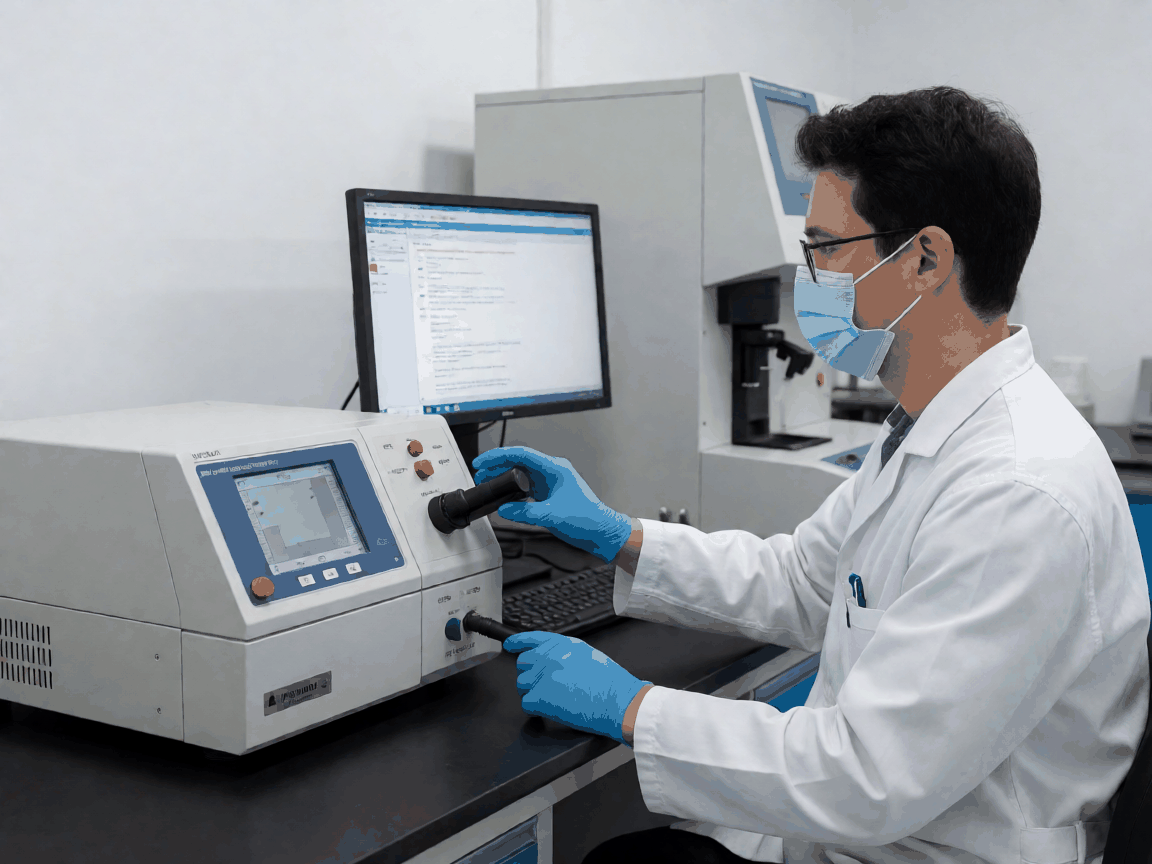
A dielectric loss factor tester (tan δ bridge) ships as a self-contained measurement console: high-voltage source, precision reference capacitor, null detector, and microprocessor control in a single rack-mount or portable chassis. Buyers qualifying a second source should verify that the quoted unit includes the calibration certificate traceable to IEC 60247, the HV test lead set rated for the declared maximum voltage, and the temperature probe with 0.1 °C resolution — omissions here add hidden cost faster than the unit price difference.
Typical form factors: 19-inch 3U rack for lab benches (12–18 kg), or ruggedized carry-case models for substation work (8–14 kg with internal battery). Both share the same measurement core; the mechanical package decides whether the instrument survives daily transit in a service truck.
What the Design Has to Balance
Replacement rate, not unit price, drives total cost of ownership. A tester that drifts 0.002 % tan δ per year forces annual recalibration and, worse, risks missing incipient insulation degradation on power transformers. The design trade-off sits between three parameters: voltage stability under capacitive load, common-mode rejection at 50/60 Hz, and reference capacitor temperature coefficient. Push voltage range to 20 kV without a correspondingly stiff HV supply, and the bridge null becomes noisy exactly where transformer bushings need the cleanest reading.
Specification Rule: For transformer bushing diagnostics, require tan δ resolution ≤ 0.001 % at 10 kV with CMRR ≥ 100 dB. Anything looser masks the 0.1–0.5 % loss-angle shifts that precede failure.
Frequency-agile models (20–200 Hz sweep) add diagnostic value for moisture tracking in paper-oil insulation, but the sweep generator must maintain < 0.1 % voltage THD across the band or the harmonic content corrupts the loss-angle calculation.
Materials and Construction Trade-offs
Reference Capacitor Technology
Standard: nitrogen-filled gas dielectric (ppm/°C stability). Premium: fused-silica vacuum capacitor (sub-ppm/°C). The vacuum type costs 3–4× more but eliminates the 0.0005 %/°C drift that forces monthly recal checks in uncontrolled lab temperatures.
HV Output Stage
Resonant inverter with IGBTs keeps weight under 15 kg for 12 kV models. Linear amplifier stages exceed 25 kg but deliver < 0.05 % voltage THD — critical when testing low-loss capacitor banks where harmonic current masks true tan δ.
Enclosure sealing: IP54 minimum for field units; condensation inside the HV compartment causes surface tracking that reads as false high loss. Confirm gasket material (silicone, not EPDM) and breather valve rating before accepting a shipment destined for humid climates.
Assumptions Buyers Should Stop Making
| Usage Condition | Typical Complaint / Failure | Specification That Prevents It |
|---|---|---|
| Daily substation rounds, 40 °C ambient | Readings drift 0.003 % tan δ by afternoon; recalibration needed weekly | Reference capacitor TC ≤ 0.5 ppm/°C + active temperature compensation |
| Transformer bushing test at 10 kV, high EMI | Noisy null, cannot resolve < 0.01 % tan δ; false "good" verdicts | CMRR ≥ 100 dB at 50/60 Hz, guarded test leads, digital synchronous detection |
| Cable batch testing, 200 samples/day | HV connector wear, intermittent contact after 3 months | Bayonet-lock HV connectors rated 10 k cycles, field-replaceable without tools |
| Multi-site lab network, shared calibration | Inter-instrument disagreement > 0.005 % tan δ | Built-in reference standard (100 pF ± 0.01 %) for daily cross-check |
Working as a Production Partner, Not a Catalogue Supplier
Tooling amortisation decides whether a custom voltage range (e.g., 15 kV for GIS busbars) or a special frequency (0.1 Hz for VLF cable diagnostics) is viable. We maintain the HV transformer winding jigs and the reference-capacitor calibration bridge in-house; a new voltage tap adds two weeks to lead time and ~$1,200 non-recurring engineering if the coil form already exists. Firmware features — automated IEEE C57.152 test sequences, Modbus/TCP streaming, PDF report templates — are configured from the same code base, so adding a customer-specific pass/fail limit costs engineering hours, not a new board spin.
Total cost of ownership shifts once returns are counted. A tester that survives five years with one factory recalibration costs less per test than a cheaper unit returned twice for HV module replacement. Ask for the mean-time-between-failure data on the HV inverter and the reference capacitor stability record over 24 months — suppliers who cannot produce those numbers are assembling, not manufacturing.
Volume Planning and Lead Time
| Order Band | Standard Lead Time | Expedite Option | MOQ for Custom Config |
|---|---|---|---|
| 1–3 units (catalogue spec) | 4–6 weeks | 2 weeks + 15 % surcharge | N/A |
| 4–10 units | 6–8 weeks | 3 weeks + 10 % surcharge | 5 units (voltage/frequency change) |
| 10+ units / frame agreement | 8–10 weeks (staggered delivery) | Pull from safety stock | 3 units (firmware, connector, enclosure) |
Safety stock of three calibrated units (12 kV rack, 10 kV portable, 20 kV rack) is held for frame-agreement partners. Release requires a purchase-order number and ships within 48 hours.
Stock Availability and Reorder Planning
Current finished-goods buffer: two 12 kV rack units, one 10 kV portable, zero 20 kV units (next batch completes week 38). Reorder point triggers at one unit per SKU; lead time from trigger to dock is six weeks. For multi-site buyers, we recommend a blanket PO with quarterly call-offs — this locks the calibration slot schedule and prevents the "urgent recalibration" bottleneck that appears every spring when utilities commission new transformers.
Spare-parts kit (HV output module, reference capacitor heater, display/keypad assembly, communication board) ships with every tenth unit ordered. Field service contracts cover annual calibration, firmware updates, and loaner unit during repair — priced at 8 % of instrument list price per year.
Questions Buyers Ask Before Ordering
Can the tester measure tan δ at 0.1 Hz for VLF cable acceptance?
Only if the HV source is a resonant inverter rated for continuous operation at 0.1 Hz — the standard 50/60 Hz bridge cannot regulate voltage at that frequency. Specify VLF requirement at quote stage; it changes the inverter topology and adds 3 kg.
What calibration uncertainty does the factory certificate state?
Typical expanded uncertainty (k=2): ±(0.0005 % + 0.0002 % × tan δ reading) at 10 kV, 23 °C ± 2 °C. Ask for the full uncertainty budget — some suppliers quote only the bridge linearity, omitting reference capacitor and voltage divider contributions.
How is the reference capacitor stability verified after shipment?
Each unit includes a built-in 100 pF ± 0.01 % check standard. The self-test routine measures it at power-up and logs deviation; a drift > 0.001 % triggers a front-panel warning. This catches mechanical shock damage from transit before the first real test.
Are the HV test leads user-replaceable without recalibration?
Yes, provided the replacement leads match the original length (3 m) and capacitance (≈ 120 pF/m). Longer leads add shunt capacitance that unbalances the bridge; we supply matched pairs with calibrated length tags.
What firmware updates are included in the service contract?
All security patches, new IEC test-sequence templates, and communication-protocol extensions released during the contract period. Hardware-dependent features (e.g., higher voltage range) require a board change and are quoted separately.
Request a Calibrated Evaluation Unit
Qualify the measurement stability on your own bushings and cables before committing to a frame agreement. We ship a calibrated 12 kV rack unit with full accessory kit for a 30-day evaluation; return shipping is prepaid if the unit meets your repeatability threshold. Submit the evaluation request form with your target test voltage, frequency, and ambient temperature range so we can configure the correct reference capacitor and HV lead set.