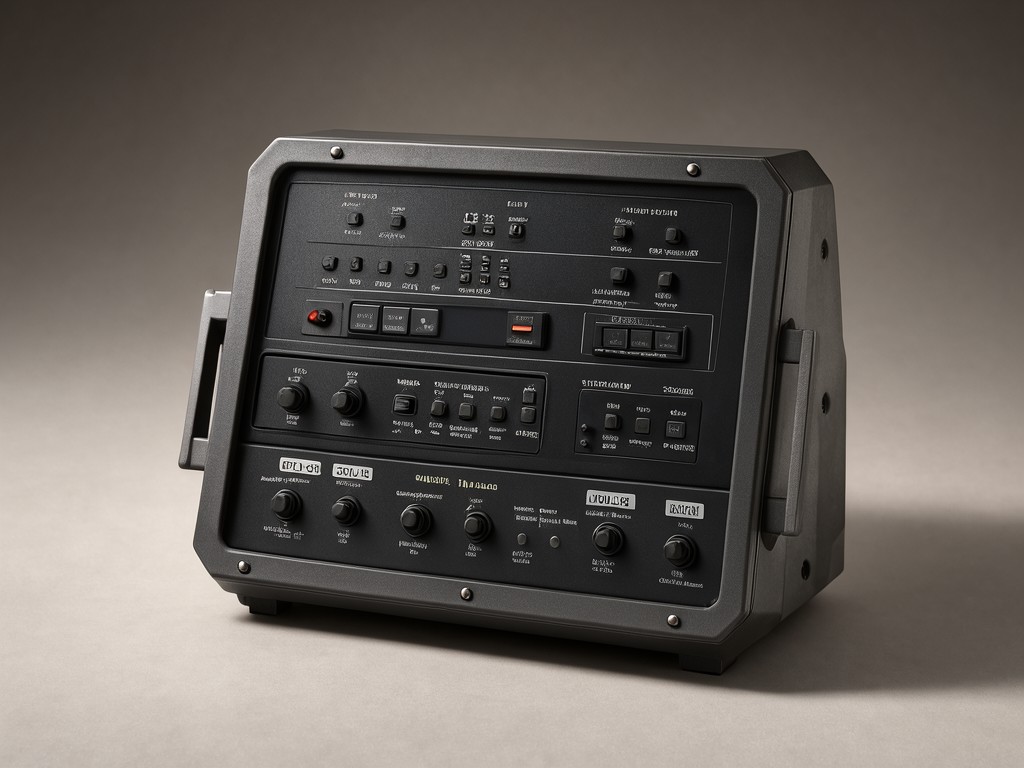
oem high voltage tan delta tester suppliers: Specification, Ordering and Quality Notes
What the Design Has to Balance
Tooling amortisation decides how much voltage stress the insulation system can tolerate before the test set itself becomes a cost driver.
Maximum test voltage 120 kV RMS; tan δ resolution 0.001; temperature drift <0.02 %/°C. Exceeding any of these limits forces a redesign of the high‑voltage divider and the shielding layout.
The divider stack must keep partial‑discharge inception voltage above the test voltage while the measuring electronics stay within their noise floor. A 10 % increase in divider capacitance typically adds 2 kg to the housing and pushes the bill‑of‑materials up 15 %.
Material Options and Their Trade-offs
Epoxy‑filled HV bushing
Solid dielectric, no gas handling. Good for 120 kV RMS, tan δ stability ±0.0005 over 0‑40 °C. Weight ≈ 12 kg per unit.
Long‑term moisture ingress can raise loss factor 0.001 after 5 years if seal degrades.
SF₆‑gas insulated module
Higher dielectric strength, enables 150 kV RMS in same envelope. Tan δ repeatability ±0.0003. Requires gas‑tight welding and periodic pressure check.
Adds 3 kg for pressure vessel, but reduces divider size 20 %.
Choose epoxy for sites without gas‑handling infrastructure; choose SF₆ when the test lab already runs gas‑insulated switchgear and can absorb the recertification cost.
Comparing Two Standard Configurations
Configuration A delivers 100 kV RMS at 0.5 % tan δ accuracy; Configuration B reaches 150 kV RMS at 0.8 % accuracy.
Configuration A uses a 12‑stage resistive divider with 0.1 % resistor tolerance, yielding a measurement bandwidth of 10 Hz‑1 kHz. Configuration B adds a capacitive trimming stage, widening bandwidth to 5 Hz‑2 kHz but increasing component count by 30 % and calibration time by 45 minutes per unit.
If the end‑user tests only transformer bushings up to 110 kV, Configuration A gives a lower unit price and faster throughput. For mixed‑asset labs that also test GIS up to 145 kV, the extra voltage headroom of Configuration B avoids a second purchase cycle.
Matching the Product to the Buyer's Need
Procurement officers should map the tester’s voltage class to the highest asset voltage in the maintenance program, then add a 10 % margin for future uprates.
A utility with a 220 kV fleet needs at least a 250 kV RMS capability; a railway substation operating at 110 kV can standardise on 120 kV RMS units and negotiate volume pricing.
Software integration (Modbus‑TCP, IEC 61850) is a decisive factor for SCADA‑centric buyers; the base firmware supports Modbus only, while the IEC 61850 stack adds a fixed licence fee per seat.
Assumptions Buyers Should Stop Making
| Standard | Test Parameter | Acceptance Criteria | Frequency |
|---|---|---|---|
| IEC 60270 | Tan δ measurement accuracy | ±0.001 at 50 Hz | Annual type test |
| IEC 60060‑1 | High‑voltage withstand | No breakdown at 1.2× rated voltage | Each production batch |
| IEEE C57.12.90 | Partial‑discharge inception | ≥ 1.5× test voltage | Pre‑shipment verification |
Assuming a single “calibration certificate” covers all three standards is a common cause of re‑work; each standard demands its own test record and traceability chain.
Customisation Options and Their Limits
Voltage range
Up to 250 kV RMS in 10 kV steps; each step adds a divider module and 1 kg.
Interface
Modbus‑TCP standard; IEC 61850, PROFINET, or OPC‑UA available with 4‑week firmware lead‑time.
Enclosure rating
IP54 default; IP65 adds sealed cable glands and 2 kg.
Branding
Laser‑etched logo on front panel, custom colour RAL code; minimum 50 units for tooling amortisation.
Beyond these four axes, any change to the high‑voltage divider topology requires a full type‑test re‑qualification, adding 8‑12 weeks and a non‑recurring engineering charge.
Segment-Specific Requirements
Utility transmission divisions demand IEC 61850 GOOSE messaging for real‑time asset health; the firmware module is a separate licence and must be validated on‑site before acceptance.
Railway operators require EN 50155 vibration and shock compliance; the tester’s chassis is reinforced with 3 mm steel ribs and tested to 5 g RMS for 2 hours.
Industrial plant maintenance teams often prefer a portable 30 kg trolley version with integrated battery pack; this adds a DC‑DC converter and reduces maximum test voltage to 80 kV RMS.
Capacity, Tooling and Scheduling
- Standard batch size 20 units; tooling for divider boards amortised over 200 pcs.
- Lead‑time 6 weeks from PO to first article inspection for Configuration A; 8 weeks for Configuration B.
- Expedited 4‑week slot available with 25 % surcharge and a dedicated test‑bench reservation.
- Annual capacity 500 units; peak Q4 demand can extend lead‑time by 2 weeks unless forecast shared 90 days ahead.
Providing a firm 12‑month rolling forecast lets the factory lock divider‑board panels and keep unit cost within ±3 % of the quoted price.
Request a quotation review
Share your voltage class, volume and interface needs; we will return a detailed cost breakdown within two business days.
Submit enquiry