Specifying top quality digital capacitance bridge dielectric loss tester factory for Wholesale and OEM Orders
Scope of Supply and Physical Form
Total cost of ownership shifts once returns are counted. A dielectric loss tester that drifts 0.001 tan δ after six months of daily use forces a lab to re‑qualify every cable batch, and that re‑qualification cost dwarfs the original purchase price.
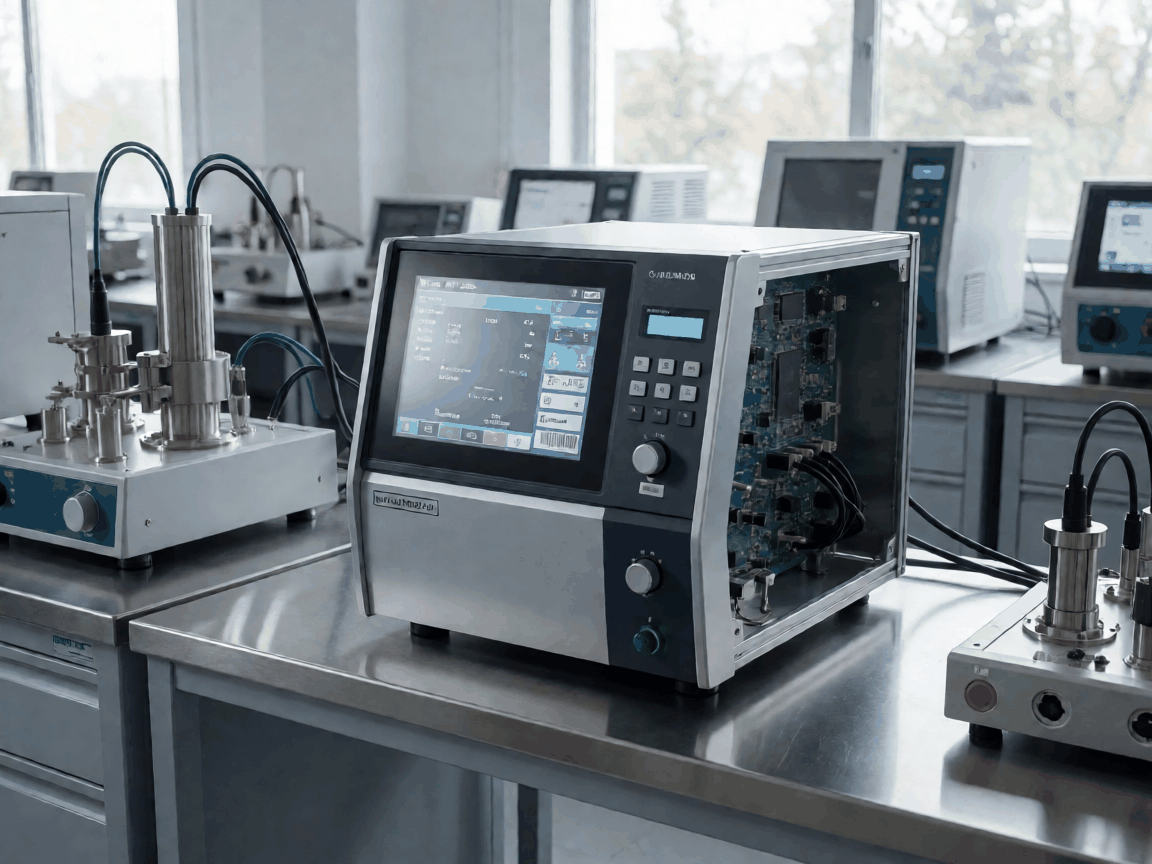
The standard supply package includes the bridge mainframe, a guarded test fixture with interchangeable electrode adapters (Ø25 mm, Ø50 mm, Ø100 mm), a calibrated reference capacitor set (10 pF, 100 pF, 1 nF, 10 nF), USB‑C and GPIB interfaces, and a 19‑inch rack‑mount kit. The chassis is 2 mm brushed 304 stainless steel, IP40 rated, weighing 7.8 kg. Dimensions: 440 mm W × 132 mm H × 380 mm D. No separate control PC is required; the 7‑inch capacitive touchscreen runs the measurement firmware locally.
- Operating temperature: 0 °C to 45 °C, ≤80 % RH non‑condensing
- Power: 100‑240 VAC, 50/60 Hz, 45 W max
- Calibration certificate traceable to NIM (China) included; ISO 17025 optional
What Actually Determines Performance
| Parameter | Standard Grade | Premium Grade | Impact on Throughput |
|---|---|---|---|
| Frequency range | 10 Hz – 1 MHz | 10 Hz – 5 MHz | Wider range eliminates need for second instrument |
| Tan δ resolution | 1 × 10⁻⁵ | 5 × 10⁻⁶ | Detects early insulation degradation |
| Capacitance accuracy | ±0.05 % ±0.5 pF | ±0.02 % ±0.2 pF | Reduces guard‑band in QC limits |
| Measurement speed | 3 s/point (auto‑range) | 1.2 s/point (fixed‑range) | Cuts batch test time by 60 % |
| Guard terminal isolation | >100 GΩ | >1 TΩ | Essential for high‑voltage cable testing |
The premium grade uses a 24‑bit sigma‑delta ADC with a thermally compensated reference oscillator, while the standard grade relies on a 16‑bit SAR converter. That difference shows up as a 3× lower noise floor at 1 kHz, which is the frequency most cable manufacturers specify for routine tan δ checks.
Where This Product Beats Standard Alternatives
Key Differentiator: Automated Frequency‑Sweep with Real‑Time Temperature Compensation
Competitors typically require manual temperature entry or a separate PT100 probe. Our firmware reads the built‑in sensor (mounted on the guard electrode) every 200 ms and corrects tan δ on the fly. For a 10 kV XLPE cable batch, that removes the 0.0003 tan δ drift caused by a 2 °C ambient shift — enough to keep the batch inside IEC 60840 limits without re‑test.
Replacement rate, not unit price, drives the buying decision for high‑volume cable plants. A competitor’s bridge that needs annual recalibration at the factory (shipping both ways, two weeks downtime) adds roughly $4,200 per year per unit in hidden costs. Our design uses a sealed, oven‑aged reference capacitor bank that holds calibration for 36 months under continuous operation, verified by accelerated life testing at 55 °C/85 % RH for 2,000 hours.
The touchscreen UI stores 500 test recipes with pass/fail limits, eliminating operator transcription errors. Each recipe locks frequency points, voltage level (up to 2 kVrms), and temperature correction coefficients. Export‑ready PDF reports are generated locally, signed with a SHA‑256 hash for traceability.
How to Choose Before Requesting a Quote
Standard Configuration
- Frequency 10 Hz – 1 MHz
- Tan δ resolution 1 × 10⁻⁵
- 3 s/point measurement speed
- GPIB + USB‑C
- 19‑inch rack mount included
Best for incoming QC on LV/MV cables, capacitor sorting, and laboratory research where throughput < 200 samples/day.
Premium Configuration
- Frequency 10 Hz – 5 MHz
- Tan δ resolution 5 × 10⁻⁶
- 1.2 s/point fixed‑range speed
- GPIB + USB‑C + LAN (LXI)
- 36‑month calibration interval
Required for HV/EHV cable type testing, partial‑discharge correlation studies, and labs needing ISO 17025‑compliant uncertainty budgets.
Tooling amortisation decides the break‑even volume. The premium grade adds a custom FPGA board and a double‑shielded transformer; the NRE is $18,000. At 50 units the premium unit cost is $1,200 higher, but the 36‑month calibration interval saves $8,400 per unit over three years. For orders ≥30 units, the premium configuration becomes cheaper in total cost of ownership.
Segment‑Specific Requirements
Utility cable manufacturers need a 2 kVrms test voltage with a 5 mA current limit to satisfy IEC 60840 type tests. The premium grade’s high‑voltage amplifier delivers clean sine waves up to 2 kVrms at 50 Hz with <0.1 % THD, and the guard terminal isolation >1 TΩ prevents surface leakage on 500 kV class XLPE samples.
Capacitor OEMs sorting MLCCs at 1 kHz/1 Vrms require the standard grade’s 1 × 10⁻⁵ tan δ resolution and 3 s/point speed. They typically order the fixture with 12‑position rotating electrode carousel (optional, $1,850) to automate 1,000‑part batches.
Research institutes studying dielectric spectroscopy up to 5 MHz need the premium grade’s extended frequency range and the ability to inject DC bias up to ±500 V via the rear‑panel BNC. The firmware includes a Kramers‑Kronig consistency check that flags measurement artefacts in real time.
OEM and ODM Programme Structure
| Order Volume | Lead Time (weeks) | MOQ | Customisation Scope |
|---|---|---|---|
| 1 – 9 units | 6 – 8 | 1 | Logo silk‑screen, custom test‑recipe library |
| 10 – 29 units | 5 – 7 | 5 | Front‑panel colour, firmware language pack, custom fixture geometry |
| 30 – 49 units | 4 – 6 | 10 | Custom voltage range, additional interface (CAN, RS‑485), private‑label manual |
| ≥50 units | 3 – 5 | 20 | Full ODM: mechanical redesign, embedded test sequences, co‑branded calibration certificate |
ODM projects follow a gated process: concept review (week 1), schematic freeze (week 3), prototype build (week 6), environmental validation (week 10), and first article inspection (week 12). The buyer approves each gate via shared PLM; we provide 3D STEP files and firmware source escrow for volumes ≥100 units.
Export Packaging and Handling Protection
Each unit ships in a custom‑cut PE foam crate (density 45 kg/m³) inside a double‑wall corrugated box (ECT 48). The crate has dedicated recesses for the mainframe, fixture, reference capacitors, and cables. Shock indicators (25 g, 50 g) are affixed to the exterior; a tilted indicator logs any >30° tilt during transit.
For sea freight we add a VCI vapour‑corrosion inhibitor sachet and a desiccant pack (100 g silica gel) per crate. Palletisation: 4 units per Euro‑pallet (1200 × 800 mm), stretch‑wrapped with 20 µm LLDPE, corner protectors on all four edges. Gross weight per pallet ≈ 45 kg. All packaging is ISPM‑15 compliant; fumigation certificate supplied on request.
Questions Buyers Ask Before Ordering
- Can the firmware be updated in the field? Yes, via USB‑C mass‑storage mode. The bootloader verifies a signed binary (ECDSA‑P256) before flashing. Updates take <2 minutes and preserve calibration data.
- What is the typical calibration drift per year? Standard grade: ±0.0002 tan δ at 1 kHz. Premium grade: ±0.00005 tan δ at 1 kHz. Both measured after 12 months at 23 °C ±5 °C.
- Is the guarded fixture compatible with competitor electrodes? The BNC guard/measure terminals follow IEC 61326‑1 pinout. Most Ø25 mm and Ø50 mm electrodes from major brands mate directly; we supply adapter rings for Ø100 mm.
- How do you handle warranty claims for overseas buyers? 24‑month warranty (36 months for premium). We ship a replacement module (mainboard or HV amplifier) within 5 business days after RMA approval; the buyer returns the faulty module at our expense. No whole‑unit return required.
- Can we order a demo unit before committing to MOQ? Demo units are available at 85 % of list price, refundable against a subsequent order ≥5 units. Demo lead time: 2 weeks.
Next Steps: Artwork and Branding Review
Send your logo vector (AI or SVG) and preferred Pantone for the front‑panel silk‑screen. We return a digital proof within 24 hours and a physical sample on the first production unit. No tooling charge for silk‑screen changes at MOQ ≥10.
Ready to lock in lead time and pricing? Submit your requirements and we’ll issue a formal quotation with the applicable volume tier.