wholesale advanced dielectric loss dissipation factor meter factory: What Buyers Should Check Before Ordering
what this product is and where it fits
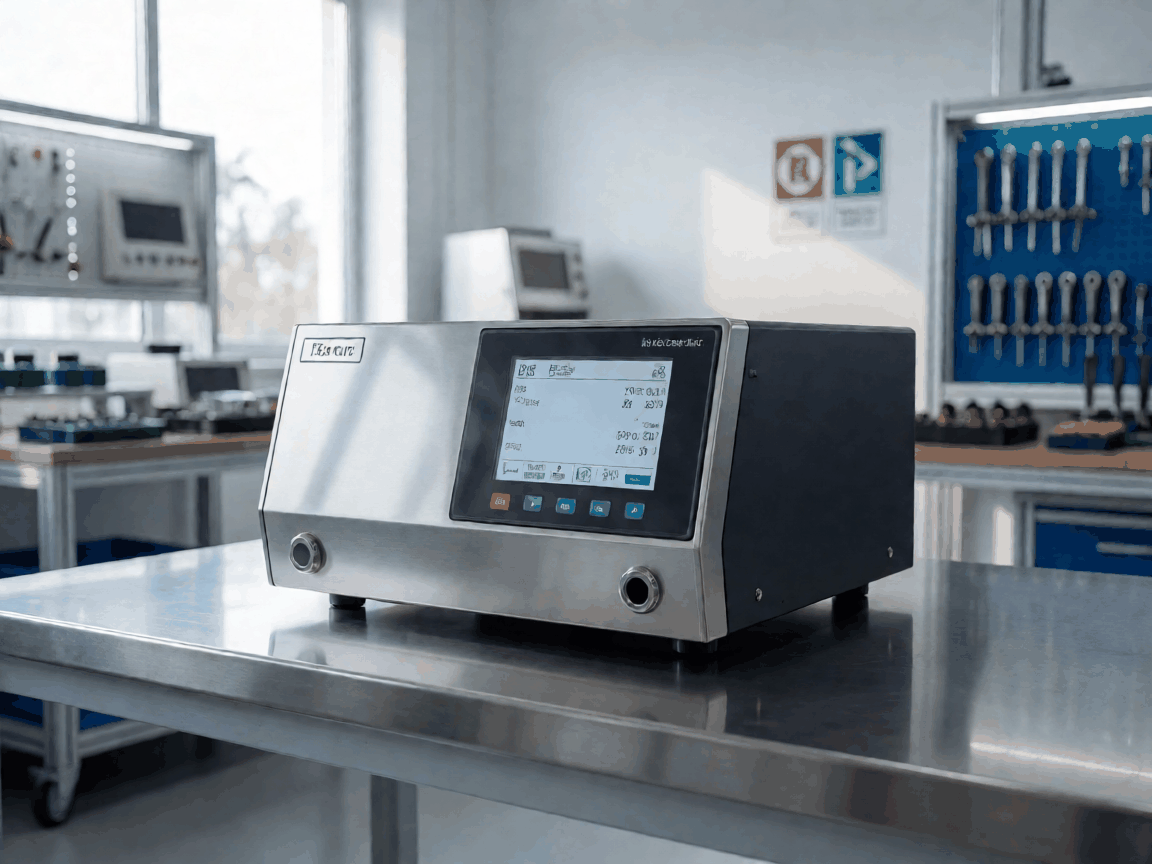
The limiting factor is rarely the headline specification. Buyers often confuse the instrument itself with the test method required to validate dielectric loss. This device is a precision analytical tool used to measure energy dissipation in insulating materials during AC voltage application. A single-supplier risk emerges when the factory cannot provide traceable calibration or consistent measurement stability over a 5-year period. The buyer does not need a consumer-grade multimeter; they need a fixed-frequency source that delivers a stable dissipation factor (DF) reading to within 0.001 ppm.
what the design has to balance
Weight and stiffness trade off against each other in the chassis design. A lighter enclosure reduces shipping costs for the wholesale buyer but introduces susceptibility to vibration-induced measurement errors. The internal circuitry requires rigid mounting to prevent micro-movements that could alter capacitance readings. Factory A might use a magnesium alloy to save 20% in weight, resulting in a chassis that degrades thermal stability under load. Factory B uses a heavier steel frame that maintains thermal equilibrium but increases the unit's total mass.
The real design challenge is balancing the input impedance with the shielding efficiency. If the shielding is too thick, it creates a parasitic capacitance that the meter reads as a signal. If it is too thin, external electromagnetic interference corrupts the loss factor reading. The solution lies in the specific dielectric constant of the enclosure material and the thickness of the shielding layer. A buyer must check the material data sheet for the shielding properties before approving a batch.
how it performs in use
Repeat loading drives the failure. When the instrument is subjected to repeated power cycles or moved between temperature gradients, the internal components may drift. The dielectric loss dissipation factor is highly sensitive to temperature changes. A reading of 0.05% at 25°C may shift to 0.06% at 35°C if the compensation circuit is not calibrated for the specific thermal coefficient of the circuit board.
Performance Drift and Correction
The factory must provide a correction factor for the specific temperature range the buyer operates in. Without this, the data is meaningless. The instrument's internal frequency source must remain stable to within 0.1% regardless of ambient temperature fluctuations. If the frequency drifts, the calculated loss factor will be incorrect. Buyers often report failure modes where the display reading jumps between cycles, caused by poor solder joints or thermal expansion of the PCB traces.
materials and construction trade-offs
Material choice dictates the instrument's resistance to wear and tear. The internal components must be rated for continuous duty. A lower-cost factory might use standard copper wiring that oxidizes over time, introducing resistance. A premium factory uses silver-plated copper or gold-plated connectors to ensure long-term conductivity. The trade-off is cost per unit versus service life. A buyer must specify the plating material to ensure the device does not degrade after 500 hours of operation.
Material Grade Comparison
| Material | Corrosion Resistance | Cost Impact |
|---|---|---|
| Standard Copper | Moderate | Low |
| Silver-Plated Copper | High | Medium |
| Gold-Plated Connectors | Very High | High |
who uses it and where it matters
This product is used in quality control departments for cable insulation testing and dielectric material analysis. It matters where the buyer needs to verify the electrical properties of a new batch of insulators or high-voltage cables. The failure mode is often a false pass/fail due to calibration drift. A buyer purchasing this device is likely looking to qualify a second source to remove single-supplier risk.
Usage Patterns and Failure Modes
Users report that the device fails in environments with high humidity or dust. The sealing of the instrument must be robust. A cheaper factory might use a simple rubber gasket that degrades after 2000 hours. A premium factory uses a silicone seal that resists degradation. The buyer must specify the IP rating and the gasket material to ensure the device does not fail during field use.
capacity, tooling and scheduling
Capacity is a function of tooling and scheduling. The factory must have the tooling to produce the internal circuit boards and the assembly line to build the chassis. A single-supplier risk arises when the factory cannot scale up production during peak demand. The buyer must check the factory's capacity to produce the required volume within the specified lead time.
Production Constraints
The factory must have the tooling to produce the specific internal components required. If the factory lacks the tooling, they will outsource the components, introducing a second-supplier risk. The buyer must ensure the factory has the tooling to produce the components in-house. The lead time will increase if the factory has to outsource any critical components.
stock availability and reorder planning
Stock availability is a function of the reorder planning. The buyer must plan for the reorder cycle. If the factory cannot maintain a buffer stock, the buyer will face stock-outs. The buyer must check the factory's stock levels before placing an order. The reorder cycle must be long enough to allow the factory to produce the required volume.
Stock and Reorder Guide
| Item | Lead Time | Buffer Stock |
|---|---|---|
| Standard Model | 10-15 Days | 100 Units |
| Custom Model | 20-25 Days | 50 Units |
call to action
The buyer must contact the factory to confirm the stock levels and lead times. The factory will provide a quote for the required volume and the lead time. The buyer must review the quote before placing an order. The factory will provide a quote for the required volume and the lead time.
For more information on the instrument's specifications and lead times, contact the factory.