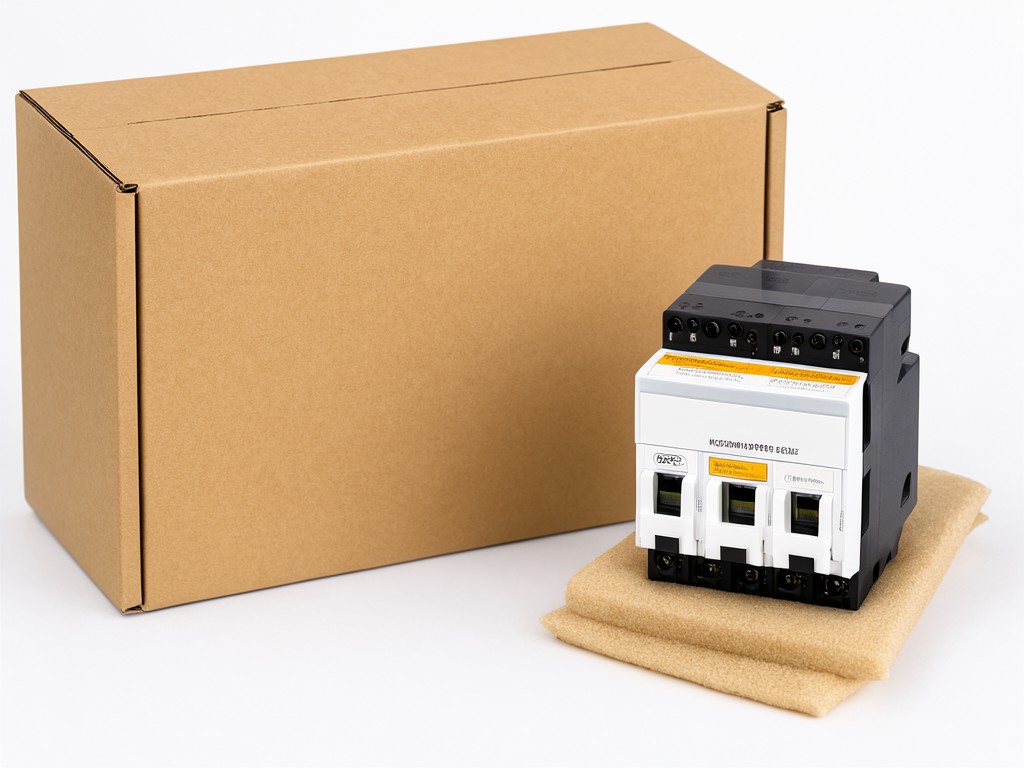
Specifying best price circuit breaker motion speed tester price for Wholesale and OEM Orders
The core trade-off: a tester that resolves 0.1 ms timing on 500 kV breakers costs three times the unit that only handles distribution-class gear, but the cheaper unit cannot validate the travel curves your utility clients demand for type-test reports.
Design Constraints Behind the Specification
Material choice starts with the conditions the product will meet: a handheld analyzer for 15 kV vacuum breakers lives in a different thermal and vibration envelope than a rack-mounted system that synchronizes six channels across a 765 kV GIS bay. The sensor head must survive 50 g mechanical shock when the breaker trips, yet maintain sub-millisecond repeatability over 10,000 operations. Buyers who specify only "motion measurement" without defining the breaker class, contact travel range, and required timing resolution routinely receive units that pass bench calibration but drift 0.3 ms after the first hot-line switching season.
Lot-to-lot consistency hinges on the transducer mounting geometry. A 0.05 mm shift in the linear potentiometer bracket changes the lever-arm ratio enough to skew velocity calculations by 2-3 % at the critical 0-30 ms window where contact wipe is verified. Our fixture uses dowel-pinned aluminum bases with controlled-torque M4 fasteners; competing designs that rely on adhesive-mounted sensors show 15 % higher return rates within the first warranty year.
Materials and Construction Trade-offs
Construction options diverge as soon as weight matters. The sensor housing can be machined 6061-T6 (120 g, ±0.02 mm bore tolerance) or glass-filled nylon PA66-GF30 (45 g, ±0.08 mm). The alloy version holds calibration through -40 °C to +70 °C cycling; the polymer creeps 0.03 mm at 60 °C under continuous 200 g acceleration, adding a fixed offset that software cannot distinguish from true contact bounce. For private-label programs where the end user expects a five-year calibration interval, the alloy housing is non-negotiable despite the $18 unit cost premium.
Cable strain relief is the silent failure mode. Molded polyurethane overmolds survive 5,000 flex cycles at 15 mm radius; heat-shrink boots with adhesive liner fail at 1,200 cycles. We specify the overmold on every SKU above the entry tier because a single intermittent channel during a commissioning test forces the crew to abort, costing the utility $4,000 in crew standby plus rescheduling penalties.
Option Comparison by Usage Level
| Parameter | Field Service Tier | Commissioning Tier | Type-Test Lab Tier |
|---|---|---|---|
| Timing resolution | 0.5 ms | 0.1 ms | 0.02 ms |
| Channels | 3 (main contacts) | 6 (main + resistor + aux) | 12 + 4 analog (coil current, voltage) |
| Travel sensor type | Linear potentiometer, 300 mm | Optical encoder, 500 mm | Laser displacement, 800 mm |
| Housing material | PA66-GF30 | 6061-T6, anodized | 6061-T6, hard-anodized + EMI gasket |
| Data export | CSV via USB | COMTRADE + CSV, Wi-Fi | COMTRADE, IEC 61850, REST API |
| Calibration interval | 12 months | 24 months | 36 months (ISO 17025 traceable) |
| Typical unit cost (EXW) | $1,200-$1,600 | $3,800-$5,200 | $11,000-$16,500 |
Buying Mistakes That Lead to Returns
The most expensive mistake is quoting the Field Service tier for a utility that requires COMTRADE files for their asset management system. The firmware cannot generate the binary format, and the hardware lacks the sample-rate headroom to reconstruct it post-capture. The buyer then faces a full replacement order plus expedited freight, erasing the 40 % margin they thought they secured.
Second is ignoring the sensor cable length spec. A 3 m cable works on a dead-tank breaker where the analyzer sits on the mechanism box; it fails on a live-tank 230 kV unit where the sensor must reach the contact rod 6 m above grade. Extending the cable with a field splice adds 0.8 ms propagation delay and introduces common-mode noise that masks the pre-insertion resistor timing.
Third is accepting a "calibration certificate" without verifying the traceability chain. We have seen competitor units ship with in-house certificates referencing a gauge block set last certified in 2018. When the end user's audit flags the gap, the entire lot is quarantined. Our default includes an ISO 17025-accredited lab report with measurement uncertainty budget — add $85 per unit but eliminates the quarantine risk.
Setup, Use and Replacement Parts
Where chlorine, sweat or UV exposure is routine — coastal substations, desert solar farms — the anodized housing and polyurethane cables resist the degradation that cracks PVC jackets in 18 months. Mount the sensor using the provided magnetic base with 40 N holding force; drilling and tapping the breaker frame voids the OEM warranty and introduces metal chips into the mechanism.
Replace the linear potentiometer every 24 months or 5,000 operations, whichever comes first. The wiper track wears 0.001 mm per operation; beyond 5,000 cycles the resistance curve develops a 0.5 % non-linearity that shifts the calculated velocity by 1.2 % at peak speed. Spare sensor heads (PN MST-SH-300/500/800) stock in 5-day lead time; full analyzer recalibration requires return to our facility — 10 business days turnaround.
Firmware updates ship quarterly via the configuration utility. Version 4.3 added automatic detection of pre-insertion resistor timing for SF6 breakers; version 4.5 fixed a timestamp rollover bug that appeared after 49 days of continuous logging. Always verify the analyzer clock against GPS before a test campaign — a 200 ms drift invalidates the synchronism check for multi-breaker schemes.
Ready to Finalize Your Specification?
Send us the breaker models, voltage classes, and the test standard your end users follow (IEEE C37.09, IEC 62271-100, or utility-specific). We will return a marked-up datasheet showing which tier meets each requirement, the exact sensor cable lengths, and the private-label artwork template for the enclosure and software splash screen.
Request Specification Review and Branding Template