OEM breaker timing and trip test equipment supplier - Bulk Supply and Specification Guide
Material Options and Their Trade-offs
Construction options diverge as soon as weight matters. A production-line test set that stays bolted to a bench can use a steel chassis, cast-aluminium current busbars, and forced-air cooling without penalty. Move the same architecture into a field-service case and every kilogram adds freight cost, technician fatigue, and drop-risk during transport.
The current-injection stage is where the trade-off sharpens. Copper-wound high-current transformers deliver 2 000 A continuous with predictable thermal behaviour, but a 600 A unit built on silicon-carbide MOSFETs fits in half the volume and runs from a 120 V wall outlet. The solid-state version costs 35–40 % more per ampere of rating, yet it eliminates the 15-minute warm-up cycle that delays shift-change testing on a factory floor.
Specification rule: If the test plan requires >1 500 A primary injection for more than 30 seconds per shot, specify liquid-cooled copper windings. For <800 A or intermittent duty, the MOSFET architecture reduces total cost of ownership when calibration intervals, floor space, and technician hours are summed over three years.
Signal-acquisition front-ends follow a similar split. Isolated BNC analogues with 24-bit ADCs give 0.02 % timing resolution on contact travel, but each channel adds 18 mm of rack depth. Multiplexed fibre-optic digitizers pack 16 channels into 1 U, yet the 50 kS/s shared clock limits motion-analysis bandwidth to 2 kHz — acceptable for vacuum and SF6 breakers, marginal for spring-operated mechanisms with 5 ms pre-insertion resistors.
Buying Mistakes That Lead to Returns
The most expensive error is under-sizing the current source for the largest frame size in the buyer's portfolio. A utility that standardises on 1 200 A class breakers will still encounter 2 500 A generator breakers during commissioning. Renting a supplementary injector for those two units a year costs more than the 15 % premium for a 3 000 A mainframe.
Software licensing models create the second-largest return driver. Perpetual licences tied to a single PC dongle prevent the test engineer from analysing waveforms on a laptop at the substation. Subscription models that expire mid-outage halt production lines. The procurement clause should mandate floating licences with offline lease periods of at least 30 days.
| Usage Condition | Typical Complaint / Failure | Preventing Specification |
|---|---|---|
| Daily production-line testing, 3-shift operation | Thermal shutdown after 4 hours; contact-timing drift >0.5 ms | Liquid-cooled current stage, 0.01 % timing stability over 0–50 °C |
| Substation commissioning, outdoor, -20 °C to 45 °C | Display unreadable in sunlight; battery dies at -10 °C | 1 000 nits optically bonded display, heated LiFePO4 pack rated -30 °C |
| OEM private-label batch release, mixed breaker families | Software template mismatch; missing coil-current trigger for new design | Open SDK with version-controlled test-plan repository, 16-channel simultaneous capture |
Connector wear is the silent budget killer. Standard 4 mm banana jacks survive 500 mate cycles; the test lead set on a busy bench sees that in six weeks. Specify military-spec circular connectors (MIL-DTL-38999 Series III) on the mainframe and provide sacrificial pigtail adapters. The adapter cost per cycle drops from $0.42 to $0.03.
Usage Scenarios and Buyer Segments
Switchgear OEMs running type-test cells need 3 000 A three-phase injection with synchronised voltage capture across six channels. They buy rack-mount mainframes, keep them for 10–12 years, and amortise calibration against 5 000+ breaker tests per unit. Their spec sheet centres on IEC 62271-100 compliance reports generated automatically from raw waveforms.
Utility maintenance crews operate differently. A two-person team carries a 18 kg portable set to 15 substations per quarter. They value single-handed cable latching, glove-friendly touchscreen, and a battery that finishes a full 1 200 A test sequence without recharge. The same crew will reject a 22 kg unit even if it costs 20 % less.
Third-party test laboratories sit between these extremes. They need modularity — swap a 600 A module for a 2 000 A module in under an hour — because their contract mix shifts quarterly. Their purchasing cycle favours mainframes with hot-swap current cards and a common calibration fixture that validates any card without returning the chassis to the factory.
How Consistency Is Held Across Batches
Every mainframe leaves the factory with a born-on calibration certificate traceable to a national metrology institute. The certificate lists timing accuracy at 1 ms, 10 ms, and 100 ms intervals, current-amplitude error at 10 %, 50 %, and 100 % of range, and channel-to-channel skew. These three numbers are the only ones the buyer needs to audit incoming goods.
Component-level traceability uses laser-etched QR codes on each PCB assembly. A scanner at the final test station pulls the bill of materials, firmware hash, and burn-in log into the unit's digital twin. When a field unit reports a 0.15 ms timing shift at the 12-month recalibration, the quality engineer can see whether the same lot of timing ASICs appeared in other serial numbers.
Firmware updates are signed and delivered through an air-gapped USB key, not over the network. The key contains a manifest that the bootloader verifies before writing. This prevents the scenario where a utility's IT policy blocks automatic updates, leaving 40 field units on a revision that misinterprets the new IEC 62271-100 Edition 3 pre-insertion resistor test sequence.
Inspection Items and Test Methods
Incoming inspection at the buyer's dock should verify three things in under 20 minutes: timing reference against a GPS-disciplined 1 PPS source, current-output linearity at three load points using a calibrated shunt, and channel isolation by injecting a 1 kV common-mode signal while measuring crosstalk. Fail any one and the unit goes to quarantine.
Annual recalibration follows a documented procedure that exercises every current range, every voltage range, and every timing mode the buyer actually uses. Skipping the 10 A range because "we never test that low" creates a blind spot when a new low-voltage breaker family arrives. The calibration lab must provide as-found data, not just as-left, so the buyer can assess whether drift stayed within the 0.05 % per year spec.
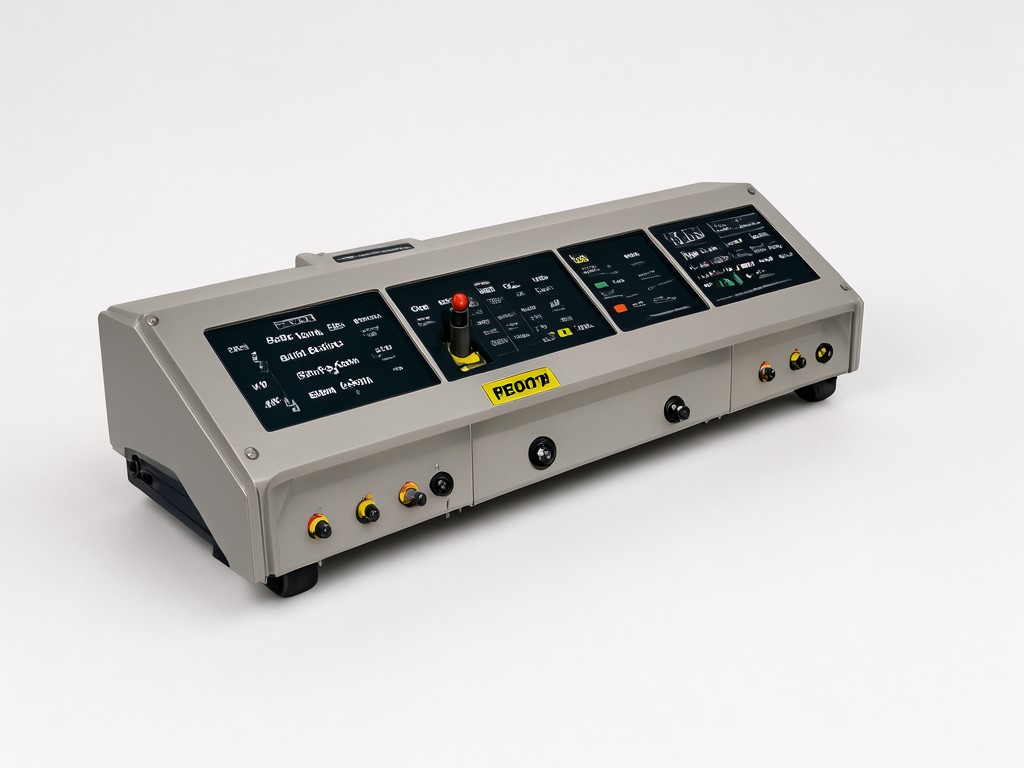
| Inspection Item | Test Method | Acceptance Criterion | Frequency |
|---|---|---|---|
| Timing accuracy | GPS 1 PPS reference, 1000 triggers | ±0.02 ms at 1 ms, ±0.05 ms at 100 ms | Incoming + annual |
| Current amplitude | Calibrated 0.01 % shunt, 3 points per range | ±0.1 % of reading + 0.02 % of range | Incoming + annual |
| Channel isolation | 1 kV CM @ 50 Hz, measure adjacent channels | >120 dB CMRR | Incoming only |
| Motion transducer linearity | Calibrated linear stage, 10 points full stroke | ±0.25 mm over 500 mm | Annual |
| Coil current capture | Known L/R standard, compare di/dt | ±1 % of peak, ±0.1 ms timing | Annual |
Stock Availability and Reorder Planning
Standard 600 A and 1 200 A portable mainframes ship from regional depots within 10 business days. The 2 000 A and 3 000 A rack-mount units are built to order — 8-week lead time for the first article, 4 weeks for repeat orders once the test-plan library is frozen. Buyers who qualify a second source should place a blanket PO with quarterly releases to lock the production slot.
Spare-part kits are staged at the same depots: current-stage IGBT modules, timing ASICs, display assemblies, and connector sets. A kit covers 95 % of field-replaceable failures and costs 12 % of the mainframe price. Contracts that include a kit with the initial purchase avoid the 6-week wait for a single IGBT when a production line goes down.
Firmware and test-plan compatibility are maintained for 10 years from last manufacture date. After that, security patches continue but new breaker templates are not guaranteed. The procurement spec should require a written end-of-support notice 24 months before the date, giving the buyer time to budget a refresh cycle.
Questions Buyers Ask Before Ordering
Can the same mainframe test both medium-voltage vacuum breakers and low-voltage moulded-case breakers?
Yes, if the current range spans 10 A–3 000 A and the timing channels accept both dry-contact and analogue travel transducer inputs. The software must support separate test-plan libraries with different pass/fail criteria per breaker class. Confirm the voltage measurement channels handle 38 kV impulse withstand for MV and 2.2 kV for LV without range switching.
What happens if the calibration lab loses accreditation mid-contract?
The supply agreement should name a backup lab with identical scope (ISO/IEC 17025, timing and high-current). The buyer retains the right to redirect recalibration at the supplier's cost. Keep the original calibration fixture — it validates any accredited lab's procedure.
How are private-label firmware builds managed?
The OEM provides a branded splash screen, custom report header, and locked test-plan templates. The supplier maintains a separate git branch for each label. Updates merge from the main branch quarterly; the OEM reviews diffs before signing the release. No source code leaves the supplier's repository.
What freight configuration protects the timing reference during air shipment?
The OCXO reference oscillator is shock-mounted in a foam cavity rated for 30 g half-sine. The case includes a tilt-and-shock indicator. If the indicator trips, the unit quarantines until a full timing verification passes. Sea freight uses the same crate with added desiccant and humidity indicator cards.
Request a Quotation Review
Send your breaker portfolio, test-plan requirements, and annual volume. We return a marked-up specification, lead-time commitment, and total cost of ownership model within five business days.
Start quotation review →