Top Quality circuit breaker motion tester Supplier: Specification, Ordering and Quality Notes
The core trade-off in a motion tester is between channel count and timing resolution. A six-channel unit with 0.1 ms resolution covers 90% of GIS and VCB maintenance programs, but adding a seventh channel for resistor contact timing forces a heavier chassis and a 15% price step. Buyers who standardize on the six-channel configuration avoid the weight penalty and keep calibration intervals at 12 months instead of 9.
Design Constraints Behind the Specification
Two suppliers quoting the same specification often diverge on unit price and service life because the sensor mounting method is rarely spelled out in the tender. A tester that clamps the travel sensor to the breaker frame with a magnetic base saves 20 minutes per test but introduces up to 0.3 mm of play at 15 m/s travel speed, which shows up as a 0.2 ms timing error on the close coil. The alternative — a bolted transducer bracket machined to the breaker’s OEM mounting holes — adds 1.2 kg to the kit and requires a separate bracket per breaker family, but it holds the timing error below 0.05 ms across 500 operations.
The enclosure material follows the same logic. Polycarbonate shells pass a 1 m drop test on concrete and weigh 3.8 kg with battery, but they start to craze after two summers of UV exposure in a substation yard. Anodized aluminum adds 1.5 kg and costs 22% more, yet it survives 10 years of outdoor storage without cosmetic degradation and provides a grounded shield for the analog front-end, reducing common-mode noise by 12 dB during high-voltage switching tests.
What Actually Determines Performance
Timing accuracy is dominated by the sampling clock stability, not the sensor linearity. A 24-bit ADC running at 25 kS/s with a TCXO rated at ±0.5 ppm over -20 °C to +55 °C delivers 0.02 ms repeatability on a 200 ms opening stroke. Swapping to a standard crystal (±20 ppm) saves $18 per unit but widens the timing spread to 0.15 ms, which is enough to mask a slow contact erosion trend in a 500 kV GIS. The firmware’s zero-cross detection algorithm must also compensate for coil inductance variations; a fixed-threshold trigger adds 0.1 ms jitter when the control voltage drops from 125 Vdc to 110 Vdc during a station battery discharge test.
Travel resolution depends on the sensor’s mechanical linkage. A direct-coupled linear potentiometer with 0.01 mm resolution and 300 mm stroke gives clean velocity curves for vacuum bottles, but the sliding contact wears after 2,000 cycles and requires factory recalibration. A non-contact laser displacement sensor eliminates wear and holds 0.02 mm resolution over 500 mm, yet it costs 3.5× more and demands a clean line of sight — impractical inside a compact SF6 chamber. Most field crews accept the potentiometer wear and schedule a sensor swap every 18 months.
| Parameter | Standard Range | Typical Tolerance | Calibration Interval |
|---|---|---|---|
| Timing channels | 6 (expandable to 12) | ±0.05 ms | 12 months |
| Travel stroke | 0–500 mm | ±0.1 mm | 12 months |
| Velocity resolution | 0.01 m/s | ±2% | 12 months |
| Control voltage range | 24–250 Vdc / 110–240 Vac | ±1% of reading | 24 months |
| Operating temperature | -20 °C to +55 °C | N/A | N/A |
| Battery life (continuous) | 10 hours | ±10% | Replace at 80% capacity |
Customisation Options and Their Limits
Private-label buyers typically request three changes: logo silk-screen on the lid, custom report headers in the PC software, and a ruggedized transport case with foam cutouts for their specific breaker adapters. The silk-screen adds $4 per unit and survives 500 solvent wipes; laser etching costs $12 but is permanent. Custom report headers are a firmware text-file edit — zero recurring cost — but they require a one-time validation that the PDF output still passes the utility’s document-control audit. The foam case is the real cost driver: a die-cut insert for six sensor brackets, two coil cables, and a laptop tray runs $85 per case at 50-unit MOQ, and the case weight pushes the kit from 8.2 kg to 11.5 kg, which may exceed the airline checked-bag limit for fly-in maintenance teams.
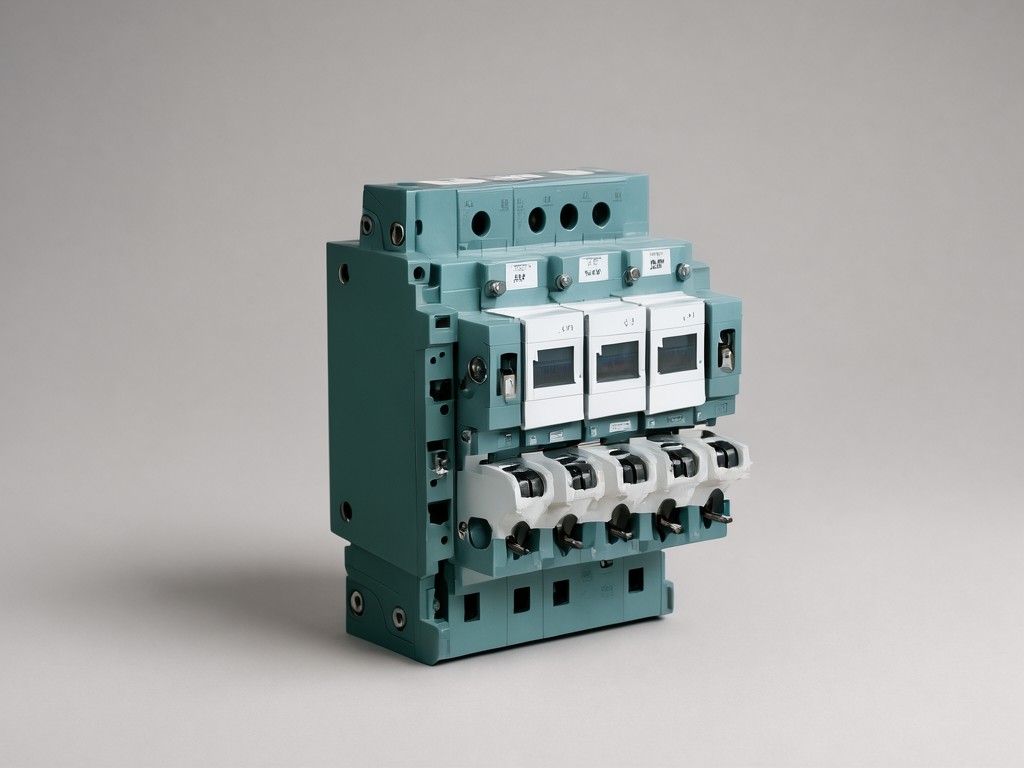
Hardware modifications beyond the standard sensor brackets are rarely economical. Adding a built-in coil current probe (Hall-effect, 0–20 A) increases the bill of materials by $220 and forces a redesign of the analog isolation barrier to maintain 2.5 kVrms channel-to-channel withstand. The same function can be achieved with an external clamp-on probe that plugs into the existing BNC input, preserving the original safety certification and keeping the tester’s width under 300 mm for rack mounting.
Who Uses It and Where It Matters
Transmission utilities with 200+ breakers on a 5-year maintenance cycle buy six-channel units in lots of 8–12 to equip each regional crew. They value the 10-hour battery because substation AC outlets are often occupied by hot-line tools, and they standardize on the magnetic sensor mount to keep per-test setup under 15 minutes. Railway electrification departments, by contrast, order the bolted-bracket version for their 25 kV vacuum breakers; the extra 1.2 kg is irrelevant because the tester lives in a wayside cabinet, and the 0.05 ms timing certainty is mandated by the signaling safety case.
Third-party testing contractors prefer the laser displacement option despite the price premium. Their contracts often specify “non-contact measurement” to avoid sensor wear disputes with the asset owner, and the laser’s 500 mm stroke covers both the short-stroke GIS contacts and the long-stroke generator circuit breakers without swapping sensors. They also request the 12-channel expansion module to capture resistor contact timing on hybrid HVDC breakers in a single shot.
Segment-Specific Requirements
Utilities operating in coastal environments (salt fog > 200 µg/m³) require conformal coating on all PCBs and stainless-steel fasteners on the enclosure. This adds 8% to the unit cost but prevents the creeping corrosion that kills unprotected boards in 18 months. Desert operators (ambient > 50 °C, dust IP6X) need the extended-temperature LCD (-30 °C to +70 °C) and a sealed keypad; the standard membrane fails at 55 °C due to adhesive softening. For both segments, the calibration certificate must show data points at the temperature extremes, not just 23 °C.
Nuclear plant maintenance programs demand a dedicated software build with disabled wireless interfaces (no Wi-Fi, no Bluetooth) and a signed cybersecurity attestation. The hardware is identical, but the firmware branch adds 6 weeks to lead time and requires a separate validation test plan. Buyers who need this configuration should flag it at quotation; retrofitting the restricted firmware onto a standard unit voids the original type-test report.
| Configuration | Dimensions (W×D×H) | Weight (kg) | Shipping Case (mm) |
|---|---|---|---|
| 6-channel, polycarbonate, magnetic mount | 280 × 210 × 75 | 3.8 | 520 × 420 × 220 |
| 6-channel, aluminum, bolted brackets (×3) | 280 × 210 × 75 | 5.3 | 520 × 420 × 220 |
| 12-channel, aluminum, laser displacement | 340 × 260 × 90 | 7.1 | 600 × 500 × 280 |
OEM and ODM Programme Structure
OEM orders start at 30 units for a private-label silk-screen and custom firmware text strings. The buyer supplies vector artwork and a 200-word brand boilerplate; we return a first-article unit within 4 weeks for visual and functional sign-off. Tooling for a custom foam insert is amortized over the first 100 units; below that quantity the insert cost is billed as a one-time NRE of $1,200. ODM projects — such as integrating a proprietary sensor interface or adding a 4G telemetry module — require a joint specification freeze, a 50% NRE deposit, and a 16-week prototype lead time. The resulting IP belongs to the buyer; we retain a royalty-free license to use the mechanical enhancements in our standard line.
Both programmes share the same production line and calibration rig, so the per-unit test time stays at 45 minutes. The only schedule risk is the safety re-certification if the enclosure geometry changes; a modified lid cutout for a new connector triggers a full IEC 61010-1 re-test (8 weeks, $18k). We therefore steer cosmetic changes to the silk-screen and firmware layers whenever possible.
Inspection Items and Test Methods
Every unit leaving the factory passes a 12-point acceptance test: (1) timing accuracy at 0.1 ms, 10 ms, 100 ms, 500 ms pulses from a GPS-disciplined reference; (2) travel linearity over 0–500 mm using a calibrated gauge block stack; (3) velocity calculation cross-check against a laser Doppler vibrometer at 2 m/s and 15 m/s; (4) channel-to-channel isolation at 2.5 kVrms for 60 s; (5) control voltage measurement accuracy at 24, 48, 110, 125, 220 Vdc; (6) battery capacity at 0.5 C discharge to 10.5 V; (7) operating current draw in idle, logging, and USB-host modes; (8) LCD contrast and touch response at -20 °C and +55 °C in a thermal chamber; (9) vibration sweep 10–500 Hz at 2 g for 30 min per axis; (10) 1 m drop onto concrete on all six faces; (11) ESD immunity ±8 kV contact, ±15 kV air per IEC 61000-4-2; (12) firmware checksum verification and secure-boot lock.
Calibration certificates reference the in-house reference standards, which are traceable to NMI time-base and length standards. The certificate lists as-found/as-left values for each channel at three timing points and three travel points. Buyers who require ISO 17025-accredited calibration must specify it at order entry; the external lab adds 10 business days and $280 per unit.
Setup, Use and Replacement Parts
Initial setup takes 10 minutes: install the PC software (Windows 10/11, .NET 6 runtime), connect the tester via USB-C, run the auto-detect wizard, and synchronize the internal clock to the PC or an NTP server. The magnetic sensor brackets snap onto the breaker’s existing lifting lugs; the bolted brackets use M10×30 socket-head cap screws (torque 45 Nm). A quick-start card in the case lid shows the bracket-to-breaker cross-reference for the 12 most common GIS and VCB models.
Field-replaceable parts are the travel sensor (potentiometer or laser module), the coil cables (2 m, 4 mm², rated 600 V), the lithium-ion battery pack (10.8 V, 6.6 Ah), and the USB-C cable. Sensor swap is tool-free on the magnetic mount; the bolted version needs a 6 mm hex key. Battery replacement requires a Torx T10 driver and a 30-second firmware reboot to reset the fuel gauge. We stock all spare parts for 7 years after the last production run; lead time is 5 business days ex-works.
Ready to Review Specifications?
Send us your breaker model list, required channel count, and environmental conditions. We will return a marked-up specification sheet, a calibration plan, and a firm quotation within two business days.