wholesale high voltage switch tester suppliers - Bulk Supply and Specification Guide
Most quality disputes start with a consistency gap between the specification sheet and the unit that arrives on the dock. Buyers who treat high voltage switch testers as commodity items discover the hard way that timing resolution, insulation withstand, and software traceability vary wildly across factories using the same bill of materials.
Design Constraints Behind the Specification
| Parameter | Entry Portfolio | Mid-Range Portfolio | Laboratory Portfolio |
|---|---|---|---|
| Test voltage range | Up to 72.5 kV | Up to 245 kV | Up to 800 kV |
| Timing resolution | 1 µs | 0.1 µs | 0.01 µs (10 ns) |
| Contact channels | 6 (3-phase main + 3 aux) | 12 (3-phase main + 9 aux) | 24+ with multiplexing |
| Motion transducer support | Linear potentiometer only | Potentiometer, encoder, LVDT | All types + laser/optical |
| Dynamic resistance measurement | Not included | Optional module, 100 A DC | Integrated, 200-300 A DC with waveform capture |
| Data export & compliance | CSV, basic PDF report | COMTRADE, IEEE C37.111, PDF with custom template | Full IEC 61850 GOOSE/SMV, automated test plans, audit trail |
The table above reflects the three tiers we see requested most often. Notice that timing resolution jumps an order of magnitude at each step while channel count doubles — this is not marketing segmentation, it's the physics of sampling architecture and isolation transformer sizing. A buyer specifying 0.1 µs resolution for 72.5 kV breakers is over-specifying; the same buyer demanding 1 µs resolution for 245 kV GIS will miss contact bounce signatures that cause re-strikes.
Specification agreement starts with the breaker fleet voltage class and the utility's maintenance standard. From there we derive the minimum timing resolution, channel count, and dynamic resistance capability. Every custom order receives a specification review document listing the agreed tolerances, test voltage verification method, and software configuration locked before first article inspection.
Materials and Construction Trade-offs
Enclosure choice drives both field survivability and freight cost. Ruggedized ABS/Polycarbonate blend housings with IP65 rating survive substation drops and condensation cycles but add 3-4 kg versus aluminum extrusion chassis. The aluminum units dissipate heat better during extended dynamic resistance runs — critical when testing 200 A DC through 3000 µΩ contacts for 30 seconds per phase.
High voltage connectors are the single largest failure point. We specify custom-molded silicone rubber boots over silver-plated brass contacts for all outdoor-rated units. Cheaper suppliers use off-the-shelf banana plugs with heat-shrink — those fail insulation resistance tests after six months of humidity cycling. The boot tooling cost is amortized at 200 units; below that MOQ we offer a field-replaceable connector kit instead.
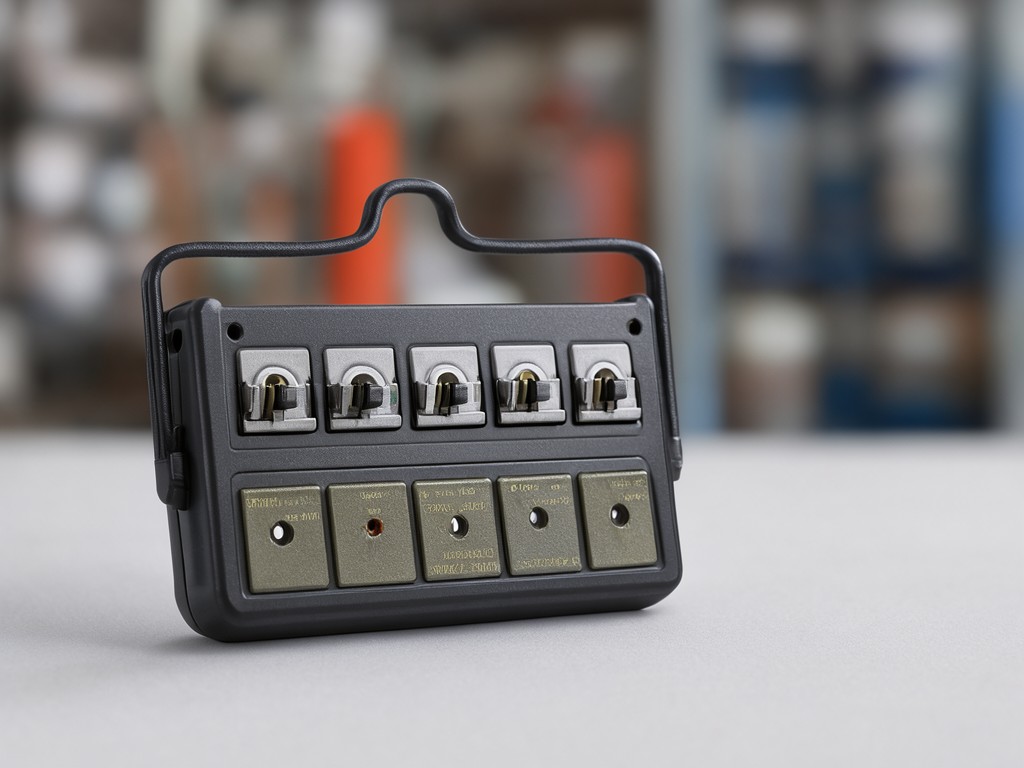
Specification lock point: connector interface drawing, boot material durometer, and creepage distance are frozen at sample approval. Any change after first article requires re-qualification of the 1.2/50 µs impulse withstand test at the factory's high voltage lab.
Internal PCB layout separates the measurement front-end from the digital section by 15 mm minimum creepage with slotted barriers. This is non-negotiable for 245 kV rated units. Entry portfolios sometimes share ground planes to save layers — acceptable for 72.5 kV but a latent defect waiting for a transient on higher voltage classes.
Where This Product Beats Standard Alternatives
Generic timing analyzers sold as "circuit breaker analyzers" typically lack the isolation withstand for direct connection to live tank breakers. They require external capacitive dividers that add setup time and measurement uncertainty. Our mid-range and laboratory portfolios integrate the divider network inside the tester chassis, calibrated as a system.
Software update mechanism is another differentiator. Field firmware updates over USB-C with cryptographic signature verification prevent the bricked units we see from competitors using unsecured bootloaders. The laboratory portfolio adds over-the-air updates via LTE module for fleets managed by central asset teams — a feature that pays for itself in reduced truck rolls within the first calibration cycle.
Vibration analysis capability ships standard on mid-range and above. Accelerometer inputs synchronized to timing channels capture mechanism resonance that correlates with contact wear progression. This single feature shifts maintenance from time-based to condition-based for utilities running 5000+ breaker operations per year.
Option Comparison by Usage Level
Portfolio A: Field Service Portable
Weight: 8.5 kg with battery. 72.5 kV max. 1 µs timing. 6 contact channels. 8-hour LiFePO4 battery. IP65. Single-hand carry handle.
Best for: Distribution utility crews testing reclosers, sectionalizers, and pad-mount switchgear. No dynamic resistance. Software auto-generates pass/fail report against IEEE C37.60 thresholds.
Calibration interval: 12 months. Field verification kit included (reference resistor, timing simulator).
Portfolio B: Substation Bench / Mobile Lab
Weight: 18 kg rackmount. 245 kV max. 0.1 µs timing. 12 contact channels. Dynamic resistance 100 A DC module. AC mains + 4-hour UPS battery.
Best for: Transmission utility test vans and regional calibration labs. Full COMTRADE export. Vibration analysis with 3-axis accelerometer kit. Motion transducer auto-detection.
Calibration interval: 12 months. Factory recalibration includes dynamic resistance shunt verification at 50/100/200 A.
Private-label buyers typically choose Portfolio B as the base and add laboratory-tier software licensing as an upsell tier for their premium customers. The hardware platform is identical — only the firmware feature flags and calibration certificate scope differ. This reduces SKU count and inventory carrying cost.
Quality Control and Batch Consistency
Every unit undergoes a 4-hour burn-in at 40°C ambient with all channels cycling simulated breaker operations at 10 operations/minute. Timing drift is logged continuously — acceptance criterion is < 0.05 µs shift over the burn-in period. Units exceeding this are segregated for front-end component replacement, not re-calibration.
High voltage withstand test at 1.5x rated voltage for 60 seconds is performed on 100% of production, not sample basis. Partial discharge measurement at 1.1x rated voltage must read < 5 pC. This catches voids in the epoxy encapsulation of the divider resistors that would fail within 18 months of field service.
Batch traceability links each tester's serial number to the component lot codes for the isolation transformers, timing ASIC, and high voltage connectors. When a utility reports a systematic timing offset across five units from the same batch, we can trace to the crystal oscillator lot and issue a targeted firmware compensation update within 48 hours.
Calibration certificates reference the factory's primary standard traceable to national metrology institute. The certificate includes as-found/as-left data at 5 timing points across the range, contact resistance at 3 current levels, and dynamic resistance shunt verification where equipped. No "pass/fail only" certificates — the data stays with the unit for its service life.
Setup, Use and Replacement Parts
First-time setup requires grounding the tester chassis to the substation ground mat before connecting any high voltage leads. The software enforces this with a ground continuity check that blocks test initiation if resistance exceeds 0.5 Ω. This single interlock prevents the floating-chassis measurements that invalidate timing data and risk operator safety.
Contact lead sets are color-coded and length-matched within 5 mm to minimize skew. Replacement lead sets are stocked in 6 m, 10 m, and 15 m lengths with the same silicone-booted connectors. Custom lengths up to 30 m are available with a 4-week lead time — the added capacitance is characterized and compensated in firmware.
Motion transducer brackets are the most common wear item. We supply universal mounting kits with magnetic base, articulated arm, and three transducer adapters (potentiometer, encoder, LVDT). The kit weighs 1.2 kg and fits in the tester's accessory compartment. Replacement brackets ship from regional warehouse within 48 hours.
Battery packs for portable units are user-replaceable LiFePO4 modules with fuel gauge IC. No soldering, no firmware re-calibration. Expected cycle life: 2000 cycles to 80% capacity. Replacement cost is 12% of tester list price — we publish this so buyers can model total cost of ownership over a 10-year depreciation schedule.
Request a Calibration-Matched Sample
We ship pre-calibrated evaluation units to qualified buyers with a 30-day test window. The sample arrives with your specified voltage class configuration, connector interface, and firmware feature set locked per the specification review document. Return shipping is prepaid if the unit does not meet the agreed tolerances.
Start a sample request →