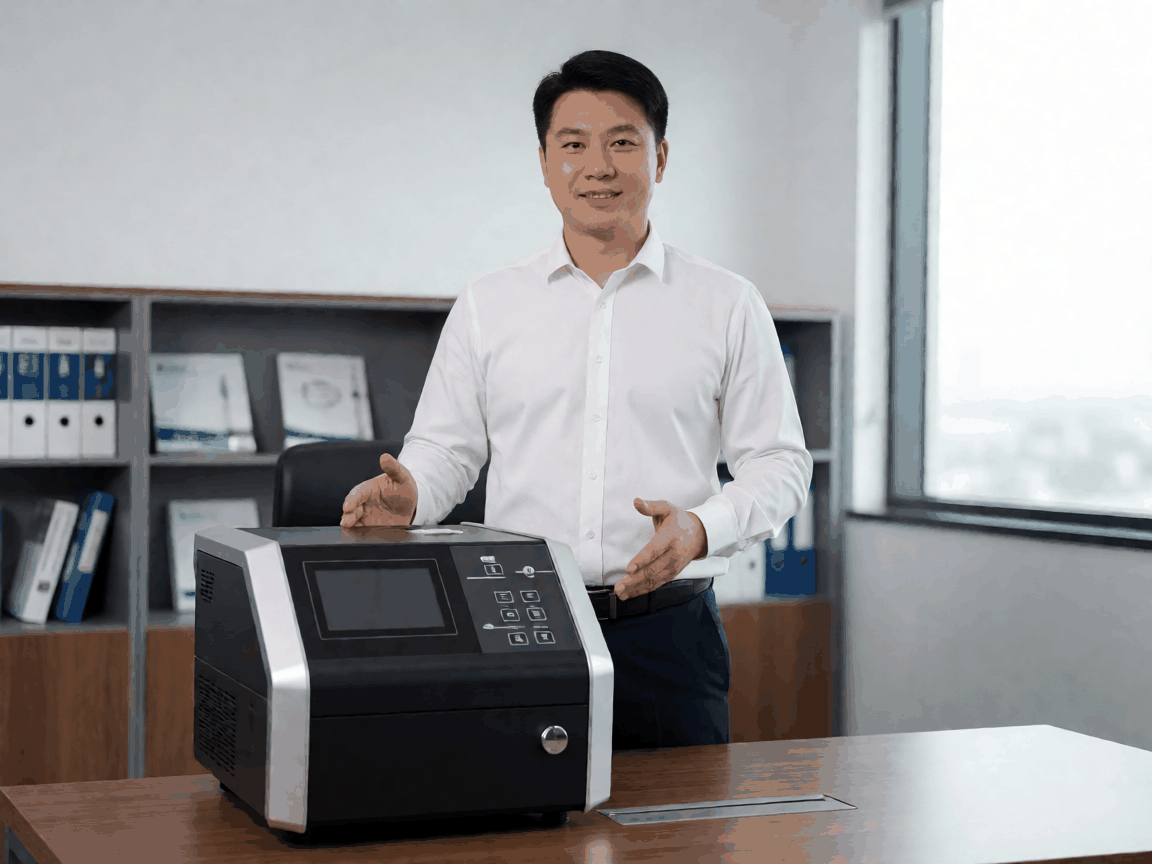
Specifying b2b earth soil resistivity tester manufacturer for Wholesale and OEM Orders
Where Cheaper Alternatives Fall Short
Low‑cost units often use a single‑piece plastic housing that cracks after a few field cycles, and their electrode contacts are stamped from thin brass that oxidises within weeks of exposure to moist soil. The result is a drift in measured resistivity that can exceed 15 % after 30 days, forcing the end user to recalibrate or replace the instrument. In a wholesale program that ships hundreds of units, that failure rate translates directly into warranty claims and re‑order churn.
The build method decides whether the probe shaft can survive repeated insertion into compacted clay without bending. A machined stainless‑steel shaft with a hardened tip holds its straightness to ±0.1 mm over 10 000 insertions, while a die‑cast aluminium alternative begins to show permanent set after 2 000 cycles. That difference is the line between a product that stays in the field for a full season and one that returns for repair before the first quarter ends.
What the Design Has to Balance
Design trade‑off: a higher‑frequency excitation circuit improves resolution in low‑resistivity soils but draws more current, reducing battery life from 40 h to roughly 22 h per charge. The specification sheet should state the intended soil range so the buyer can choose the appropriate firmware variant before tooling is cut.
Consistency is set at the forming stage. The four‑electrode Wenner array requires each electrode spacing to be held within ±0.5 mm; a CNC‑milled jig guarantees that tolerance, whereas a hand‑drilled fixture typically yields ±1.2 mm, which adds up to a 3 % systematic error in the final resistivity value. The buyer’s private‑label spec should call out the jig tolerance and the inspection method (laser micrometer on first article, then go/no‑go gauge on production).
First‑article tooling determines the cost of any later change. If the OEM decides to switch from a sealed membrane keypad to a tactile silicone overlay after the mould is cut, the mould modification adds 3–4 weeks and a 12 % tooling surcharge. Locking the user‑interface decision into the design freeze avoids that penalty.
Who Uses It and Where It Matters
Geotechnical consulting firms that run weekly resistivity surveys on highway sub‑grade projects need a unit that survives vibration in a truck bed, temperature swings from –10 °C to 45 °C, and occasional immersion in standing water. The instrument’s IP‑67 rating and shock‑mounted PCB are the minimum spec for that workflow.
Utility locator crews prefer a lightweight hand‑held model (≈1.2 kg with battery) that can be operated with one hand while the other holds a mapping tablet. A rubberised over‑mould on the grip reduces slippage when gloves are wet, and the display’s anti‑glare coating remains readable at 80 000 lux.
Academic field stations that deploy arrays for long‑term monitoring value a modular electrode set that can be swapped without tools. Quick‑release stainless‑steel pins with a 6 mm thread allow a single technician to reconfigure a 20‑electrode line in under 15 minutes.
Quality Control and Batch Consistency
| Parameter | Acceptance Range | Test Method | Frequency |
|---|---|---|---|
| Electrode spacing tolerance | ±0.5 mm | Laser micrometer on first article; go/no‑go gauge thereafter | Every lot |
| Excitation frequency accuracy | ±0.2 % of nominal | Frequency counter on calibrated reference | Each production run |
| Battery capacity retention | ≥90 % after 300 cycles | Automated charge/discharge cycler | Quarterly audit |
| IP‑67 seal integrity | No ingress after 30 min at 1 m depth | Immersion test per IEC 60529 (reference only) | First article + random 5 % |
Batch traceability is maintained by laser‑etched serial numbers on the probe shaft and a QR‑coded label on the enclosure that links to the test report PDF. The buyer’s incoming inspection can scan the code and verify the exact lot data without opening the package.
Packing, Marking and Freight Configuration
- Each tester ships in a custom‑moulded EPE foam insert inside a double‑wall corrugated carton (200 lb burst strength) sized 420 × 310 × 180 mm.
- Carton label includes: model, serial range, production date, PO number, and a colour‑coded band indicating the firmware variant (blue = low‑frequency, green = high‑frequency).
- Palletisation: 12 cartons per layer, 4 layers per 1.2 m × 1.0 m euro‑pallet, stretch‑wrapped with UV‑stabilised film. Gross weight per pallet ≈ 210 kg, within standard air‑freight limits.
- Desiccant sachets (2 × 5 g) placed in each carton to keep internal RH below 40 % during sea transit.
The marking scheme satisfies most retail‑ready requirements and allows the private‑label buyer to add their own barcode sticker without obscuring the manufacturer’s traceability code.
Care, Storage and Service Life
Store units at 15–25 °C, 30–60 % RH. Remove batteries if the instrument will sit idle longer than 90 days; lithium‑ion cells self‑discharge to <20 % in that window, which can trigger the protection circuit and require a factory reset.
Electrode pins should be cleaned with a soft brass brush after each field day; abrasive pads remove the passivation layer and increase contact resistance. A light coat of dielectric grease (non‑conductive, silicone‑based) on the threads prevents galling without affecting measurement integrity.
Calibration interval: 12 months or 2 000 measurements, whichever occurs first. The firmware logs measurement count and flags the next due date on the display, so the end user never misses a recalibration window.
Expected service life under typical utility‑locator duty cycle is 5 years; the limiting factor is the membrane keypad actuation count (rated 1 million cycles). Replacement keypad kits are stocked and can be swapped in‑field with a Torx T10 driver.
Artwork and Branding Review
Before the first production run we require a vector‑format logo (AI, EPS, or SVG) and a Pantone‑referenced colour specification for any custom bezel or label. The artwork proof is returned within 2 business days; approval locks the silk‑screen layout and prevents costly re‑print runs.
If the private‑label program includes a unique model suffix, the suffix is added to the laser‑etched serial block at no extra tooling cost, provided the request is made before the first‑article inspection.