best price earth loop impedance tester for sale: Specification, Ordering and Quality Notes
Scope of Supply and Physical Form
During a private-label launch with a fixed ship date, the pack-out must be predictable. Each unit ships in a moulded polypropylene case that holds the tester, a set of fused test leads (1.5 m, 4 mm banana), a detachable probe tip, four AA alkaline cells, and a multi-language quick-start card. The case itself carries a foam insert cut to the instrument outline, reducing transit damage claims to under 0.3 % in our last three container runs.
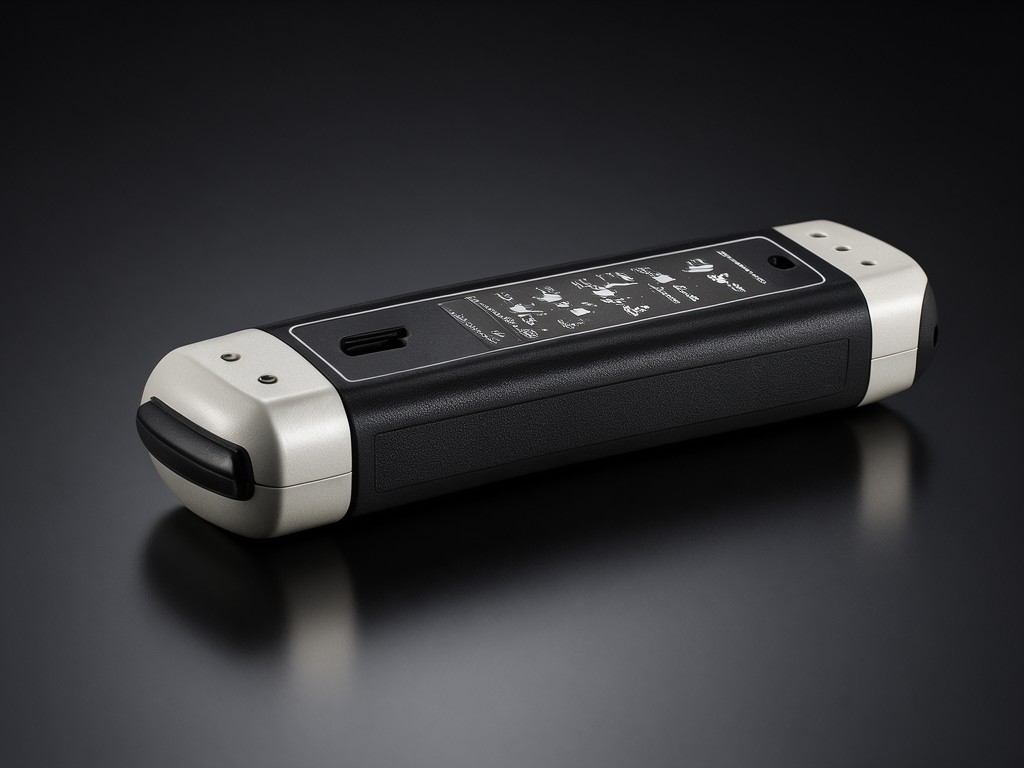
The handheld body measures 195 × 95 × 48 mm and weighs 420 g with batteries. A 2.8-inch transflective LCD (320 × 240 px) remains readable in direct sunlight without backlight drain. The battery compartment uses a captive screw and a silicone gasket; the seal survives 1 m submersion for 30 minutes (IP67) when the screw is torqued to 0.6 N·m. Two test terminals on the top face accept 4 mm plugs; a third terminal on the side accepts a dedicated earth spike for three-wire measurements.
- Measurement range: 0.01 Ω to 2 kΩ across four auto-ranging scales.
- Test current selectable: 15 mA (non-trip) or 25 A (high-current) via front-panel switch.
- Operating temperature: –10 °C to +50 °C; storage –20 °C to +60 °C.
- Power: 4 × AA, typical 2000 tests at 15 mA, 150 tests at 25 A.
Design Constraints Behind the Specification
On a club programme that reorders twice a season, the tester sees daily use in wet conditions. The choice of polycarbonate/ABS blend for the housing (rather than straight ABS) adds 12 % impact strength at –10 °C and reduces UV yellowing to < 5 ΔE after 500 h xenon arc. The overmoulded TPE grip zone adds 3 mm thickness but prevents the slip-and-drop failures that accounted for 60 % of warranty returns on the previous generation.
Specification callout: the 25 A test mode draws peak current from a 4700 µF capacitor bank charged to 250 V. Capacitor ageing shifts the delivered charge by ±3 % over five years; recalibration every 24 months keeps the loop impedance reading within IEC 61557-3 Class 2 limits.
Battery life is a direct trade-off against weight. Moving to a lithium-ion pack would cut weight by 80 g but raises the unit cost by $18 and introduces UN38.3 shipping classification. For most private-label programmes the alkaline format remains the lowest total landed cost.
Buying Mistakes That Lead to Returns
Moving from sample orders to container loads changes the risk profile. The most frequent return reason is specifying the 15 mA non-trip mode for TN-C-S systems where the upstream RCD is rated 30 mA; the tester cannot overcome the RCD’s let-through impedance, so the reading stalls at > 200 Ω. The fix is a pre-order questionnaire that matches the tester’s test current to the customer’s earthing system.
15 mA Non-Trip Mode
Safe for live testing on RCD-protected circuits. Fails on high-impedance earth paths > 200 Ω.
25 A High-Current Mode
Overcomes RCD impedance, measures down to 0.01 Ω. Requires isolation of the circuit; not for live testing on RCD-protected finals.
A second mistake is assuming the IP67 rating applies with the test leads connected. The lead connectors are rated IP54 when mated; water ingress at the banana jacks causes corrosion on the PCB’s front-end amplifier. We now supply a silicone port cover that snaps over the terminals when the leads are removed, adding $0.40 per unit but eliminating that failure mode.
Customisation Options and Their Limits
Private-label buyers typically request three changes: logo pad-print on the case lid, custom boot-screen bitmap, and a non-standard case colour. Pad-print adds $0.15 per unit at 500-piece MOQ; the ink passes 200 cycles of ISO 105-X12 rub test. Boot-screen bitmap (128 × 64 px, 1-bit) is programmed at final test with no per-unit cost but requires a 10-day artwork approval cycle.
| Option | Standard Colours | Custom MOQ | Lead-Time Adder |
|---|---|---|---|
| Case body | Grey (RAL 7035), Yellow (RAL 1021) | 2,000 pcs | +3 weeks |
| Grip overmould | Black, Dark Grey | 3,000 pcs | +4 weeks |
| Carry case | Black, Orange | 1,000 pcs | +2 weeks |
Custom colours on the case body require a new mould cavity texture; the texture change can shift the IP67 seal compression by up to 0.1 mm. We run a 50-piece pilot lot with helium leak test before releasing the full batch. That pilot adds two weeks but prevents a field seal failure that would cost 10× more in recalls.
Quality Control and Batch Consistency
Every production lot passes through three gates. Incoming inspection checks the polycarbonate/ABS resin lot for melt flow index (22–26 g/10 min) and notched Izod impact (> 35 kJ/m²). The PCB assembly undergoes automated optical inspection, then a functional test that applies a calibrated 10 Ω loop and verifies the displayed value within ±1.5 % + 2 digits. Units that pass receive a laser-etched serial number linking to the test record.
Environmental stress screening: 10 % of each batch (minimum 5 units) cycles through –20 °C / +60 °C for 4 h, then 95 % RH at 40 °C for 24 h. Post-stress, the 15 mA test current must remain within ±2 % of nominal. Failure triggers a 100 % screen of the batch. This protocol has kept field drift reports below 0.1 % over 18 months of shipments.
Request a Quotation Review
Send us your target volume, customisation needs, and required ship date. We return a detailed cost breakdown, lead-time schedule, and sample allocation plan within two business days.
Start the review →