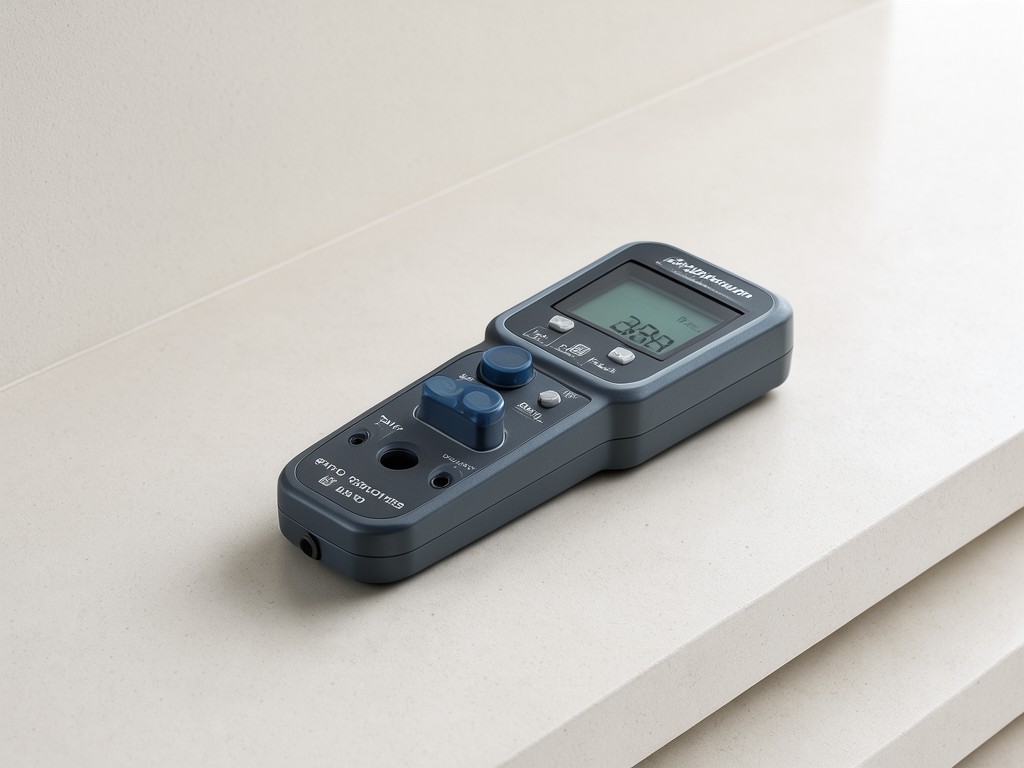
china digital earth ground tester price: What Buyers Should Check Before Ordering
The Problem Buyers Keep Paying For
Unit price and service life diverge the moment a tester leaves the loading dock. Two suppliers quoting the same specification — 0.01 Ω resolution, 2000 Ω range, CAT IV 600 V — can deliver units that behave differently after six months in a service van. The cheaper housing cracks at the battery door. The membrane keypad delaminates at the corner where technicians grip it. The LCD contrast fades at -10 °C, and the reference resistor inside the calibration circuit drifts because the board was never conformal-coated.
Distributors who chase the lowest FOB number end up absorbing warranty returns, re-calibration fees, and the quiet loss of repeat orders when electricians stop trusting the brand. Private-label buyers face the same risk: their logo sits on a housing that yellows under UV, on a keypad that sticks after one wet season, on a tester that fails the next ISO 9001 audit because the calibration certificate references a standard the factory never actually ran.
Construction Method and Its Effect on Consistency
The housing is injection-moulded from either virgin ABS or a PC/ABS blend. Virgin ABS costs less but embrittles after 18 months of UV exposure; the blend holds impact strength and colour stability for three to five years in the field. The overmould — TPE or TPU — is a separate shot. If the shut-off line is not held to ±0.05 mm, moisture wicks into the battery compartment and corrodes the contact springs within weeks.
Inside, the mainboard sits on standoffs moulded into the lower shell. No screws through the PCB means no stress cracks when the unit hits concrete. The test terminals are brass, nickel-plated then gold-flashed. Thickness matters: 0.8 µm gold survives 5000 insertion cycles; 0.2 µm wears through in a single season of daily use. The display is a segment LCD with LED backlight, bonded to the front bezel with optically clear adhesive. Delamination starts at the corners if the adhesive cure schedule is shortened to save cycle time.
Housing Grade Trade-Off
Virgin ABS: lower tooling cost, faster cycle, but UV yellowing at 12–18 months. PC/ABS blend: 15–20 % higher resin cost, 3–5 s longer cooling, but retains Izod impact and colour delta E < 2 after 3000 h QUV. Choose by warranty period you must honour.
Terminal Plating Decision
0.2 µm gold flash passes incoming inspection but fails salt-spray at 96 h. 0.8 µm survives 500 h. The delta is $0.12 per terminal set. On a 5000-unit run that is $600 — less than one warranty claim shipment. Specify the thickness in the drawing, not the purchase order.
Assumptions Buyers Should Stop Making
Two suppliers quoting the same specification does not mean they build the same product. The data sheet lists ranges and accuracies; it does not list the front-end amplifier slew rate, the ADC reference stability, or the firmware filter window that rejects 50/60 Hz noise. A tester that reads 4.7 Ω on a quiet bench can read 12 Ω on a live substation ground grid if the notch filter is 2 Hz wide instead of 0.5 Hz.
Unit price settles the question only after the bill of materials is locked. A buyer who negotiates 3 % off the housing but accepts a 0.2 µm terminal plating saves $0.18 per unit and spends $40 per return on freight, labour, and replacement stock. The same buyer who specifies the plating, the conformal coat, and the QUV-tested blend pays $1.20 more per unit and reduces field failures by an order of magnitude.
Working as a Production Partner, Not a Catalogue Supplier
Private-label programmes stall when the buyer treats the factory as a print shop. Artwork on the overlay is the last step, not the first. The overlay material — polyester or polycarbonate — must match the housing coefficient of thermal expansion, or the graphic bubbles at 50 °C. The adhesive must survive IPA wipe-downs without edge lift. The window for the LCD must have a hard-coat anti-glare layer, or reflections make the reading unreadable in direct sun.
We review the artwork file against the tooling drawing before the overlay die is cut. We supply a first-article overlay on a production housing for visual and dimensional approval. We run a 50-unit pilot batch through the full test sequence — calibration, environmental soak, drop, dielectric withstand — before the production PO is released. That pilot costs three days and $800 in tooling amortisation. It prevents a 5000-unit recall.
How Consistency Is Held Across Batches
Every batch starts with a golden reference board — a calibrated resistor network traceable to a national metrology institute. The production test jig measures each unit at 0.1 Ω, 10 Ω, 100 Ω, and 1000 Ω using the reference board. Limits are ±(1 % + 2 digits) at 23 °C ± 2 °C. Units outside are segregated for rework or scrap; they never ship.
Environmental screening: 10 % of each batch cycles -20 °C to +55 °C, 95 % RH, 48 h. Post-soak, the same four-point check repeats. Drift > 0.5 % triggers a lot hold. Drop test: 1 m onto concrete, six faces, two units per batch. Housing crack or display failure stops the line. Salt spray: 96 h, 5 % NaCl, terminals powered. Corrosion product > 5 % surface area fails the lot.
| Inspection Point | Method | Acceptance Criteria | Frequency |
|---|---|---|---|
| Four-point accuracy | Golden reference board, 23 °C ± 2 °C | ±(1 % + 2 digits) at 0.1, 10, 100, 1000 Ω | 100 % |
| Thermal/humidity soak | -20 °C to +55 °C, 95 % RH, 48 h | Post-soak drift ≤ 0.5 % | 10 % per batch |
| Mechanical shock | 1 m drop onto concrete, 6 faces | No housing crack, display functional, accuracy held | 2 units per batch |
| Salt spray | 96 h, 5 % NaCl, terminals energised | Corrosion ≤ 5 % terminal area | 1 unit per batch |
| Dielectric withstand | CAT IV 600 V, 5 s ramp | No breakdown, leakage < 1 mA | 100 % |
Capacity, Tooling and Scheduling
The housing mould is a four-cavity family tool (upper, lower, battery door, terminal cover). Steel is P20 pre-hardened, good for 300,000 shots. Tooling cost amortises at $0.08 per unit over 50,000 units. Below 10,000 units the per-unit tooling share jumps to $0.40 — often the difference between a viable private-label margin and a loss.
Lead time from PO to first shipment: 35 days if the overlay die exists, 45 days if new artwork requires die cut. Repeat orders from approved tooling: 21 days. We hold safety stock of PC/ABS blend and terminal brass for 60 days of forecasted demand. Custom colours add 7 days for masterbatch qualification. Bluetooth module variants share the same housing; only the PCB and firmware change, so mixed-model runs are possible on the same SMT line.
| Parameter | Standard Range | Custom Option Impact |
|---|---|---|
| MOQ (private label) | 1000 units | 500 units with $1.20/unit surcharge |
| First-article lead time | 35 days | +7 days per custom colour or overlay die |
| Repeat order lead time | 21 days | 14 days with blanket PO and safety stock |
| Tooling amortisation | $0.08/unit at 50k | $0.40/unit at 10k; buyer may own tool |
| Calibration certificate | Included, 4-point | Accredited lab cert +$8/unit, 3 days |
Packing, Marking and Freight Configuration
Each tester ships in a moulded EVA insert inside a printed cardboard sleeve. The sleeve carries the private-label barcode, model, serial range, and calibration date. Ten sleeves per master carton, double-wall corrugated, burst strength 275 psi. Carton dims 420 × 330 × 280 mm, gross weight 14.2 kg. Pallet: 48 cartons (480 units), 1100 × 1100 mm, stretch-wrapped, corner boards, strapped. Container load: 20 pallets in a 40 ft HC, 9600 units.
Desiccant sachet (2 g silica gel) inside each sleeve. Humidity indicator card in every fifth carton. Drop-test validated per ISTA 2A. Labels comply with retailer GS1-128 requirements. Country of origin marked on sleeve and moulded into housing. No lithium battery — ships as non-dangerous goods.
Ready to Review Artwork and Branding?
Send your logo files, colour specs, and target MOQ. We return a marked-up overlay drawing, a housing colour chip, and a costed BOM within two business days.
Start the artwork review →