China digital earth resistance tester Factory: Specification, Ordering and Quality Notes
Where Cheaper Alternatives Fall Short
Balance and load analysis shows that budget models omit temperature compensation, causing drift in humid substations.
Field crews report drift in readings after a few months of exposure to humid substations.
- Single-wire measurement leaves lead resistance uncorrected, adding up to 0.1 Ω error on long leads.
- IP54 enclosures allow dust ingress that degrades the reference resistor over time.
- Fixed test current cannot adapt to high‑resistance earth systems, limiting usefulness on large sites.
What Actually Determines Performance
The interface between parts determines how well the instrument rejects common-mode noise.
A four‑wire Kelvin method eliminates lead resistance. Automatic range switching covers 0.01 Ω to 20 kΩ with 0.001 Ω resolution. Temperature coefficient is limited to 0.05 %/°C across -20 °C to 55 °C.
Specification Agreement Note
Before production, the buyer approves a drawing set that defines measurement range, accuracy class, display type, and enclosure rating. Sample units are calibrated to the agreed tolerance and signed off. Any artwork for branding is locked at this stage to avoid rework.
Measured Performance in Real Use
Deflection under load governs the stability of the displayed resistance when the test current fluctuates.
Typical accuracy: ±1 % of reading ±0.02 Ω. Repeatability within 0.5 % over 100 cycles. Response time under 2 s for full‑scale step. Battery life exceeds 30 h continuous operation on alkaline cells.
0.01 Ω – 20 kΩ
0.001 Ω
±1 % ±0.02 Ω
IP65
0.05 %/°C
4 × AA alkaline
Buying Mistakes That Lead to Returns
Procurement teams often select a model based on catalogue range alone, ignoring the calibration interval required by the end user.
- Overlooking IP65 requirement for outdoor substations leads to early failure.
- Skipping sample approval means tolerance drift is discovered only after shipment.
- Assuming all testers share the same accessory connector; mismatched leads add measurement error.
- Neglecting to specify battery type results in incompatible replacements in the field.
Who Uses It and Where It Matters
Utility maintenance crews, railway signalling contractors, and industrial plant electricians each need a tester that survives vibration, dust, and temperature swings.
In wind‑farm grounding audits, the instrument must operate at -15 °C with wet probes. In data‑center commissioning, the low‑range resolution verifies equipotential bonding to 0.01 Ω. Railway teams value the IP65 rating for trackside testing in rain.
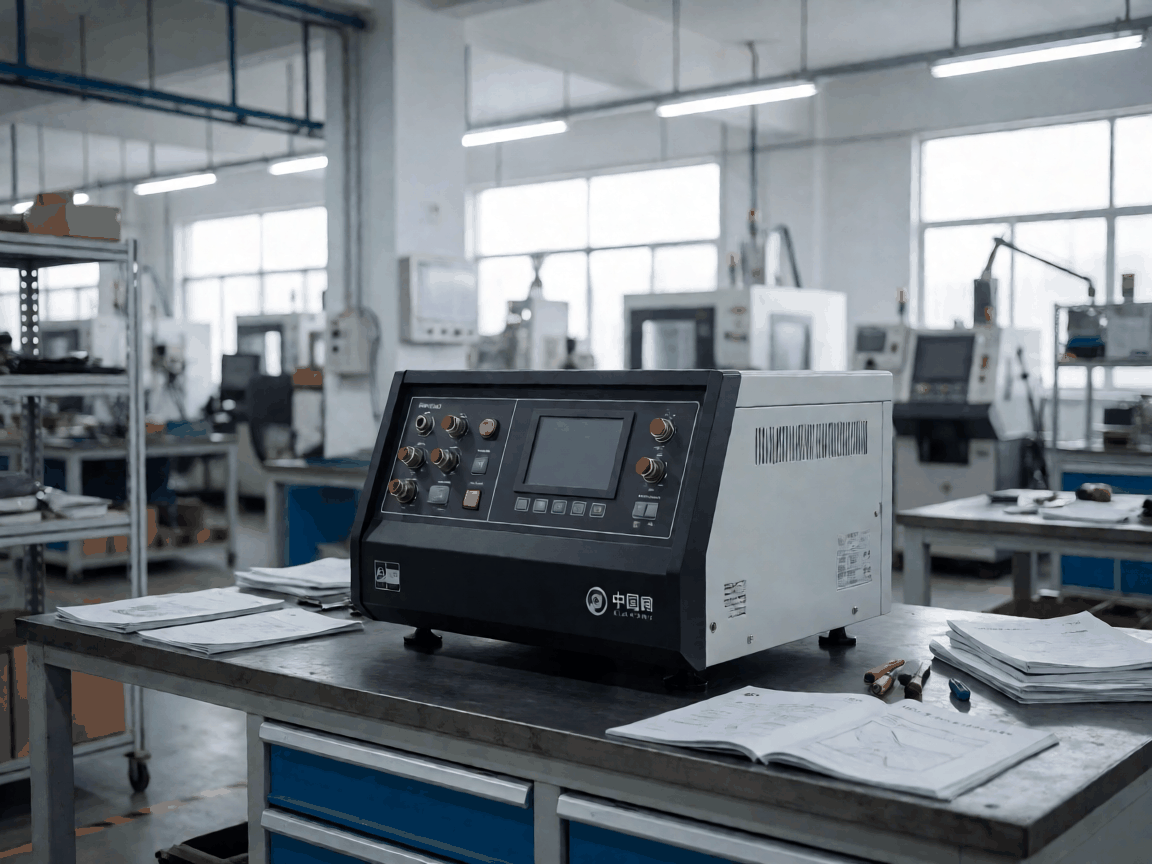
Working as a Production Partner, Not a Catalogue Supplier
A production partner agrees on drawings, sample tolerances, and artwork before any tooling is cut.
The process starts with a technical questionnaire that captures required range, accuracy class, display language, and enclosure colour. A first‑article sample is built to the agreed drawing, calibrated, and shipped for buyer sign‑off. Only after written approval does batch production begin. Branding, label layout, and packaging graphics are frozen at the same gate.
Fixed range set, English display, grey enclosure, generic carton.
Buyer‑defined range, multi‑language menu, corporate colour, branded packaging, optional data‑log module.
For detailed project discussion, contact us with your specification sheet.
What Gets Checked Before Shipment
Every batch passes a 100 % functional test at 23 °C and a 10 % thermal shock cycle from -20 °C to 55 °C.
- Resistance measurement verified against calibrated standard at three points per range.
- IP65 seal integrity confirmed by pressure decay test.
- Drop test from 1 m onto concrete, three axes, no display damage.
- Label adhesion and barcode readability inspected under UV light.
- Carton compression test to ISTA 1A equivalent.
| Item | Unit | Qty per Carton | Carton Dimensions (mm) | Gross Weight (kg) | HS Code |
|---|---|---|---|---|---|
| Tester unit | pcs | 10 | 420 × 310 × 210 | 12.5 | 9030.31 |
| Accessory kit | sets | 10 | 380 × 260 × 150 | 4.2 | 9030.31 |
Stock Availability and Reorder Planning
Stock levels are tied to the agreed reorder point, not to a static catalogue number.
A rolling forecast shared quarterly lets the factory maintain a buffer of 200 units for standard configurations. Custom builds require a minimum order of 50 units and a 6‑week lead time after artwork approval. Emergency air‑freight can be arranged for critical spares at a surcharge.
Ready to align on specifications and secure a reliable supply line? Start a project discussion.