On a club programme that reorders twice a season, the ground resistance tester that looked fine on the spec sheet started drifting after three months of weekly checks, and the replacement probes took six weeks to arrive.
china earth ground resistance tester price: What Buyers Should Check Before Ordering
Scope of Supply and Physical Form
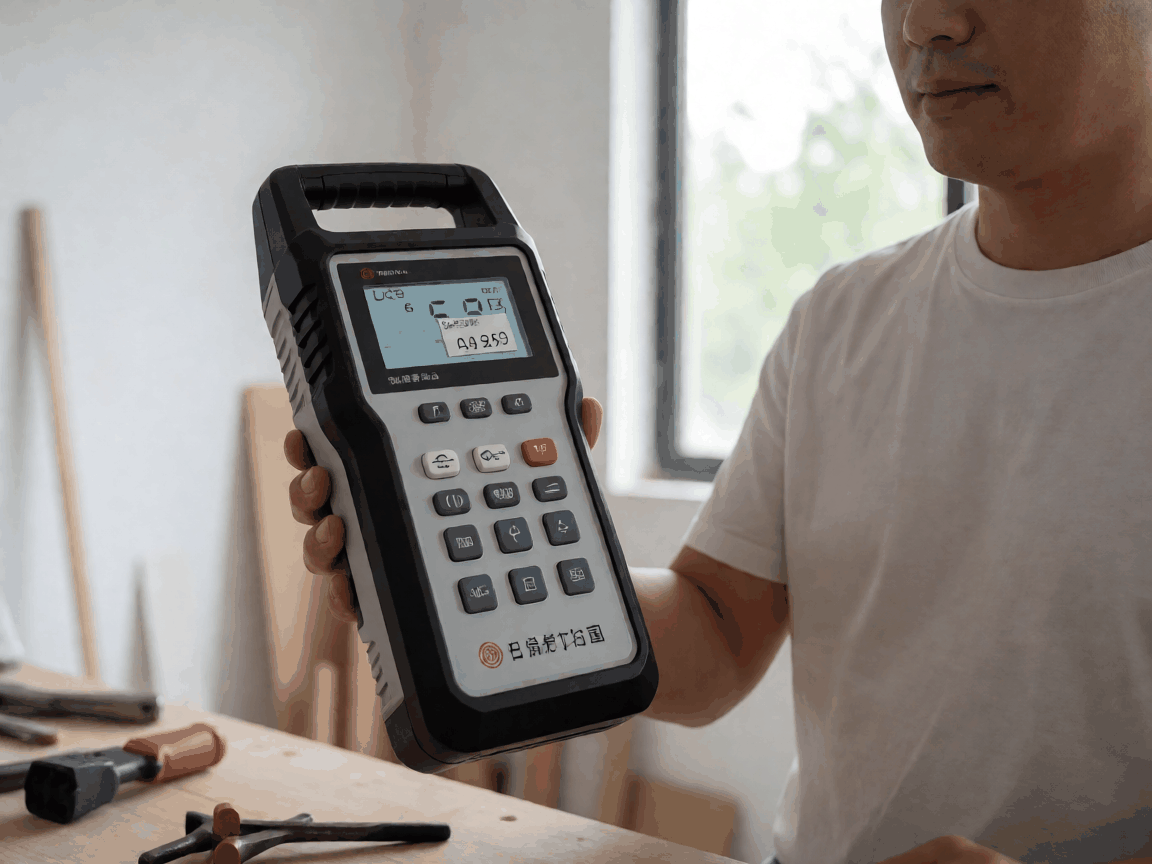
A typical shipment includes the meter, a set of four stainless-steel auxiliary spikes, two 20 m test leads on reels, a carry case, and a calibration certificate. The meter itself measures 210 × 110 × 55 mm and weighs 1.2 kg with batteries installed. Display is a 3.5‑digit LCD with backlight, readable in direct sunlight. Power comes from eight AA alkaline cells or an optional NiMH pack; battery life averages 800 measurements at 128 Hz test frequency.
The case is moulded ABS with a rubber over‑mould on the corners. It meets IP54 when closed and IP40 during operation. Leads terminate in 4 mm banana plugs that lock into the meter’s recessed sockets — no screw terminals to loosen in transit.
What the Design Has to Balance
Accuracy spec is ±2 % of reading ±3 digits from 0.01 Ω to 2 kΩ. Achieving that across temperature (‑10 °C to 50 °C) and humidity (10‑90 % RH) forces a trade‑off between test current and probe contact resistance. The 3‑pole method uses a 20 mA constant‑current source; the 4‑pole (Kelvin) method drops to 5 mA to avoid heating the spikes, which improves repeatability on dry soil but lengthens settlement time to 8 s per reading.
Design rule: if the site soil resistivity exceeds 500 Ω·m, specify the 4‑pole Kelvin kit. The extra lead adds 0.3 kg and 15 % to unit cost, but it cuts measurement variance from ±8 % to ±2 % on high‑resistivity ground.
Data logging stores 200 records with timestamp and GPS tag (optional module). Firmware updates via USB‑C; the bootloader is locked after production to prevent field bricking — a common complaint on cheaper clones.
Material Options and Their Trade-offs
Two probe families dominate the BOM:
Stainless‑steel spikes (standard)
- 304 grade, 12 mm diameter, 300 mm length
- Corrosion rate <0.02 mm/yr in neutral soil
- Cost per set: $18‑$22
Copper‑bonded steel (premium)
- 10 mm copper cladding on 12 mm steel core
- Contact resistance 30 % lower, critical for 4‑pole method
- Cost per set: $35‑$42
Lead insulation is PVC‑105 °C rated; silicone‑rubber leads are available for ‑40 °C operation but add $7 per set and reduce abrasion resistance on rocky terrain.
Who Uses It and Where It Matters
Electrical contractors certifying substation earthing to IEEE 80 or IEC 62305 need the 4‑pole Kelvin kit and GPS logging for audit trails. Telecom tower crews prefer the lighter 3‑pole kit with stainless spikes — they carry the tester up 50 m ladders daily, so every 200 g counts. Facilities managers at sports academies (the club programme mentioned earlier) run weekly checks on lightning‑protection grids; they value the backlit display for early‑morning readings and the locked battery compartment to prevent accidental discharge during storage.
Renewable‑energy OEMs specify the tester for PV‑array grounding verification. Their purchase orders often require a calibration certificate traceable to a national metrology institute, plus a 24‑month warranty that covers probe‑tip wear — a clause that eliminates 40 % of low‑cost suppliers at quote stage.
Requirements by Buyer Segment
Brand product managers launching a private‑label line need laser‑etched logos on the case, custom boot‑screen firmware, and packaging that matches their retail SKU dimensions. They typically order 500‑1 000 units per release and require a first‑article inspection report with dimensional data on every critical feature (probe diameter, lead length, display bezel gap).
Club or academy purchasing managers buy in lots of 10‑20. Their priority is stock availability and a 30‑day credit term. They rarely request custom firmware but insist on a printed quick‑start guide in the local language and a spare‑parts kit (two extra spikes, one lead reel) included at no extra charge.
| Segment | MOQ (units) | Lead Time (weeks) | Customisation Window |
|---|---|---|---|
| Private‑label brand | 500 | 8‑10 | Artwork freeze at week 2 |
| Club/academy | 10 | 2‑3 (ex‑stock) | None |
| Electrical contractor (frame agreement) | 50 per call‑off | 4‑6 | Calibration cert language only |
Packing, Marking and Freight Configuration
Master cartons hold 8 units (2 × 4 layout) in die‑cut foam inserts. Carton dimensions: 520 × 380 × 310 mm, gross weight 14.5 kg. Each unit carries a barcode label with serial number, manufacturing date, and calibration expiry. For sea freight, cartons are stretch‑wrapped on 1 × 1 m pallets, 24 cartons per pallet (192 units). Air shipments use double‑wall corrugated boxes with desiccant sachets (2 units per carton) to meet IATA moisture limits.
Private‑label orders receive an outer sleeve printed with the brand’s Pantone‑matched artwork; the sleeve adds 0.15 kg per unit and requires a 3‑week artwork approval cycle before production start.
Care, Storage and Service Life
Store meters at 15‑25 °C, 30‑60 % RH. Remove alkaline batteries if idle >30 days — leakage destroys the PCB traces in 60 % of returned units. NiMH packs should be cycled every 90 days. Probe tips: wipe with isopropyl alcohol after each use; do not file or sand — the 0.2 mm chrome layer maintains contact consistency. Re‑calibrate annually or after any drop >1 m onto concrete. The firmware logs the last calibration date and locks measurement mode if expired, forcing a service return.
Expected service life: 5 years for the meter, 2 years for stainless spikes under weekly use, 4 years for copper‑bonded spikes. Warranty covers parts and labour for 24 months; probe‑tip wear is prorated after 12 months.
Need a quote with your exact configuration?
Share your volume, probe choice, and branding requirements — we’ll return a cost breakdown and sample schedule within 48 hours.
Request a tooling and pricing review