Specifying OEM earth ground resistivity tester Factory for Wholesale and OEM Orders
Option Comparison by Usage Level
Unit price settles the question only after the test environment and duty cycle are defined. A utility crew driving stakes into frozen clay needs a different instrument than a telecom contractor verifying rod resistance on a rooftop.
Entry‑Level Field Unit
Two‑wire/three‑wire switchable, 0.01 Ω–2 kΩ range, ±2 % accuracy, monochrome LCD, IP54, alkaline cells. Suited for residential grounding checks and periodic inspection.
- Fixed 128 Hz test frequency avoids interference from power harmonics
- Stake‑less clamp accessory optional for live‑line checks
- Calibration certificate traceable to national lab included
Professional Data‑Logging Model
Four‑wire Wenner method, 0.001 Ω–20 kΩ, ±1 % accuracy, color TFT with backlight, IP67, Li‑ion pack, Bluetooth/USB, 10 000‑point memory. Targets substation commissioning and soil‑resistivity surveys.
- Selectable frequencies 94 Hz, 105 Hz, 128 Hz, 256 Hz for noisy sites
- Auto‑ranging with manual override for high‑resistivity soil
- Firmware upgrade via USB‑C; GPS tagging option
Specification Callout
The professional model’s 4‑wire Kelvin connection eliminates lead‑resistance error below 0.1 Ω — critical when certifying low‑impedance grids. Entry units cannot meet IEEE 81.2 repeatability without this topology.
Requirements by Buyer Segment
Unit price and service life diverge sharply between a private‑label brand selling through electrical wholesalers and an OEM embedding the tester in a switchgear package. The former prioritizes shelf appeal, multilingual packaging, and a 2‑year warranty; the latter demands fixed BOM, 10‑year spare‑parts commitment, and IEC 61557‑5 compliance tested at the factory.
| Buyer Segment | Critical Requirement | Factory Deliverable |
|---|---|---|
| Private‑label distributor | Retail‑ready packaging, CE/UKCA/RoHS marks, barcode labels | Custom carton die‑cut, multilingual quick‑start guide, drop‑tested master pack |
| Switchgear OEM | Fixed firmware revision, controlled BOM, 10‑year repair SLA | Locked‑down component list, annual audit rights, consignment spares stock |
| Rental fleet operator | Ruggedized housing, field‑replaceable leads, rapid calibration turnaround | Reinforced corners, quick‑disconnect lead sockets, on‑site cal kit option |
Each segment drives a different tooling decision. Private‑label runs justify a dedicated silk‑screen fixture for logos; OEM runs require a programmable test jig that flashes the exact firmware hash the customer qualifies.
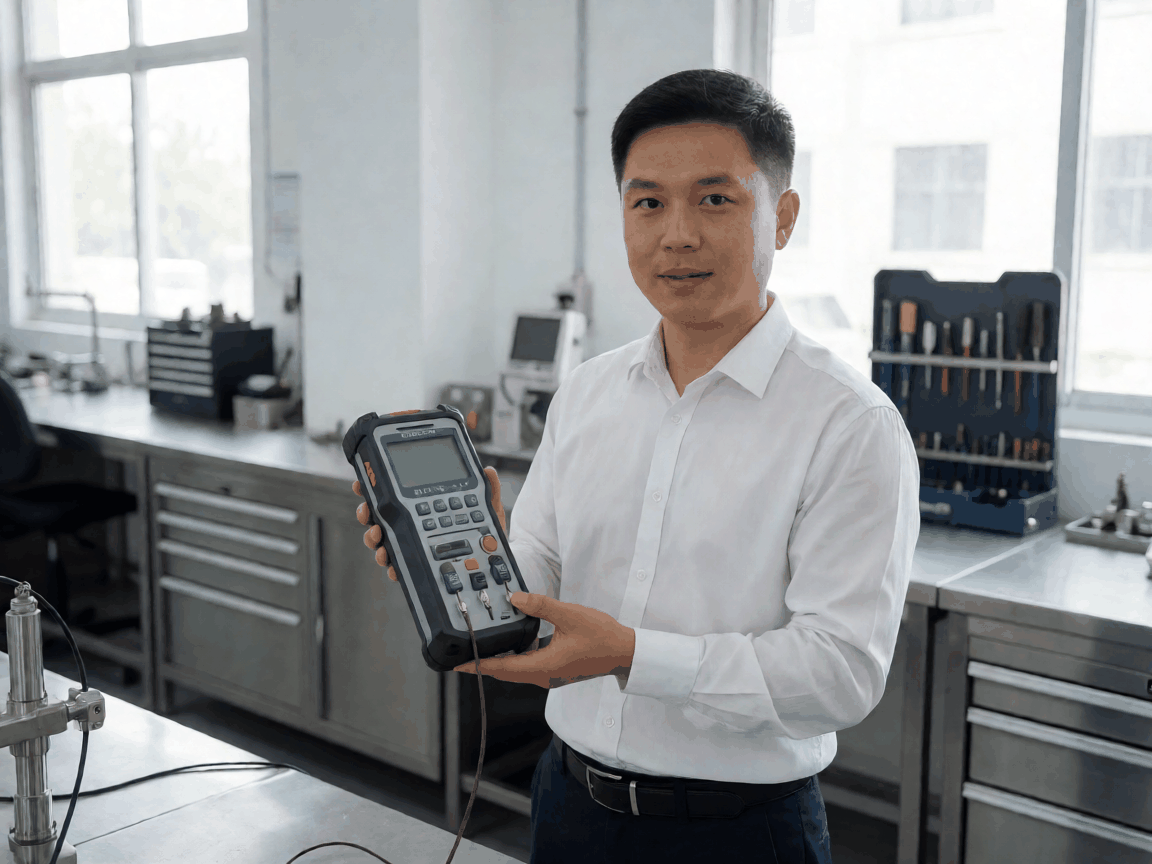
Working as a Production Partner, Not a Catalogue Supplier
Before comparing quotations, verify the factory’s ability to hold ±1 % accuracy across a 0 °C–50 °C thermal cycle without recalibration. That capability lives in the PCB layout, the reference resistor selection, and the firmware compensation tables — not in a datasheet footnote.
- Design‑for‑test: every board passes automated 5‑point resistance verification before enclosure
- Process capability: Cpk ≥ 1.33 on measurement‑accuracy parameter at final test
- Change control: ECO system with customer notification for any component substitution affecting spec
We maintain a dedicated OEM cell with its own SMT line, potting station, and climate chamber. That cell runs your SKU exclusively once volume crosses 500 units/month, amortizing fixture cost into the unit price. Below that threshold, shared‑line production applies with a higher per‑unit overhead but no tooling charge.
Capacity, Tooling and Scheduling
Complaint patterns from field returns drive our capacity planning. The top three failures — lead‑wire fracture at the strain relief, LCD contrast loss below ‑10 °C, and battery‑contact corrosion — map directly to tooling choices and in‑process inspections.
| Usage Condition | Typical Complaint / Failure | Preventive Specification |
|---|---|---|
| Daily stake driving in rocky soil | Lead insulation cuts, conductor fatigue at clamp | 10 mm² silicone‑insulated leads, reinforced strain relief, 5 000‑cycle flex test |
| Overnight storage in unheated vehicle | LCD ghosting, slow refresh, contrast loss | Wide‑temp TFT (‑20 °C–70 °C), heater trace option for ‑30 °C operation |
| Humid coastal substation | Battery‑compartment corrosion, leakage current | Gold‑plated contacts, conformal coating on PCB, IP67 seal validated by 1 m/30 min immersion |
Our line runs two shifts, 16 hours/day, with a maximum throughput of 1 200 units/week for the professional model. Tooling lead time: 4 weeks for custom enclosure silk‑screen, 6 weeks for dedicated test‑jig firmware. First‑article inspection (FAI) adds 5 business days after PPAP approval.
Ordering, Tooling and Lead‑Time Questions
Frequently Asked Questions
- What is the minimum order quantity for custom branding? 200 units for silk‑screen logo; 500 units for custom boot‑screen firmware.
- Can we supply our own test leads and stakes? Yes, provided they pass our incoming inspection (dimensional, hi‑pot, flex). We’ll quote a reduced BOM cost.
- How do you handle calibration certificates for each unit? Every tester ships with an ISO 17025‑traceable certificate. Batch‑level data uploaded to your portal via API.
- What are the payment terms for new OEM partners? 30 % deposit at tooling release, 70 % before shipment. Irrevocable L/C accepted for orders > $50 k.
- Can we schedule a factory audit before first order? We welcome audits; available slots within 3 weeks. Virtual audit with live camera walk‑through also offered.
Lead‑time scales with volume: 4 weeks for 200–500 units, 6 weeks for 500–2 000, 8 weeks above 2 000 with dedicated cell allocation. Expedite fees apply only when capacity is fully booked.
Ready to Define Your Specification?
Share your volume forecast, target markets, and any regulatory mandates. We’ll return a detailed quotation with tooling amortization schedule, FAI plan, and a sample‑approval timeline.
Start a project discussion