wholesale digital earth ground impedance tester price list: Specification, Ordering and Quality Notes
What This Product Is and Where It Fits
Field crews need a tester that survives daily drops, moisture, and temperature swings while delivering repeatable ground‑impedance readings for utility, construction, and maintenance contracts.
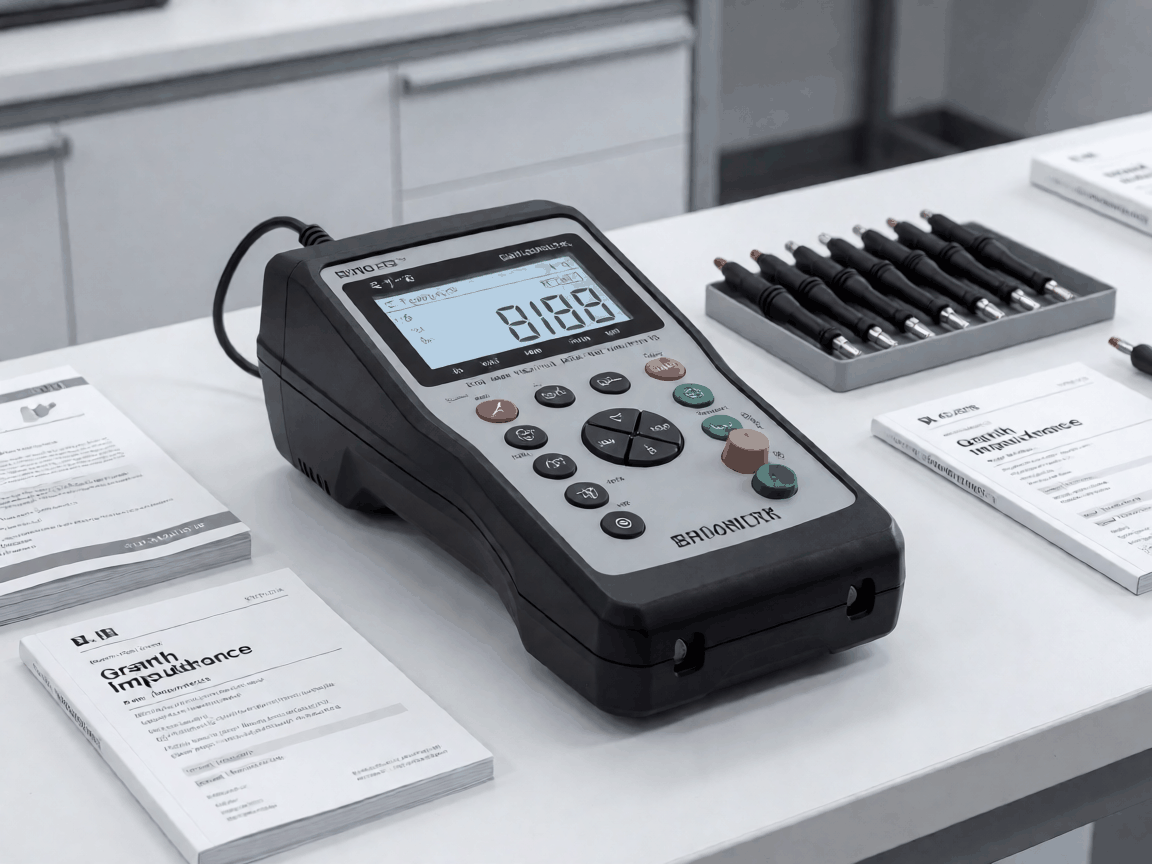
The instrument family covers handheld and bench‑mount units with measurement spans from 0.1 Ω to 2 kΩ, selectable test frequencies, and data‑logging options that integrate with asset‑management software.
What the Design Has to Balance
Design choices trade off measurement range against probe durability, display readability against power draw, and enclosure rigidity against weight limits for single‑hand operation.
Critical spec rule: calibration interval cannot exceed 12 months; drift beyond 0.5 % of reading triggers mandatory recalibration before next shipment.
| Feature | ABS Enclosure | Polycarbonate Enclosure |
|---|---|---|
| Impact resistance (IK rating) | IK07 | IK08 |
| Operating temperature range | ‑10 °C to 50 °C | ‑20 °C to 60 °C |
| Weight (typical) | 420 g | 380 g |
| UV stability (hours) | 500 | 1000 |
How It Performs in Use
In operation the instrument displays impedance in ohms with 0.01 Ω resolution, updates at 2 Hz, and stores up to 10 000 records with timestamp and GPS tag when the optional module is fitted.
Battery life reaches 30 hours on alkaline cells; the rechargeable pack delivers 22 hours and recharges in 3 hours via USB‑C.
Size, Weight and Specification Range
The catalog lists models from 0.1 Ω to 2000 Ω, test currents of 10 mA to 200 mA, and compliance with IEC 61557‑5 for earth‑test accuracy.
| Operating Condition | Common Failure Mode | Spec Guard |
|---|---|---|
| Wet‑ground testing in rainy season | Probe corrosion causing drift >1 % | Gold‑plated probe tips, IP67 rating |
| High‑vibration environment (construction sites) | Loose PCB connectors, display flicker | Conformal‑coated board, vibration‑tested to 5 g RMS |
| Extended storage before deployment | Battery self‑discharge, calibration loss | Low‑self‑discharge cells, 12‑month calibration seal |
Requirements by Buyer Segment
Procurement teams prioritize calibration traceability, batch‑level documentation, and consistent lead times for repeat orders.
- Utility contractors require IEC 61557‑5 test certificates shipped with each lot.
- Distributors need retail‑ready packaging with multilingual quick‑start guides.
- OEM brands request firmware lock‑down to prevent field re‑configuration.
OEM and ODM Programme Structure
OEM partners can select firmware variants, custom splash screens, and probe‑connector pinouts; minimum order for custom firmware is 200 units.
ODM projects follow a three‑stage gate: concept review, prototype validation (including IEC 61010‑1 safety), and production release with first‑article inspection.
Request OEM/ODM quotationCapacity, Tooling and Scheduling
Production runs of 500 units ship in six weeks from purchase‑order confirmation; tooling for custom enclosures adds two weeks and a one‑time NRE of $3,200.
Monthly capacity ceiling is 4 000 units across both handheld and bench lines; peak‑season buffer of 15 % is maintained for expedited orders.
Care, Storage and Service Life
Storage at 25 °C preserves battery chemistry; avoid prolonged exposure above 40 °C to prevent electrolyte leakage.
Probe tips should be cleaned with isopropyl alcohol after each field session; replace tip set every 500 measurements or when contact resistance exceeds 0.02 Ω.
Service‑life expectation: 7 years for enclosure, 3 years for rechargeable pack, 5 years for probe assembly under typical daily use.
Ready to Review Specifications?
Share your target price tier and volume forecast; we will return a detailed spec sheet with lot‑to‑lot consistency data.
Start specification review