wholesale digital earth ground resistance tester supplier - Bulk Supply and Specification Guide
Where electrical safety validation is non-negotiable — substation commissioning, lightning protection audits, telecom tower earthing — the tester's measurement integrity determines whether a site passes inspection or triggers costly rework. A 0.01 Ω resolution on a 20 Ω range sounds adequate until field crews encounter 0.5 Ω contact resistance on auxiliary spikes, and the instrument's noise floor swamps the reading. Buyers who specify by catalogue accuracy alone discover the gap when test reports get rejected by the utility or the insurance assessor.
Material choice starts with the conditions the product will meet: IP67 enclosures that survive monsoon-season padmount work, test leads with 1.5 mm² copper that won't fracture after six months of coiling, and a display contrast ratio readable at 80,000 lux direct sunlight. The procurement spec that omits these details receives units that pass incoming inspection but fail the first week on site. This guide walks through the specification decisions that separate a reliable fleet instrument from a warranty liability.
Scope of Supply and Physical Form
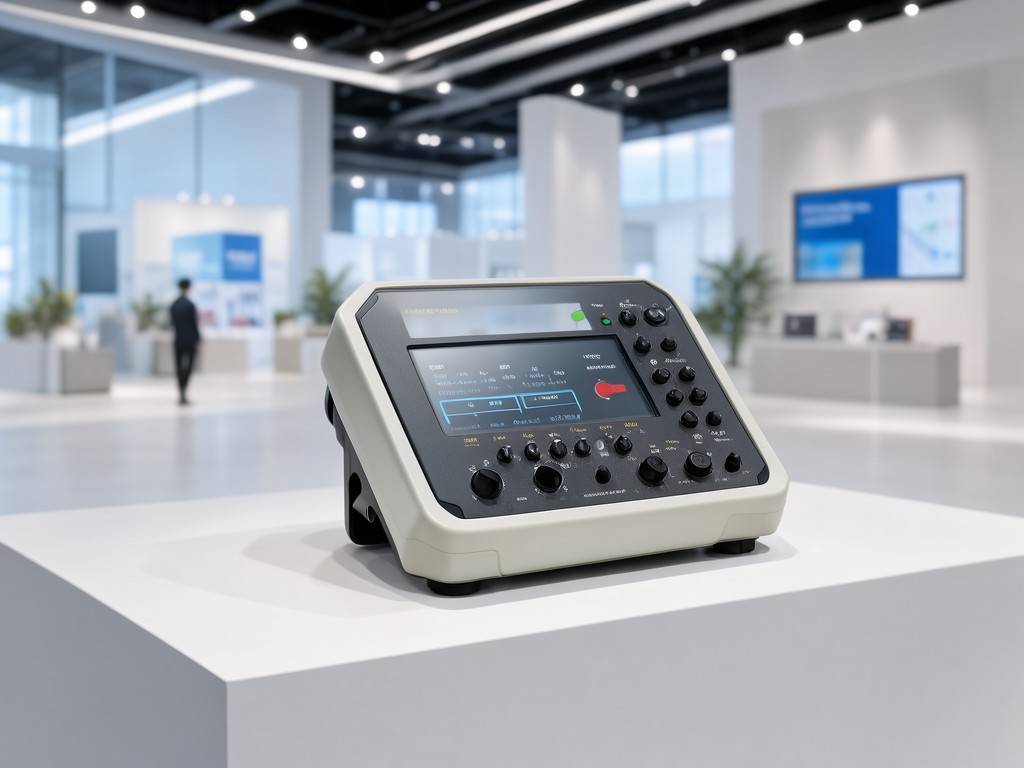
A standard wholesale configuration ships as a kit: the tester body, four 15 m test leads on retractable reels, four auxiliary earth spikes (300 mm stainless steel), a calibration certificate traceable to a national metrology institute, and a hard-shell transit case rated to ISTA 2A. Optional add-ons include a clamp-on current transformer for stakeless measurement, Bluetooth data logging module, and a magnetic hanging strap for panel-mount operation. Private-label buyers typically rebrand the case lid, the boot-screen logo, and the certificate header; the measurement firmware and PCB layout remain factory-standard to preserve calibration validity.
| Parameter | Entry Tier | Field Tier | Reference Tier |
|---|---|---|---|
| Measurement range (Ω) | 0.01 – 2,000 | 0.001 – 20,000 | 0.0001 – 200,000 |
| Basic accuracy (±% rdg + dgt) | 2 % + 3 | 1 % + 2 | 0.5 % + 1 |
| Test current (max) | 20 mA | 200 mA | 250 mA (pulsed) |
| IP rating | IP54 | IP67 | IP67 |
| Weight with batteries (kg) | 0.85 | 1.2 | 1.6 |
| Battery life (measurements) | 2,000 (alkaline) | 3,500 (Li-ion pack) | 5,000 (Li-ion pack) |
Where Cheaper Alternatives Fall Short
Budget models commonly use a single-frequency 128 Hz injection signal. In soils with strong capacitive coupling — clay, high water table, or buried metallic services — the measured impedance includes a reactive component that the instrument interprets as resistance error of 15–30 %. Field-tier and reference-tier units add dual-frequency (94/105 Hz or 111/128 Hz) or full-frequency sweep (40–250 Hz) with vector processing to separate resistive and reactive parts. The firmware overhead adds $12–18 BOM cost but eliminates the callbacks where a crew re-drives spikes three times because "the numbers don't make sense."
Lead-wire resistance compensation is another silent failure point. Entry-tier testers specify 4-wire Kelvin measurement but omit automatic lead-resistance nulling; the operator must manually short the leads and press a zero button before every test. In rain or with gloved hands, that step gets skipped, adding 0.2–0.5 Ω of uncompensated lead resistance — enough to push a 5 Ω reading out of tolerance for a 10 % spec. Factory-calibrated auto-null circuits cost $3.50 in additional ASIC area and save an average of 90 seconds per test location.
Calibration Interval Reality
Manufacturers quote 12-month calibration cycles. Utility procurement specs often demand 6-month intervals for instruments used on protection-system commissioning. The drift budget: 0.1 %/°C temperature coefficient on the reference resistor network, plus 0.05 %/year ageing. A unit stored in a 45 °C vehicle cab for three months accumulates ~0.15 % drift before first use — half the annual allowance. Specify temperature-compensated reference networks (0.02 %/°C) if the fleet lives in service trucks.
What the Design Has to Balance
Construction options diverge as soon as weight matters. A 250 mA pulsed test current requires a 470 μF low-ESR capacitor bank and a MOSFET H-bridge rated for 50 A peak — adding 180 g and 12 mm of PCB thickness. The reference tier carries this penalty to drive 100 mA through 500 Ω of spike resistance (dry sand, rocky terrain). The field tier caps at 200 mA into 200 Ω, acceptable for clay and loam. The entry tier's 20 mA limit suffices for supplemented earthing ( Ufer ground, building steel) where spike resistance rarely exceeds 50 Ω. Matching the tier to the dominant soil resistivity of the service territory avoids over-specifying 40 % of the fleet.
Display technology trades sunlight readability against power budget. Transflective memory-LCD (320 × 240, 1:150 contrast) draws 0.8 mW and remains legible at 100,000 lux but costs $22 more than a standard STN LCD with LED backlight (80 mW average). For crews working 8-hour shifts in open switchyards, the transflective option pays back in one season of avoided "shield the screen with my body" delays. Indoor substation teams rarely justify the premium.
Option Comparison by Usage Level
Utility Commissioning Crew
Daily use, mixed soil, regulatory reporting. Needs dual-frequency, auto-null, IP67, transflective display, Li-ion pack, Bluetooth logging. Reference tier. 5-year MTBF target.
Unit cost delta vs entry: +$320. Avoided re-test labour: ~$1,200/year/crew.
Electrical Contractor / Maintenance
Weekly use, known soil profiles (commercial/industrial sites). Single-frequency with manual null acceptable if spike resistance <100 Ω. Field tier with IP67, standard LCD, alkaline backup. 3-year MTBF target.
Unit cost delta vs entry: +$140. Calibration simplicity reduces downtime.
Customisation Options and Their Limits
Private-label programmes allow: case colour (Pantone-matched ABS/PC blend), boot-logo bitmap (128 × 64 px, 1-bit), certificate header layout, and default language selection (up to 12 stored). Firmware modifications — adding a custom pass/fail threshold alarm, changing the frequency set, or integrating a proprietary data format — require a minimum 500-unit MOQ and a 12-week validation cycle including EMC re-test (IEC 61326-1) and safety re-certification (IEC 61010-1). The factory maintains a firmware branch per OEM; merging upstream bug fixes into custom branches adds 3–4 weeks per release.
Lead-length customisation is the most frequent request. Standard 15 m reels cover 90 % of applications. Extending to 25 m adds 0.35 Ω loop resistance (1.5 mm² copper) and 1.2 kg per reel; the auto-null circuit compensates up to 2 Ω, so 25 m is within spec. Beyond 30 m, voltage drop at 200 mA test current exceeds the compliance voltage of the H-bridge on field-tier units — measurement fails with "LOOP OPEN" error. Reference tier supports 50 m via higher compliance voltage (48 V vs 24 V). Specify reel length at order; retrofitting requires replacing the entire lead-set assembly, not just the wire.
What Gets Checked Before Shipment
Every unit undergoes a 14-point automated test sequence on a calibrated test bench: reference resistor verification at 0.1 Ω, 1 Ω, 10 Ω, 100 Ω, 1 kΩ, 10 kΩ (traceable to 0.01 % standard resistors); injection frequency accuracy ±0.5 Hz; test current waveform THD <2 %; display pixel mapping; keypad actuation force 1.2 ±0.3 N; battery compartment contact resistance <50 mΩ; IP67 dunk test (1 m, 30 min) on a 5 % AQL sample; drop test 1 m onto concrete (6 faces, 3 edges, 1 corner) on first article of each production lot; vibration sweep 10–500 Hz, 2 g, 30 min per axis; thermal cycle −20 °C to +55 °C, 4 cycles with powered measurement at extremes; ESD immunity ±8 kV contact, ±15 kV air; conducted/radiated emissions scan (CISPR 11 Class A). Units failing any point are segregated for root-cause analysis; the lot ships only after corrective action verification.
Calibration certificates are printed from the test bench software, not handwritten. Each certificate includes: serial number, firmware version, test date, ambient temperature/humidity, reference standard serial numbers and due dates, as-found/as-left data at all six test points, measurement uncertainty budget (typically ±0.8 % at 1 Ω, ±1.2 % at 1 kΩ, k=2), and the technician's stamp. Digital PDF copies are uploaded to the buyer's portal within 4 hours of palletisation.
Export Packaging and Handling Protection
Master cartons hold 4 kits in die-cut polyethylene foam inserts (density 45 kg/m³, 25 mm wall thickness) that isolate each hard case from shock and vibration. The foam pockets are profiled to cradle the tester's corners — the most fragile point for PCB-mount BNC connectors. Carton burst strength: 275 psi (ECT 44). Pallet configuration: 24 master cartons (96 kits) on a 1200 × 1000 mm Euro pallet, stretch-wrapped with 23 μm LLDPE film, edge-protected with 3 mm corner boards. Gross weight per pallet: 380 kg. Container loading: 20 pallets per 40 ft HC (1,920 kits).
Humidity control: each master carton includes two 50 g silica gel sachets (indicating type) and a humidity indicator card (10/20/30 % RH). For sea freight exceeding 30 days, the factory offers vacuum-sealed barrier bags (aluminium laminate, MVTR <0.01 g/m²/day) at $1.80 per kit — recommended for tropical routes where container rain cycles can condense inside standard wrap. Desiccant saturation is the leading cause of display fogging and reference-resistor drift claims within the first 90 days.
Ready to Validate Your Spec?
Send us the soil resistivity range, crew count, and regulatory reporting format. We'll return a tier recommendation, a calibrated sample for field trial, and a landed-cost model that includes calibration logistics and spare-lead stocking.
Request a tooling and specification review