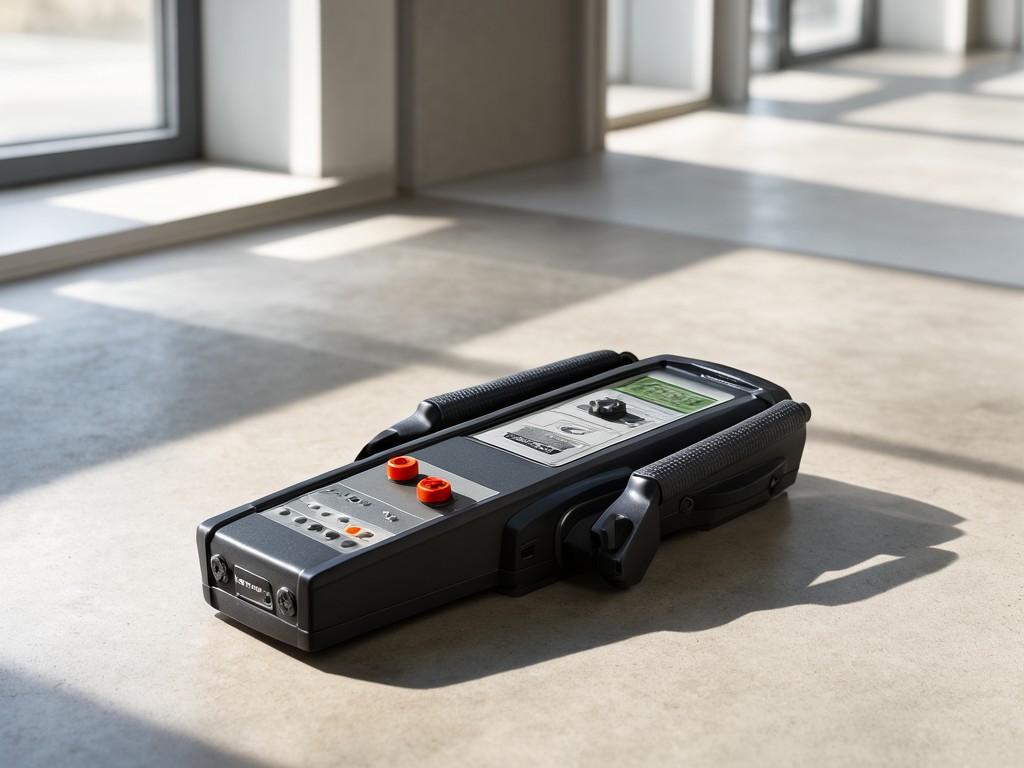
wholesale ground resistance tester factory: What Buyers Should Check Before Ordering
The core trade-off on every ground resistance tester order sits between measurement range flexibility and field durability. A four-pole model with selectable test frequencies covers more site conditions but adds switching relays and firmware complexity that can drift after repeated voltage transients. A fixed-frequency three-pole unit survives rougher handling but forces the technician to drive longer stakes on high-resistivity soil. Decide which failure mode the end user would rather explain to their safety auditor.
What the Design Has to Balance
When a brand extends an existing range, the first spec the procurement team locks is usually the measurement span — 0.01 Ω to 2 kΩ covers 90 percent of commercial and industrial earthing checks, but utility substation work often demands 20 kΩ or higher. That extra decade pushes the front-end amplifier into a lower noise floor, which means a larger PCB, more shielding cans, and a battery pack that lasts half as many tests per charge.
The second decision is ingress protection. IP54 passes a dust chamber and a splash test; IP65 survives a 12.5 mm nozzle from three metres. The gasket groove depth, screw boss placement, and membrane keypad adhesive all change. A factory that only quotes IP54 will ship a lighter, cheaper unit, but the first rainy-season service call on a construction site erases the margin difference.
How It Performs in Use
During a private-label launch with a fixed ship date, the buyer often discovers that the tester's stated accuracy — typically ±2 % rdg ±3 dgt at 23 °C — was verified on a bench with clean, low-inductance leads. In the field, 50 m of coiled test wire adds series inductance that shifts the phase angle enough to add another 1–2 % error on the 200 Ω range. The fix is not tighter calibration; it is a four-wire Kelvin clip set and a firmware compensation table that the factory burns in before the units leave the line.
Battery chemistry matters more than capacity. Alkaline AA cells drop below the 4.5 V minimum for the boost converter at −10 °C, while a 7.4 V Li-ion pack with a built-in heater maintains full current down to −20 °C. The heater adds 15 g and $3.20 BOM, but it prevents the "tester dead on arrival" claim that triggers a full container return.
Specification Range and Customisation Limits
Moving from sample orders to container loads changes what the factory can commit to on the datasheet. The table below reflects the parameters that stay stable across a 500-unit production run versus those that shift with component lot.
| Parameter | Standard Range | Customisation Window | Lot-to-Lot Drift |
|---|---|---|---|
| Measurement span | 0.01 Ω – 2 kΩ / 20 kΩ | Upper limit selectable per SKU | ±0.5 % of range |
| Test current (max) | 20 mA / 200 mA / 1 A | Fixed per hardware variant | ±5 % |
| Accuracy (23 °C) | ±2 % rdg ±3 dgt | ±1 % rdg ±2 dgt on 2 kΩ range only | ±0.3 % rdg |
| IP rating | IP54 | IP65 with silicone over-mould | None if gasket compression controlled |
| Operating temperature | −10 °C to 50 °C | −20 °C to 55 °C with Li-ion + heater | ±2 °C on low-temp threshold |
| Data storage | 999 records | 8 k records + Bluetooth LE | Firmware revision dependent |
| Safety category | CAT III 300 V / CAT IV 150 V | CAT IV 300 V with creepage redesign | Fixed by PCB layout |
Comparing Two Standard Configurations
The factory runs two baseline platforms. Configuration A is a three-pole, fixed 128 Hz test frequency, alkaline-powered, IP54 enclosure. Configuration B adds selectable frequencies (94 Hz, 105 Hz, 111 Hz, 128 Hz), four-pole Kelvin measurement, Li-ion pack with heater, IP65 over-mould, and Bluetooth LE. The BOM delta is $28. The warranty delta is 18 months versus 36 months because the relay bank in Configuration B sees hot-switching transients that degrade contact resistance over time.
If the end user is a facilities crew testing the same building grounds quarterly, Configuration A pays for itself in two calibration cycles. If the crew moves between substations, construction sites, and telecom towers, the frequency selectivity in Configuration B prevents re-test requests from the utility inspector — each avoided revisit saves roughly $450 in labour and fuel.
Matching the Product to the Buyer's Need
A procurement officer for a national electrical contractor looks at total cost of ownership: unit price plus calibration interval plus replacement lead rate. The factory data shows that test leads with strain-relieved, gold-plated banana plugs last 1,200 insertion cycles before contact resistance exceeds 50 mΩ. Standard nickel-plated plugs hit that limit at 350 cycles. The $1.80 per lead upgrade cuts annual accessory spend by 60 %.
For a private-label brand targeting the rental fleet market, the priority is cosmetic durability. A polycarbonate/ABS blend with 15 % glass fibre resists the yellowing and stress-cracking that appear on pure ABS after six months of UV exposure and solvent wipe-downs. The factory can mould the brand logo into the battery door at no tooling charge if the order exceeds 300 units.
Segment-Specific Requirements
Utility substation crews need CAT IV 300 V front-end withstand and a clamp-on selective measurement mode that isolates the tower ground from the overhead shield wire. That mode requires a current transformer with 0.5 % ratio accuracy up to 100 A — a component the factory sources from a single qualified vendor. Lead time on that CT is 14 weeks, so the buyer must lock the BOM at pilot-run stage.
Telecom tower contractors prioritize weight and one-handed operation. A sub-600 g tester with a pistol-grip trigger that fires a 3-second measurement cycle reduces technician fatigue on a 50-tower day. The trade-off is a smaller display (2.4″ versus 3.5″) and no on-board PDF report generation; the app handles reporting via Bluetooth.
Packing, Marking and Freight Configuration
Each tester ships in a moulded EVA insert inside a double-wall corrugated carton (ECT 48) rated for 1.2 m drop on six faces. The master carton holds four units and measures 420 × 330 × 280 mm at 3.8 kg gross. Pallet configuration is 12 cartons per layer, 5 layers high on a 1200 × 1000 mm Euro pallet — 240 units per pallet, 1,150 kg including pallet weight.
Labels must carry the CE mark, WEEE symbol, batch code (YYWW-SSSS), and a scannable QR code linking to the calibration certificate PDF. The factory prints the QR at final test; the buyer supplies the URL template. No lithium battery handling labels are needed for the alkaline Configuration A; Configuration B requires UN3481 Class 9 labels and a Shipper's Declaration.
Ordering, Tooling and Lead-Time Questions
What is the minimum order quantity for a custom frequency table? 200 units. The firmware branch is compiled per SKU; the factory flashes and verifies each board in-circuit, which adds 45 seconds per unit but eliminates the "wrong frequency selected" field complaint.
Can we supply our own test leads and stakes? Yes, provided the lead resistance stays below 50 mΩ per metre and the stake diameter fits the 12 mm chuck. The factory will run a first-article resistance check on 10 samples from your batch at no charge.
How is calibration traceability documented? Every unit leaves with a factory calibration certificate referencing IEC 61557-5 and IEC 61010-1, traceable to a national metrology institute via the lab's ISO 17025 scope. The certificate PDF is the one linked by the QR code on the label.
What changes if we need CAT IV 300 V instead of CAT IV 150 V? The PCB creepage and clearance distances increase from 4 mm to 8 mm, forcing a 15 % larger board outline. That moves the display connector, so the bezel mould tool must be modified — a $4,500 tooling charge and a 6-week lead-time adder.
Request a pilot batch with your frequency table and lead set. The factory ships five calibrated units within 15 working days of BOM lock.
Request Sample Shipment