Custom omicron ct analyzer transformer tester Solution: Specification, Ordering and Quality Notes
Design Constraints Behind the Specification
On a utility testing programme that reorders calibrated kits twice a year, the first question is always measurement repeatability after transport. A CT analyser that reads 0.15% ratio error on the bench but drifts to 0.4% after a week in a service truck fails the only test that matters: the next site acceptance.
The specification starts with the IEC 61869 accuracy class the buyer must hold — typically 0.2 or 0.5 for revenue metering, 1.0 for protection CTs. From that target, the allowable noise floor, temperature coefficient, and long-term drift budget are derived. Every customisation decision traces back to that chain: if the enclosure rating drops from IP65 to IP54 to save cost, the humidity-induced leakage path on the secondary injection terminals adds 0.05% uncertainty at 90% RH. That 0.05% may be the difference between pass and fail on a 0.2 class job.
Specification rule: The declared accuracy class at reference conditions (23°C ±2°C, 45-75% RH) must be maintained across the full operating temperature range (-25°C to +55°C) after vibration profile IEC 60068-2-64. Any custom enclosure, connector, or cable set that cannot demonstrate this by type-test report is not a variant — it is a different product.
What Can Be Customised and What Cannot
Moving from sample orders to container loads changes the customisation conversation. The core measurement engine — voltage/current acquisition, DSP chain, calibration constants — is fixed. What shifts per project:
- Test voltage/current range extension: adding 20 kV AC withstand or 100 A primary injection requires a separate high-voltage module with its own calibration traceability.
- Connector families: 4 mm safety banana, LEMO 1B/2B, M12, or customer-specific proprietary plugs. Each connector change triggers a new EMC pre-compliance scan.
- Software test plans: automated IEC 61850 GOOSE/Sampled Value testing, custom report templates with utility logo and asset hierarchy, multi-language UI.
- Power supply: hot-swappable Li-ion (8 h runtime), 110/230 V AC module, 12-48 V DC vehicle adapter. Battery chemistry choice affects UN38.3 shipping classification.
- Ruggedisation level: standard IP65 carry case vs. MIL-STD-810H transit case with shock-mounted chassis and desiccant port.
What cannot change without a full re-type-test: the analogue front-end bandwidth (3 kHz standard, 10 kHz option), the 24-bit ADC architecture, the internal reference stability (≤5 ppm/°C), and the safety clearance distances for CAT IV 600 V / CAT III 1000 V rating. These are locked by the base platform certification.
Usage Scenarios and Buyer Segments
During a private-label launch with a fixed ship date, the buyer segment defines the configuration more than the technical spec. Three typical profiles:
Utility Metering Division
Buys 20-50 units per order, two-year calibration cycle. Needs IEC 61869-11 compliance, automated pass/fail against utility template, and firmware update via secure portal. Failure mode: calibration drift discovered at audit — traceability gap costs re-test of 500+ metering points.
Electrical Testing Contractor
Buys 5-10 units, rent-to-own model. Needs maximum voltage/current coverage in one box, quick-change test leads, and daylight-readable display. Failure mode: connector pin bent on site — no spare lead kit, job delayed, penalty clause triggered.
OEM Switchgear Integrator
Embeds analyser in factory test bay. Needs SCPI/Modbus TCP remote control, 19" rack mount, 24 V DC supply, and 10-year spare parts commitment. Failure mode: firmware incompatibility with test automation script after Windows update — production line down.
Working as a Production Partner, Not a Catalogue Supplier
The specification agreement process has four gates. Gate 1: buyer provides application questionnaire — CT types, voltage levels, accuracy class, environmental exposure, software integration needs. Gate 2: we return a configuration matrix with line-item pricing, lead-time per option, and a "frozen spec" column showing which choices lock the calibration certificate. Gate 3: first-article inspection at our lab — buyer witnesses or receives recorded test data (ratio error, phase displacement, knee-point, insulation resistance at 5 kV DC). Gate 4: production release with serial-numbered calibration certificates traceable to ISO 17025 lab.
Artwork and labelling follow the same gate. Front-panel overlay, carry-case badge, calibration label layout, and QR code linking to digital certificate — all approved on PDF proof before print tooling. A single typo on the voltage rating label triggers a recall; the gate prevents it.
Keeping Repeat Orders Supplied
Stock strategy is split by customisation tier. Tier 1 (standard IP65 case, 4 mm banana, 8 h battery, English/Chinese UI): 30 units in bonded warehouse, 2-week dispatch. Tier 2 (custom connectors, additional languages, custom test plans): 5-unit buffer per active project, 6-week lead time. Tier 3 (high-voltage module, rack mount, special ruggedisation): build-to-order, 10-12 weeks.
Firmware branch management is the hidden consistency risk. Every custom UI or test plan lives on a version-controlled branch. When the base platform gets a security patch or IEC 61850 edition update, we regression-test against all active branches before release. Buyers receive a quarterly firmware advisory — mandatory, optional, or deprecated — with one-click update via the analyser's WiFi or USB. No surprise incompatibility at site.
Packing, Marking and Freight Configuration
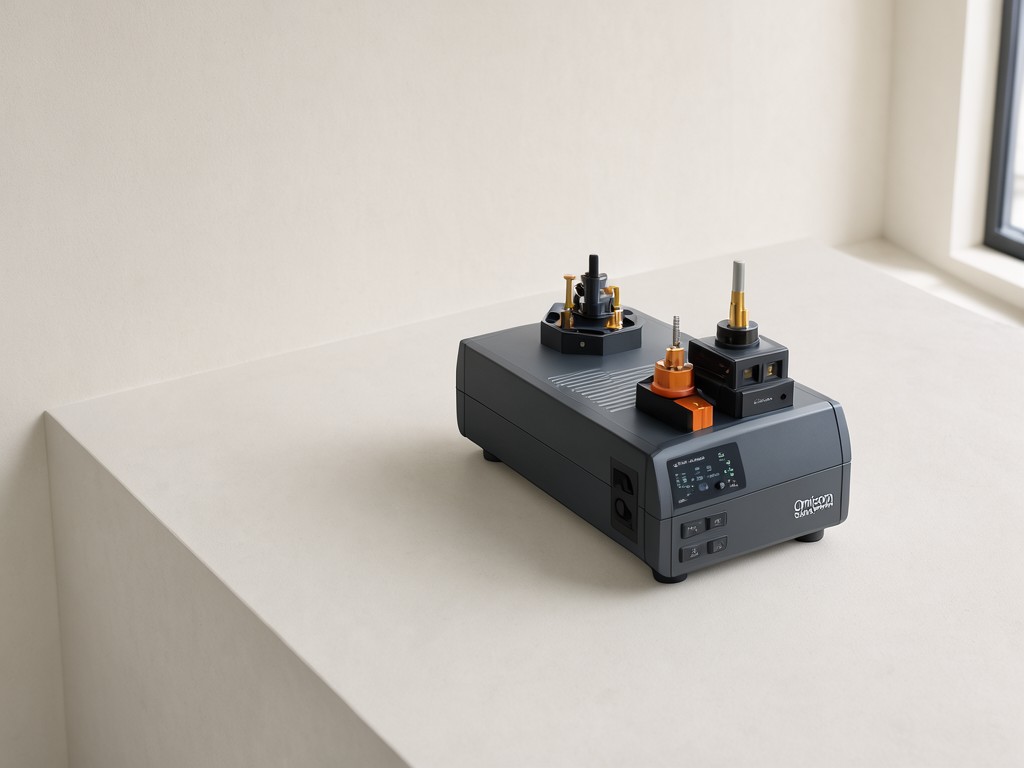
Each analyser ships in a custom-moulded polyethylene foam insert inside a polypropylene transit case (IP67, pressure-equalisation valve). The case carries: serial number barcode, calibration due date, UN38.3 battery marking if Li-ion, and handling icons (shock, tilt, stack limit). Outer carton is double-wall corrugated, ISTA 2A tested, with humidity indicator card and desiccant sachet.
For container loads, cases are palletised on ISPM-15 heat-treated pallets, stretch-wrapped with edge protectors, max 8 cases per layer, 4 layers. A packing list with serial numbers, calibration certificate numbers, and firmware version is taped to each pallet and emailed as CSV at dispatch. Air freight shipments use the same inner case but single-wall carton with "Lithium Ion Batteries — Cargo Aircraft Only" label when applicable.
Questions Buyers Ask Before Ordering
How is the calibration certificate structured for a custom configuration?
Each certificate lists the base platform accuracy, then every custom option with its individual contribution to expanded uncertainty (k=2). Example: "Base ratio error ±0.15% + custom 20 kV module ±0.05% + custom LEMO connector set ±0.02% = ±0.22% expanded uncertainty." The certificate references the type-test report number for each option.
What happens if a custom test plan needs modification after deployment?
Test plans are stored as encrypted XML on the analyser and in our version control. Buyer submits change request; we simulate on reference CT bank, return revised plan with version number and regression test log. Update is pushed via secure OTA or USB. No charge for safety-related fixes; functional enhancements are quoted per hour.
Can we qualify a second-source connector to reduce lead time?
Only if the second-source connector passes the same EMC immunity (IEC 61000-4-3, 20 V/m), vibration (10-500 Hz, 2 g), and temperature cycling (-40°C to +70°C, 10 cycles) as the primary. We run the qualification at our lab; cost and timeline are quoted per connector family. The original connector remains on the approved parts list for traceability.
What is the spare-parts commitment for a private-label build?
Minimum 7 years from last production date for PCBA, display, battery, connector, and case components. Critical ICs (ADC, FPGA, reference) are covered by manufacturer longevity programmes (typically 10-15 years). We hold 2% of projected annual volume as safety stock for each active private-label SKU.
Complaint Prevention Matrix
| Field Condition | Typical Failure Reported | Spec That Prevents It |
|---|---|---|
| Substation yard, 95% RH, 40°C | Leakage current on secondary terminals shifts ratio error by 0.3% | IP65 rated terminals with conformal-coated PCB, clearance ≥8 mm CAT IV |
| Service truck vibration, 500 km/day | BNC connector centre pin fractures; intermittent connection | LEMO 2B push-pull or M12 rated 50 g shock, cable strain relief moulded |
| Factory test bay, 24/7 duty cycle | Fan bearing fails at 18 months; thermal shutdown during test | Fanless chassis, thermal design power ≤35 W, heatsink rated 50°C ambient |
| Multi-site crew, mixed firmware versions | Test plan incompatible; results rejected by asset management system | Centralised firmware branch control, mandatory OTA before site deployment |
| Air freight with Li-ion battery | Shipment held at origin; UN38.3 report missing for custom pack | Pre-qualified battery modules only; UN38.3 report in shipping doc pack |
Ready to Define Your Configuration?
Send the application questionnaire — CT types, accuracy class, environmental profile, software needs. We return a frozen spec with line-item pricing, lead times, and the calibration certificate structure within three business days.
Start the specification review