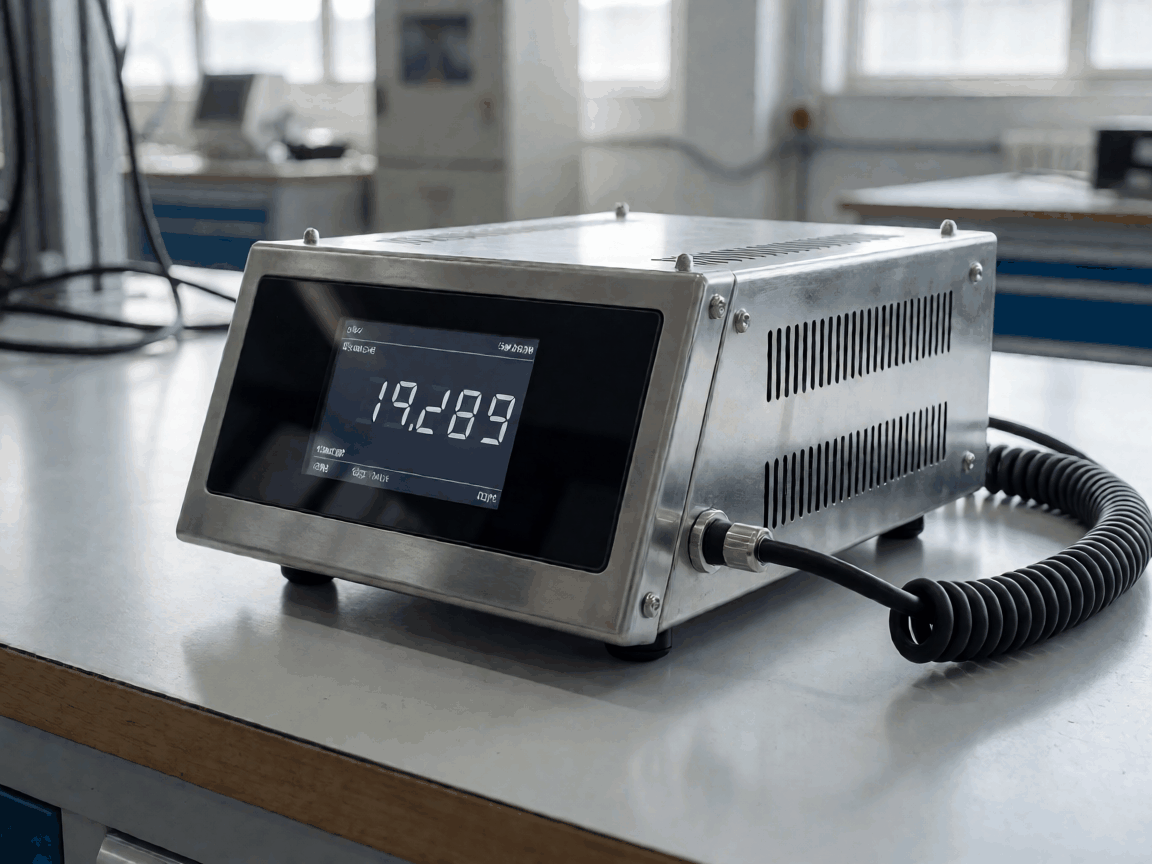
Specifying Factory Price transformer turns ratio tester Supplier for Wholesale and OEM Orders
The core trade-off on a turns‑ratio tester is ratio‑accuracy bandwidth versus excitation‑voltage flexibility. A unit that guarantees ±0.1 % ratio error across 0.8–10 kV excitation will cost 30–40 % more than one limited to 2 kV, but the wider range eliminates the need for a separate high‑voltage source when testing large power transformers on‑site.
Materials and Construction Trade-offs
Repeat loading drives the failure mode on the test‑lead connectors and the membrane keypad. Housings moulded from glass‑filled polycarbonate survive drop‑test sequences that crack standard ABS after three impacts, but the added 15 % weight penalty matters for technicians climbing substation structures. We specify 316 stainless‑steel connector shells with gold‑plated pins because nickel‑plated brass develops surface oxidation after six months in coastal humidity, causing intermittent contact resistance that skews phase‑angle readings by up to 0.05 °.
The display window is a frequent warranty item. Chemically‑tempered glass with anti‑reflective coating adds $12 per unit over polycarbonate, yet it prevents the scratching that makes sunlight readability unusable after one summer. For OEM buyers who re‑brand, the bezel can be laser‑etched with a logo without compromising the IP65 seal — provided the etching depth stays below 0.05 mm.
Buying Mistakes That Lead to Returns
The limiting factor is rarely the headline specification. Procurement teams often select a model based on a 0.1 % ratio‑accuracy claim at 1 kV excitation, then discover the same instrument drifts to 0.3 % at 5 kV because the internal voltage‑divider network uses 0.1 % resistors that self‑heat. Another common error is ordering a handheld unit with a 4 Ah battery for a utility crew that performs 30 three‑phase tests per day; the battery depletes before lunch, forcing a mid‑shift swap that adds 20 minutes of downtime per crew.
- Specifying a single‑phase tester for a fleet that services both single‑phase and three‑phase transformers — retrofit kits cost 60 % of a new three‑phase unit.
- Ignoring firmware‑update capability; units locked to a single revision cannot adopt the new IEC‑compliant vector‑group detection algorithm released last quarter.
- Choosing a fixed‑frequency (50/60 Hz) excitation source when the test plan includes variable‑frequency response analysis for winding‑deformation screening.
Customisation Options and Their Limits
Private‑label buyers typically request three changes: enclosure colour, boot‑screen logo, and a custom test‑report template. Colour matching to a Pantone reference adds a two‑week lead time because the moulder must purge and validate the new masterbatch; minimum order for a non‑standard colour is 200 units. The boot‑screen logo is stored in a 128 KB SPI flash sector — vector artwork must be supplied as monochrome SVG, 320 × 240 px, otherwise the rasteriser introduces artefacts that fail the factory visual inspection.
Report templates are limited to the fields exposed by the firmware API: ratio, phase angle, excitation voltage, current, tap position, and timestamp. Adding a calculated field such as “percentage impedance” requires a firmware branch, which triggers a full regression test cycle (four weeks) and a new type‑test report. For most OEMs, the faster route is to export raw CSV and post‑process in their own software.
Segment‑Specific Requirements
Utility maintenance crews prioritize weight and battery life; they accept ±0.2 % ratio accuracy if the unit stays under 2.5 kg and runs eight hours on a charge. Transformer manufacturers, by contrast, need ±0.05 % accuracy at up to 10 kV excitation for factory acceptance testing, so they specify benchtop models with forced‑air cooling and a 19‑inch rack mount option. Railway electrification teams require a 16.7 Hz excitation mode — not standard on most platforms — and a ruggedised carry case that meets EN 50155 vibration profiles. Each segment drives a different bill‑of‑materials tier; mixing them in a single SKU inflates cost for every buyer.
Inspection Items and Test Methods
Every production batch undergoes a five‑point verification before shipment. Ratio accuracy is checked against a calibrated reference transformer at three excitation levels (0.5, 2, 5 kV) and three tap positions. Phase‑angle error is measured with a calibrated phase‑shifter at 0.5 kV. Excitation‑voltage waveform distortion must stay below 2 % THD. Insulation resistance between test terminals and chassis is verified at 2.5 kV DC for 60 seconds. Finally, a functional self‑test runs the full measurement sequence on an internal reference winding to confirm firmware integrity.
| Inspection Item | Test Method | Acceptance Criterion |
|---|---|---|
| Ratio accuracy | Comparison with reference transformer at 0.5/2/5 kV | ≤ ±0.1 % (or per ordered class) |
| Phase‑angle error | Calibrated phase‑shifter at 0.5 kV | ≤ ±0.05 ° |
| Excitation THD | FFT analysis of output waveform | < 2 % total harmonic distortion |
| Insulation resistance | 2.5 kV DC, 60 s | ≥ 100 MΩ |
| Functional self‑test | Internal reference winding measurement | Pass/fail per firmware checksum |
Care, Storage and Service Life
Store units in the supplied hard case at 15–25 °C, 20–60 % RH. The lithium‑ion pack loses 15 % capacity per year if kept at full charge; for long‑term storage, discharge to 40 % and recharge every six months. Test leads should be coiled loosely — tight wraps fatigue the strain relief after 200 cycles. Calibration interval is 12 months for utility fleets, 24 months for factory‑only use; the firmware logs the last calibration date and locks measurements if the interval is exceeded, preventing out‑of‑tolerance data from entering asset‑management systems.
Ready to align specifications with your procurement targets? Start a project discussion and we’ll walk through the exact configuration, sample‑approval timeline, and volume‑tier pricing for your order.