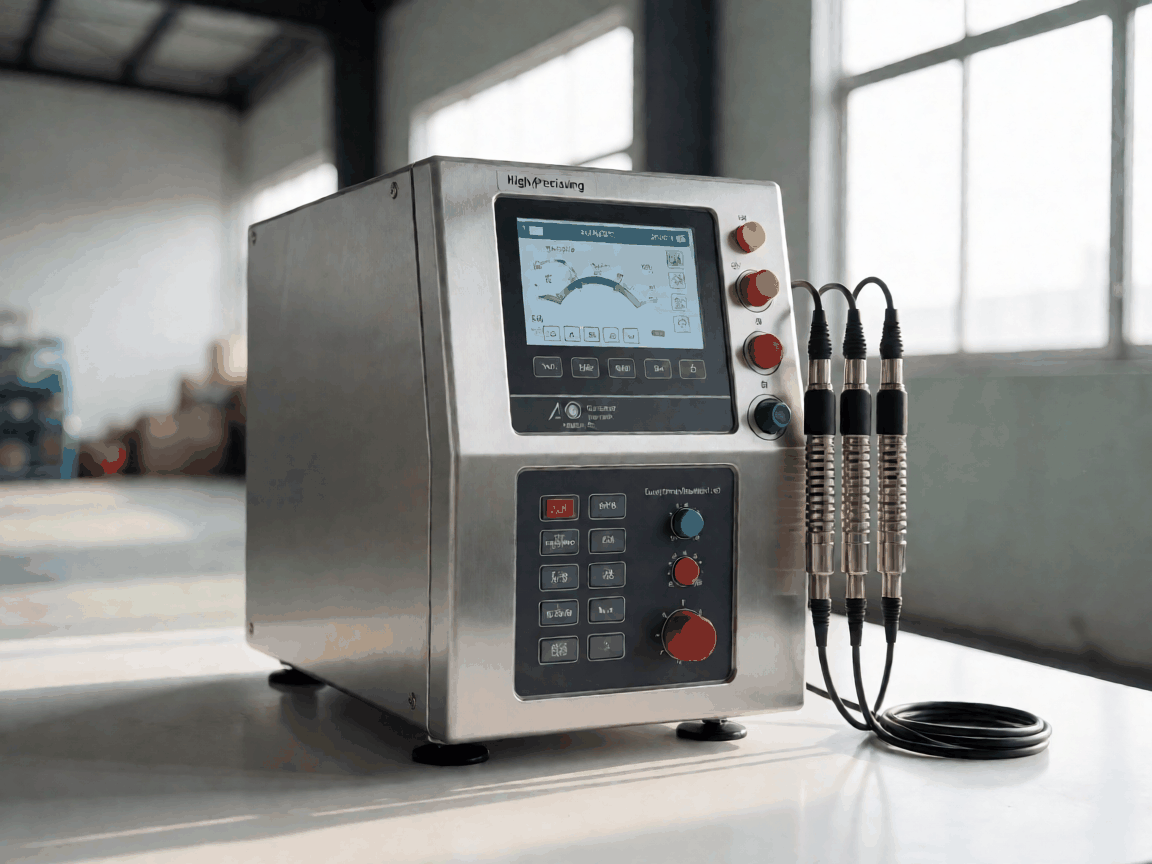
Specifying wholesale current transformer tester china factory for Wholesale and OEM Orders
What the Design Has to Balance
A current transformer tester that drifts in ratio accuracy after a few hundred operations forces the lab to re-calibrate, adding cost and downtime. The core trade‑off sits between the measurement bandwidth needed for 0.2S class CTs and the thermal budget of a handheld enclosure. If the analog front‑end draws more than 3 W, the battery pack cannot sustain a full 8‑hour shift without a recharge cycle that interrupts field work.
The voltage output stage must deliver up to 250 Vrms for knee‑point tests while keeping harmonic distortion below 0.5 % at 50 Hz. That requirement pushes the designer toward a Class‑D amplifier with a 200 kHz switching frequency, which in turn demands a four‑layer PCB with controlled impedance traces. The mechanical layout then has to accommodate the heatsink for the MOSFETs without exceeding the 2.5 kg weight limit that procurement sets for single‑operator portability.
Accuracy Class
0.2S / 0.5 / 1.0 selectable
Test Voltage Range
0 – 250 Vrms adjustable
Output Current
0 – 5 Arms (continuous)
Frequency
50/60 Hz ±0.01 Hz
Display
7‑inch 1024×600 IPS, glove‑touch
Battery Life
≥8 h at 25 °C, 2 A load
How to Choose Before Requesting a Quote
Before comparing quotations, the buyer must define the test voltage range, accuracy class, and whether the unit will be used in the field or on a bench. A utility that tests 500 kV class CTs needs the 250 Vrms knee‑point capability, while a meter‑shop calibrating revenue‑grade 0.2S units can specify 120 Vrms and save 15 % on the amplifier bill of materials.
The next decision is communication: USB‑C for laptop control, Ethernet for rack integration, or both. Adding a second interface adds two PCB layers and a connector that must pass the IP54 sealing test. If the buyer only ever connects via USB, the Ethernet PHY and magnetics become unnecessary cost.
Portable Field Unit
Weight 2.3 kg with battery, IP54 rated, 7‑inch sunlight‑readable screen.
Internal 10 Ah Li‑ion, hot‑swappable, charges to 80 % in 90 min.
Best for on‑site commissioning crews that move between substations daily.
Bench‑Top Lab Unit
Weight 6.8 kg, 19‑inch rack ears, forced‑air cooling, 10.1‑inch touch display.
Mains powered, 0.02 % ratio stability over 24 h, dual‑channel simultaneous test.
Suited for calibration labs that run batch tests overnight.
Quality Control and Batch Consistency
Batch‑to‑batch variation in excitation curve repeatability is the most common reason a test lab rejects a shipment. The factory runs a three‑stage gate: incoming inspection of the 24‑bit ADC and precision resistors, in‑process functional test at 25 °C and 40 °C, and a final 100‑hour burn‑in at full load while logging ratio error every 10 minutes.
Acceptance Rule
Ratio error must stay within ±0.03 % of the calibrated value across the 5 A–2000 A range for every unit in the lot. If a single unit exceeds ±0.05 %, the entire batch is held for root‑cause analysis.
Traceability is maintained by serializing each main board and linking the test log to the component lot numbers of the voltage reference and current shunt. The buyer receives a PDF certificate per unit plus a CSV summary for the whole purchase order.
Capacity, Tooling and Scheduling
Tooling lead time for the custom test fixture often dominates the overall schedule. The factory keeps a standard fixture for the 0.5 class portable unit, which allows a 4‑week turnaround from artwork approval to first article. Adding a bespoke voltage range or a non‑standard connector requires a new CNC‑machined fixture plate, adding 3–4 weeks and a one‑time tooling charge of $1,200–$1,800.
Customization Options
| Option | Range / Choices | Lead‑time Impact | Cost Delta |
|---|---|---|---|
| Accuracy class firmware | 0.2S, 0.5, 1.0 (selectable) | None | Included |
| Test voltage max | 120 V, 250 V, 500 V | +2 weeks for 500 V | +$350 for 500 V |
| Communication ports | USB‑C only, USB‑C + Ethernet, USB‑C + RS‑485 | +1 week per extra port | +$120 per port |
| Enclosure colour / label | RAL 7035, 9005, custom Pantone | +3 days for custom paint | +$0.80/unit |
Keeping Repeat Orders Supplied
Stock availability of the core measurement board determines how fast a repeat order can ship. The factory holds a 60‑unit buffer of the standard 0.5‑class portable board, enough to cover a typical 30‑unit monthly pull without touching the production line. If the buyer forecasts a step‑up to 100 units/month, the buffer is increased and a kanban signal triggers a 2‑week production cycle.
Size and Weight Range
| Model | Dimensions (mm) | Weight (kg) | Shipping Carton (units) |
|---|---|---|---|
| Portable 0.5‑class | 280 × 190 × 75 | 2.3 | 4 per master carton |
| Portable 0.2S‑class | 280 × 190 × 75 | 2.4 | 4 per master carton |
| Bench‑Top dual‑channel | 482 × 350 × 180 | 6.8 | 1 per carton, palletized |
Care, Storage and Service Life
Humidity above 80 % RH during storage corrodes the relay contacts, causing false polarity readings. The factory packs each unit with a desiccant sachet rated for 30 days at 40 °C/90 % RH and seals the carton with a moisture‑barrier bag. The buyer should store the testers in a climate‑controlled area (15–25 °C, ≤60 % RH) and rotate stock on a first‑in‑first‑out basis.
The lithium‑ion pack loses roughly 20 % capacity after 500 full cycles. For a crew that runs two 8‑hour shifts per day, that translates to a battery replacement every 18 months. The enclosure uses captive screws so the pack can be swapped in under five minutes without tools. Calibration interval is 12 months; the firmware includes a reminder that locks the test function until a certified lab re‑verifies the unit.
Questions Buyers Ask Before Ordering
What is the minimum order quantity for a custom voltage range? The MOQ is 20 units because the 500 V amplifier board requires a dedicated solder‑stencil run.
Can we supply our own calibration certificates? Yes, the factory will apply the buyer’s logo and certificate template after the final test, provided the artwork is approved 10 business days before production start.
How are firmware updates delivered? Updates are signed binaries pushed over USB‑C or Ethernet; the unit verifies the signature before flashing. A rollback slot preserves the previous version.
What freight terms are standard? EXW Shenzhen is the baseline; FOB Yantian adds $180 per pallet for export clearance and port handling. DDP can be quoted for North America and EU destinations.
Is there a warranty on the measurement accuracy? The factory warrants ratio error within spec for 18 months from shipment, provided the unit has not been opened, dropped, or operated outside the stated temperature range.
Request a Quotation Review
Send your specification sheet, annual volume forecast, and any custom branding files. The engineering team returns a detailed BOM cost breakdown and a production schedule within two business days.
Start a quotation review →