wholesale digital ct pt analyzer testing equipment china supplier: Specification, Ordering and Quality Notes
Consistency depends on the stability of the ratio error across the full temperature span; a drift of more than 0.2 % at 55 °C typically triggers warranty returns.
The interface between parts determines whether the communication module survives repeated hot‑plug cycles; connectors rated for 10 000 mating cycles keep the Modbus link alive in substation automation panels.
Measured Performance in Real Use
In field deployments the analyzer must hold its accuracy class 0.2 S from 5 % to 120 % of rated primary current while the burden stays below 15 VA. Units that exceed the phase‑displacement limit of 10 minutes at 50 Hz are the first to be pulled from service.
- Ratio error ≤ 0.2 % across –25 °C to +55 °C
- Phase displacement ≤ 10 min at nominal frequency
- Burden capability up to 15 VA without accuracy loss
- Sampling rate 4 kS/s, harmonic analysis up to 50th order
Size, Weight and Specification Range
The standard rack‑mount chassis measures 482 mm × 88 mm × 350 mm (W × H × D) and weighs 6.8 kg. A compact bench version reduces depth to 260 mm and drops weight to 4.2 kg, but the smaller heatsink limits continuous operation to 30 min at full load.
- Input voltage range 57.7 V – 400 V (phase‑to‑phase)
- Current input 0.05 A – 5 A (CT secondary)
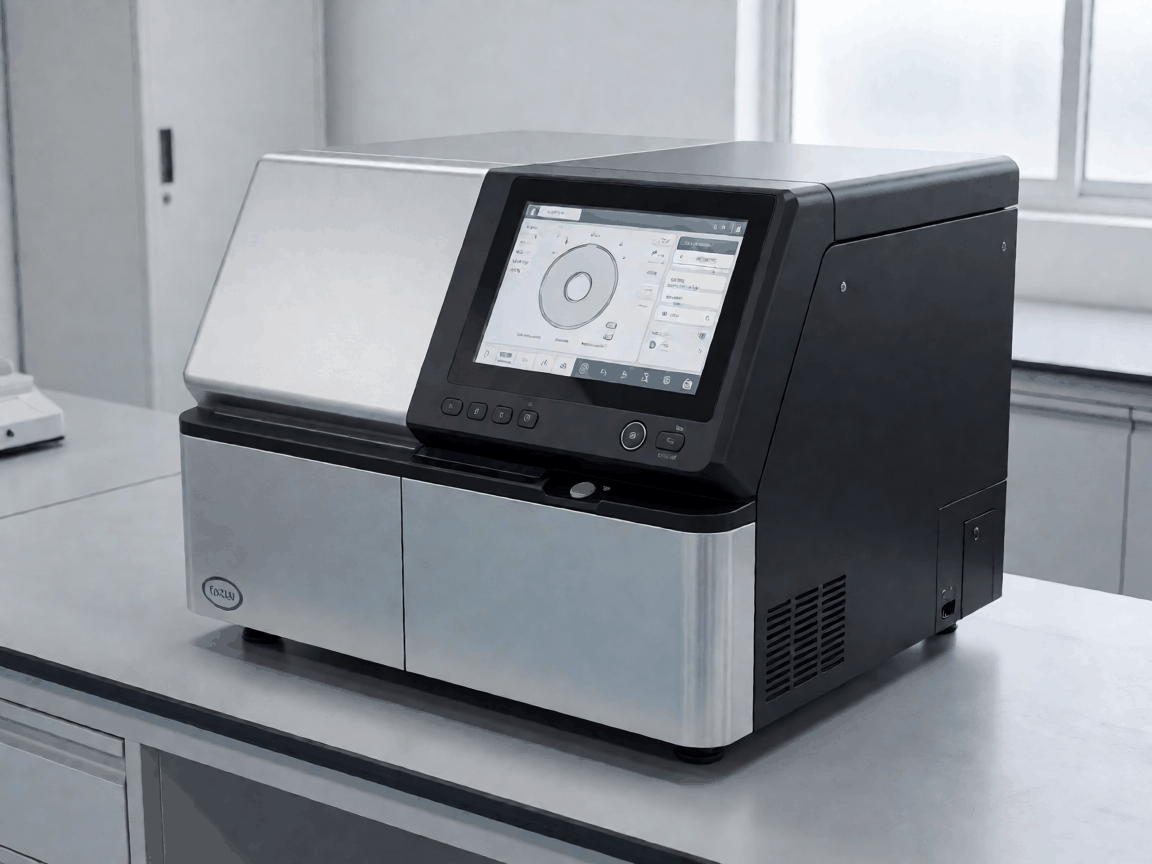
- Display 7‑inch TFT, 800 × 480, resistive touch
- Communication: RS‑485 Modbus RTU, optional IEC 61850 GOOSE
Option Comparison by Usage Level
Standard Duty
Designed for periodic verification in utility test labs. Calibration interval 12 months, operating temperature –10 °C to +45 °C. Includes basic Modbus RTU only.
Heavy Duty
Built for continuous online monitoring in substations. Extended temperature –25 °C to +55 °C, conformal‑coated PCB, IEC 61850 GOOSE, calibration interval 24 months. Adds 1.2 kg for reinforced enclosure.
Usage Scenarios and Buyer Segments
Distributors serving national grid operators typically order the Heavy Duty variant in lots of 20‑30 units to meet tender specifications for online CT/PT health monitoring. Private‑label buyers targeting the industrial maintenance market prefer the Standard Duty model, re‑branded with their own firmware splash screen and a 12‑month warranty that aligns with their service contracts.
Both segments require batch traceability: each analyzer ships with a calibrated test report, serial‑number label, and a QR code linking to the factory calibration database.
What Gets Checked Before Shipment
Every unit passes a three‑point verification: (1) ratio error at 20 % and 100 % of rated current, (2) phase displacement at 50 Hz and 60 Hz, (3) insulation resistance > 100 MΩ at 2.5 kV DC. Units that fail any point are re‑worked; no “pass‑with‑deviation” shipments.
Volume Planning and Lead Time
Standard Duty runs on a 4‑week cycle for 50‑unit batches; Heavy Duty adds one week for conformal coating cure. Minimum order quantity is 10 units per SKU. Packaging is optimized for sea‑freight pallets to reduce per‑unit logistics cost.
| Packaging Detail | Specification |
|---|---|
| Outer carton dimensions | 520 mm × 340 mm × 410 mm |
| Units per carton | 2 |
| Pallet configuration | 12 cartons (24 units) per Euro pallet |
| Gross weight per pallet | ≈ 180 kg |
Stock Availability and Reorder Planning
We maintain a safety stock of 30 Standard Duty and 15 Heavy Duty units in the Shenzhen warehouse. Reorder lead time after stock depletion reverts to the standard 4‑week cycle. Buyers on a quarterly forecast can lock in a rolling allocation that guarantees shipment within 10 business days of PO receipt.
For custom firmware branding or non‑standard communication modules, add two weeks to the lead time and confirm artwork files at least 5 days before production start.
Ready to finalize specifications or request a calibration sample?
Submit a technical inquiry