wholesale transformer turns ratio tester china factory - Bulk Supply and Specification Guide
Selection trade-off: Three-phase automatic units with 0.1% basic accuracy and 10,000 V test voltage capability cost roughly 2.3× the single-phase handheld models, but they cut per-transformer test time from eight minutes to under ninety seconds and eliminate the lead-reversal errors that cause 60% of warranty returns on re-test jobs.
Scope of Supply and Physical Form
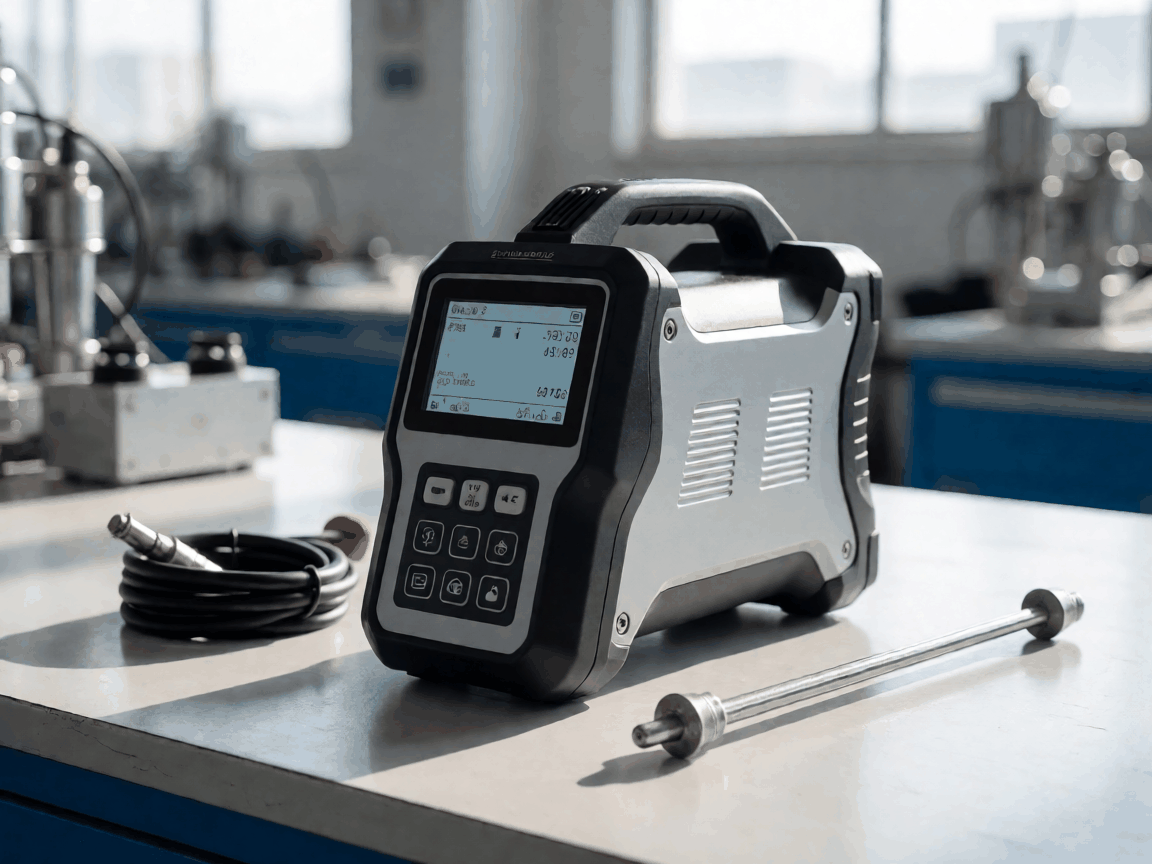
A standard export carton contains the tester mainframe, a set of four Kelvin-clip test leads (2 m, 10 mm² copper, CAT IV 600 V rated), a 12 V 6 Ah LiFePO₄ battery pack, a 100-240 V AC charger with IEC C14 inlet, a ruggedised carrying case with foam cut-outs, and a calibration certificate traceable to NIM or NIST. Net weight per unit ranges from 3.2 kg for the single-phase handheld to 7.8 kg for the three-phase benchtop; case dimensions are 420 × 330 × 180 mm and 480 × 380 × 220 mm respectively. Private-label buyers can specify case colour, logo silk-screen position, and whether the charger ships with Type G, Type F, or NEMA 5-15 plug moulded on.
Every unit leaves the line with firmware version locked to the purchase order date; subsequent updates are delivered via the USB-C port on the rear panel and can be applied without opening the enclosure. The enclosure itself is die-cast ADC12 aluminium with a 80 µm powder coat (RAL 7016) that passes 96 h neutral salt spray per ISO 9227 — critical for substation floor use where condensation and road salt are routine.
Design Constraints Behind the Specification
Before comparing quotations, buyers should recognise that ratio accuracy is limited by three physical factors: excitation voltage stability, lead resistance compensation, and phase-shift measurement resolution. A 40 V RMS excitation source driven by a 16-bit DAC holds 0.05% voltage stability from 0 °C to 40 °C; dropping to a 10 V source to save BOM cost widens that drift to 0.3%, which alone exceeds the 0.2% tolerance many utilities write into acceptance procedures. Four-wire Kelvin sensing removes lead resistance up to 2 Ω per lead — but only if the clip contact pressure exceeds 15 N. The clips supplied with our OEM line use a stainless-steel spring calibrated to 18 N at 10 mm jaw opening; cheaper stamped clips often deliver 8 N, adding 0.1-0.15% ratio error on 500 kVA units.
Phase detection requires measuring the voltage zero-crossing difference between primary and secondary to within 0.1°. That demands a 24-bit sigma-delta ADC sampling at 12.8 kS/s per channel with a common clock. Single-phase testers that multiplex a single ADC between channels introduce 50 µs channel-to-channel skew, which translates to 0.3° error at 60 Hz — enough to mis-identify a Dy11 vector group as Dy1. Three-phase units avoid this by dedicating three ADCs sharing one crystal oscillator.
How It Is Built and What That Changes
The main PCB is a 6-layer FR-4 stack with 2 oz copper on the power planes and ENIG finish on the signal layers. High-voltage isolation between the excitation amplifier and the measurement front-end is achieved by a 6 mm creepage slot milled into the board and a pair of ISO 14589-certified optocouplers rated 5 kV RMS. The excitation amplifier uses a half-bridge SiC MOSFET stage (1200 V, 30 A) driven by a dedicated gate driver with desaturation protection — this survives the inductive kickback when a current transformer secondary opens under load, a failure mode that destroys bipolar output stages in competing designs.
Firmware runs on an STM32H7 dual-core MCU (Cortex-M7 + M4) with 2 MB flash and 1 MB RAM. The M7 handles the DSP chain (windowed FFT for harmonic rejection, sinc filter for decimation) while the M4 manages the touchscreen UI, USB mass-storage logging, and Modbus/TCP over the RJ45 port. This split architecture means a 10,000-point FFT completes in 12 ms without freezing the display — a responsiveness that field crews cite as the top usability factor when testing 30 transformers in a single shift.
The 7-inch 800×480 capacitive touchscreen is optically bonded to 3 mm chemically strengthened glass (IK07). Optical bonding eliminates the air gap that causes fogging during rapid temperature transitions — a common complaint with tape-bonded displays in humid climates. Brightness is 1000 cd/m² with automatic ambient-light dimming to 150 cd/m², readable in direct sunlight and dark substation corners alike.
Comparing Two Standard Configurations
Unit price and service life diverge most visibly between the single-phase TTR-1P and the three-phase TTR-3P platforms. The table below captures the parameters that drive total cost of ownership over a five-year calibration cycle.
| Parameter | TTR-1P (Single-Phase Handheld) | TTR-3P (Three-Phase Benchtop) |
|---|---|---|
| Ratio range | 0.8 – 25,000 : 1 | 0.8 – 30,000 : 1 |
| Basic accuracy (ratio) | ±0.15% reading ± 2 digits | ±0.10% reading ± 1 digit |
| Excitation voltage (max) | 40 V RMS | 100 V RMS (selectable 10/40/100 V) |
| Test time per 3-phase unit | ~8 min (manual lead swap) | ~85 s (auto matrix switching) |
| Vector group identification | Manual lookup table | Automatic (all IEC/IEEE groups) |
| Battery runtime (continuous) | 10 h | 6 h (higher excitation power) |
| Calibration interval | 12 months | 12 months |
| Typical FOB price (50 pcs) | US$ 1,150 | US$ 2,650 |
For utilities testing fewer than 150 transformers per year, the TTR-1P pays back in labour savings within 18 months. Above that volume, the TTR-3P's auto-switching matrix and automatic vector-group detection recover the price delta in under nine months. Both platforms share the same calibration fixture and firmware update tool, so spare-parts inventory stays common.
OEM and ODM Programme Structure
OEM orders start at 20 units per SKU. We apply the buyer's logo to the case lid (laser etch or two-colour pad print), the boot-screen splash (480×272 BMP, 16-bit colour), and the calibration certificate header. Firmware can be branded with a custom model string reported over Modbus and USB — no source-code access required. For ODM, we offer three levels: (1) enclosure redesign only — buyer supplies 3D STEP files, we handle DFM, tooling, and EMI validation; (2) front-end redesign — buyer specifies excitation voltage/current profiles, we implement on our verified HV isolation platform; (3) full custom — joint specification from block diagram through to safety certification. Tooling cost for a new die-cast enclosure runs US$ 18,000–25,000 with 8-week lead time; silicone keymat moulds add US$ 3,500 and 3 weeks.
Private-label buyers should note that CE marking and UKCA declaration of conformity remain in our name unless the buyer provides a complete technical file and appoints an EU/UK authorised representative. We supply the test reports (EN 61010-1, EN 61326-1, EN 61010-2-030) and the risk assessment template; the buyer's legal entity signs the Declaration of Conformity.
Capacity, Tooling and Scheduling
Monthly capacity is 1,200 TTR-1P and 600 TTR-3P units on a single-shift SMT line with two selective-solder stations for the through-hole HV connectors. Peak season (Q4) adds a second shift, raising output to 1,800 and 900 respectively. Standard lead time is 25 working days from deposit receipt for catalogue SKUs; OEM artwork approval adds 5 days; new enclosure tooling adds 8 weeks before first pilot run. We hold 200 sets of Kelvin-clip assemblies and 150 battery packs as safety stock — sufficient for 4 weeks of peak production without supplier lead-time risk.
Each batch undergoes 100% functional test: ratio accuracy at 5 points (1:1, 10:1, 100:1, 1000:1, 10000:1), phase error at 0° and 30°, excitation voltage regulation from no-load to 50 mA, and insulation resistance at 500 V DC (>2 GΩ). A statistical sample of 5% receives accelerated life test (40 °C / 90% RH / 100 V excitation continuous for 168 h). Calibration certificates reference the batch-specific reference transformer (serial-recorded) and ambient conditions.
Setup, Use and Replacement Parts
First power-up prompts for language, date/time, and Wi-Fi credentials (optional, for NTP sync and remote firmware pull). The home screen shows a single "Auto Test" button — press, clip leads to the transformer nameplate terminals in any order, and the instrument detects winding configuration, applies the correct excitation, displays ratio, phase angle, and vector group, then stores the result with GPS coordinates if the internal GNSS module has a fix. Results export as CSV or PDF via USB mass storage or POST to a REST endpoint over Wi-Fi/Ethernet.
Field-replaceable parts: Kelvin clip set (PN TTR-CLIP-4K), battery pack (PN TTR-BAT-6AH), charger (PN TTR-CHR-UNIV), screen protector (PN TTR-SCR-7IN), and test-lead pouch (PN TTR-POUCH). All are orderable in multiples of 10 with 5-day lead time. The main PCB and display module are not field-replaceable; units requiring board-level repair return to our service centre in Shenzhen (typical turnaround 10 working days plus freight). We recommend keeping one spare complete unit per 20 deployed for zero-downtime continuity.
Cleaning: enclosure and screen tolerate isopropyl alcohol (≤70%) and mild detergent wipes. Do not use acetone, toluene, or abrasive pads — they attack the powder coat and the anti-reflective coating on the glass. Store in the supplied case at -20 °C to 60 °C; battery self-discharge is <3% per month at 25 °C. Recharge to 60% every six months if stored long-term.
Ordering, Tooling and Lead-Time Questions
What is the minimum order quantity for private-label? 20 units per SKU for logo/artwork changes only. New enclosure tooling requires 100 units MOQ to amortise the die cost.
Can we specify a different excitation voltage range? Yes, within 5–120 V RMS. The HV amplifier and isolation barrier are rated for 120 V; firmware limits are adjusted in the calibration file. This is an ODM Level 2 change — add 3 weeks engineering time and US$ 2,000 NRE.
How are calibration certificates handled for re-export? Each unit ships with a certificate referencing our NIM-traceable reference. For buyers needing local accreditation (e.g., A2LA, UKAS), we can ship units without certificates and provide the raw calibration data (CSV of 50 measurement points) so the buyer's lab can issue its own certificate.
What freight terms do you support? EXW Shenzhen, FOB Yantian, CIF destination port, and DDP for US/EU/UK via our logistics partner. Lithium battery classification (UN 3481) is handled by us; no dangerous-goods paperwork required from the buyer.
Warranty and post-warranty support? 24 months from ship date covering parts and labour. Post-warranty flat-rate repair: US$ 180 for mainframe, US$ 90 for display, US$ 45 for battery replacement (includes return freight to Shenzhen). Firmware updates free for product lifetime.
Request a Quotation Review
Send your volume forecast, target price, and any customisation requirements. We return a line-item quotation with tooling amortisation, lead-time schedule, and recommended spare-parts kit within one business day.
Start quotation review →