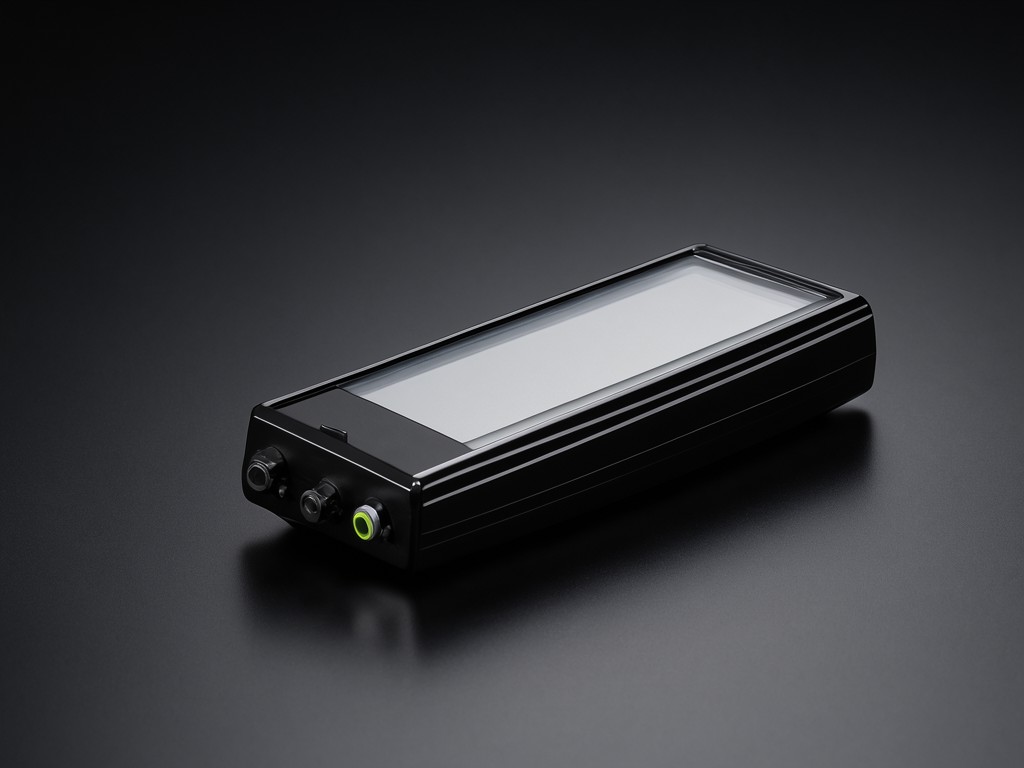
b2b high resistance measurement meter supplier: What Buyers Should Check Before Ordering
Consistency is set at the forming stage of the instrument chassis and the front-end amplifier layout. A meter that reads 1012 Ω on the bench but drifts to 1011 Ω after six months in a humid test lab usually traces back to two decisions: the guard-ring geometry on the input PCB and the potting compound chosen for the high-voltage multiplier string. Private-label buyers who skip those details end up managing returns instead of shipping product.
Material Options and Their Trade-offs
The enclosure, probe cables, and internal shielding define the noise floor more than the ADC spec sheet suggests. Three constructions dominate current production runs:
ABS/PC Blend — Standard Grade
Moulded in 2.5 mm wall sections with internal ribbing for drop survival. Surface resistivity ~1014 Ω/sq — adequate for 1 kV test voltages but marginal above 5 kV where surface tracking becomes a leakage path.
Cost delta versus base ABS: +12 %. Tooling amortises at ~3,000 units. UV stabiliser package adds 8 weeks to first-article if colour match is required.
Conductive-Coated ABS — Shielded Grade
Nickel-copper conductive paint (8–12 µm) inside the battery compartment and around the input jack. Drops common-mode rejection by 15–20 dB at 50/60 Hz. Coating adhesion passes 100-cycle tape test per ASTM D3359.
Adds $3.80–$4.50 per unit at 1k volume. Requires dedicated spray booth — minimum order 500 pcs to keep line utilisation above 60 %.
Polycarbonate + Glass-Fill — High-Voltage Grade
20 % glass fibre, 3 mm walls, CTI 600 V. Eliminates tracking at 10 kV DC. Weight penalty: +140 g versus ABS/PC. Mould temperature 120 °C — cycle time 45 s versus 32 s for unfilled grade.
Tooling cost 2.3× standard. Only justified when the private-label spec calls for CAT IV 600 V or 10 kV insulation test. Below that, the cost per unit never recovers at typical 2–5k annual volumes.
Procurement note: Probe cable jacketing is the second-most common failure mode after input protection. TPE jacket rated 105 °C / 600 V survives 5,000 flex cycles at 15 mm radius. PVC 105 °C fails at 1,200 cycles. Specify TPE in the BOM or budget 3 % annual probe replacement.
How to Choose Before Requesting a Quote
The build method decides which specifications are negotiable and which are fixed by physics. Start with the measurement range and test voltage your end-users actually need — not the maximum the datasheet advertises.
| Parameter | Typical Range | Private-Label Decision Point |
|---|---|---|
| Resistance range | 10 kΩ – 10 PΩ (1016 Ω) | Each decade above 10 TΩ adds a guarded preamp stage — +$18 BOM, +2 weeks calibration |
| Test voltage steps | 50 V, 100 V, 250 V, 500 V, 1 kV, 2.5 kV, 5 kV, 10 kV | Voltage multiplier string is laser-trimmed; adding a step requires new HV board spin |
| Accuracy (mid-scale) | ±3 % ±5 digits (1 MΩ – 100 GΩ), ±10 % above 1 TΩ | Tighter spec (±2 %) needs temperature-characterised reference resistors — +$7/unit |
| Measurement modes | Insulation R, Surface/Volume ρ, PI/DAR, Capacitance, Leakage I | Firmware modules are licensed per SKU; enable only what the target market requires |
| Interfaces | USB-C (CDC), Bluetooth LE 5.0, RS-232 (opt.), GPIB (opt.) | Bluetooth module adds $4.20 and FCC/CE-RED recertification — 6 weeks lead |
| Power | 4× AA alkaline, Li-ion pack (3.7 V 2600 mAh), USB-C PD | Li-ion pack requires UN38.3 test report — factor $1,200 and 8 weeks if not already on file |
| Safety rating | CAT III 1000 V / CAT IV 600 V (IEC 61010-1) | Creepage/clearance dictates board outline — cannot shrink enclosure without re-certification |
First-article tooling determines the cost floor. A private-label run at 500 units absorbs $18,000–$22,000 in mould, fixture, and test-jig amortisation. At 2,000 units the tooling share drops below $9/unit. Below 300 units the per-unit price exceeds catalogue standard models — buyers are better off laser-etching logos on stock SKUs.
How Consistency Is Held Across Batches
Batch repeatability lives in three control points: the laser-trim recipe for the high-voltage divider, the guard-ring solder-paste stencil aperture, and the firmware calibration coefficient table stored in protected flash. Each shift runs a golden-unit check against a 10 GΩ ±0.1 % transfer standard traceable to NMI. Drift beyond ±0.5 % on the 100 GΩ range triggers a line hold.
Component lot traceability links every resistor reel, capacitor lot, and MCU date code to the finished serial number. When a 2023 lot of 100 MΩ 0.1 % 0603 resistors showed 0.8 % shift after 1,000 h at 85 °C/85 % RH, the affected 427 units were identified and re-calibrated before shipment. That level of traceability adds $0.65/unit in MES licensing but eliminates recall scope creep.
Inspection Items and Test Methods
Every shipping lot passes through a fixed sequence. No statistical sampling on safety-critical parameters — 100 % test on insulation withstand, leakage current, and measurement accuracy at three decades.
| Inspection Item | Method / Acceptance | Frequency |
|---|---|---|
| Dielectric withstand (input to chassis) | 5.4 kV DC 60 s, leakage < 1 µA | 100 % |
| Resistance accuracy verification | 1 MΩ, 100 MΩ, 10 GΩ, 1 TΩ reference standards; ± spec limits | 100 % |
| Test voltage accuracy | ±3 % at no load, ±5 % at 1 mA load | 100 % |
| Guard terminal isolation | > 1014 Ω guard-to-chassis at 1 kV | 100 % |
| Display contrast / backlight uniformity | Visual inspection at 0°, ±30°, ±60°; no dead pixels | 100 % |
| Probe cable continuity & insulation | 4-wire Kelvin < 50 mΩ, insulation > 10 GΩ at 1 kV | 100 % |
| Firmware CRC & version lock | Automated verify against golden image | 100 % |
| Drop test (packaged) | 1 m onto concrete, 6 faces, 3 edges, 1 corner — functional after | First article + quarterly lot |
| Temperature coefficient check | 0 °C to 40 °C, ±0.05 %/°C on 10 GΩ range | Monthly audit (5 pcs) |
| EMC pre-scan (conducted/radiated) | CISPR 11 Class B, 6 dB margin | Design validation + annual re-check |
Volume Planning and Lead Time
Order volume changes unit cost non-linearly because the HV board panelisation, probe cable cut-and-strip, and calibration fixture utilisation all have step functions. The table below reflects current capacity on the standard ABS/PC enclosure with 8-step voltage and USB/Bluetooth interfaces.
500–999 units
Unit cost: $142–$158 (EXW)
Lead time: 10–12 weeks (tooling + first calibration batch)
Calibration certificates: individual, ISO 17025 traceable
1,000–2,499 units
Unit cost: $118–$132 (EXW)
Lead time: 8–9 weeks (panelised PCB run, shared fixture)
Calibration certificates: batch certificate + sample data
2,500–5,000 units
Unit cost: $98–$112 (EXW)
Lead time: 6–7 weeks (dedicated SMT shift, buffer stock)
Calibration certificates: batch certificate only
Blanket orders with quarterly releases lock the unit price at the 2,500+ tier while spreading cash flow. Minimum release quantity 500 units. Price protection holds for 12 months from first release — after that, BOM cost escalation (MLCC, MCU, LCD) is passed through at actuals with 60-day notice.
Keeping Repeat Orders Supplied
Supply reliability hinges on two long-lead items: the custom LCD module (14-week lead) and the laser-trimmed HV divider network (10-week lead). Both are held on vendor-managed inventory at 130 % of the trailing 12-month forecast. When a private-label buyer increases annual volume from 1,200 to 3,000 units mid-year, the buffer absorbs the first two releases; the third release triggers a capacity review.
Firmware branch management prevents regression. Each private-label SKU gets a dedicated git branch with locked compiler toolchain (ARM GCC 10.3.1) and fixed library versions. Patch releases for regulatory changes (e.g., new Bluetooth LE privacy feature) are back-ported within 3 weeks. No forced updates — buyers approve each release before it hits the production programmer.
Export Packaging and Handling Protection
Shipping damage claims average 1.8 % for loose-packed meters in master cartons. The tested configuration that brings claims below 0.3 %:
- Individual ESD-shielded bag (Moisture Barrier Bag Class 1, 0.14 mm) with desiccant sachet (2 g silica gel) and humidity indicator card.
- Moulded polyethylene foam insert (45 kg/m³ density) cradling the meter and probe set — prevents probe-tip impact on the display window.
- Double-wall corrugated master carton (ECT 48), 10 units per carton, 14.2 kg gross.
- Palletised 48 cartons (4×3×4), stretch-wrapped with corner boards, tipped at 15° for fork entry.
Lithium-ion pack models ship UN3481 Section II — no Class 9 label required if < 100 Wh per pack and < 12 packs per carton. Alkaline models ship unrestricted. Both configurations include a multilingual safety insert (EN, DE, FR, ES, ZH, JA) printed on 80 gsm recycled stock.
Artwork & branding review: Pad-print on enclosure (max 45 × 20 mm), laser-etch on battery door, or full-colour UV-print on polycarbonate overlay. Vector artwork (AI/SVG) due at PO confirmation. Colour proof shipped via express (3 days) — production holds until written approval. Revision after approval incurs $350 screen/setup charge and 5-day delay.
Ready to lock in specifications and lead times? Submit your private-label requirement sheet and we'll return a detailed quotation with first-article schedule within 48 hours.