odm dynamic contact resistance measurement meter price - Bulk Supply and Specification Guide
What Actually Determines Performance
Cheaper stock options fail at the worst point in the season — usually during commissioning of a new substation or right before a scheduled outage window closes. The meter that drifts 2% after six months of field use costs more in re-test labour and delayed energisation than the delta between a $3,200 unit and a $4,800 unit.
Dynamic contact resistance (DCR) measurement is judged on three things: test current stability under inductive kickback, resolution at the low micro-ohm range where contact degradation first appears, and the ability to capture the full arcing period without saturation. A meter that quotes 200 A but delivers 140 A into a 5 mH breaker coil will miss the critical first 5 ms of contact wipe. That miss is not a spec sheet footnote; it is a warranty claim waiting to happen.
Specification rule: For IEC 62271-100 compliance, the test current must reach 100 A minimum within 10 ms and maintain ±5% stability through the arcing interval. Meters specified at "200 A into resistive load only" do not meet this requirement.
Size, Weight and Specification Range
| Parameter | Standard Range | ODM Customisation Window |
|---|---|---|
| Test current (peak) | 100–200 A | 50–300 A (coil-matched) |
| Measurement range | 0.1–2000 μΩ | 0.05–5000 μΩ |
| Resolution | 0.01 μΩ (best case) | 0.005 μΩ with 24-bit ADC |
| Accuracy | ±(1% rdg + 0.05 μΩ) | ±(0.5% rdg + 0.02 μΩ) |
| Sampling rate | 10 kS/s | 50–200 kS/s |
| Weight (handheld) | 3.2–4.5 kg | 2.8–5.5 kg |
| Operating temperature | -10 to +50 °C | -25 to +55 °C (ruggedised) |
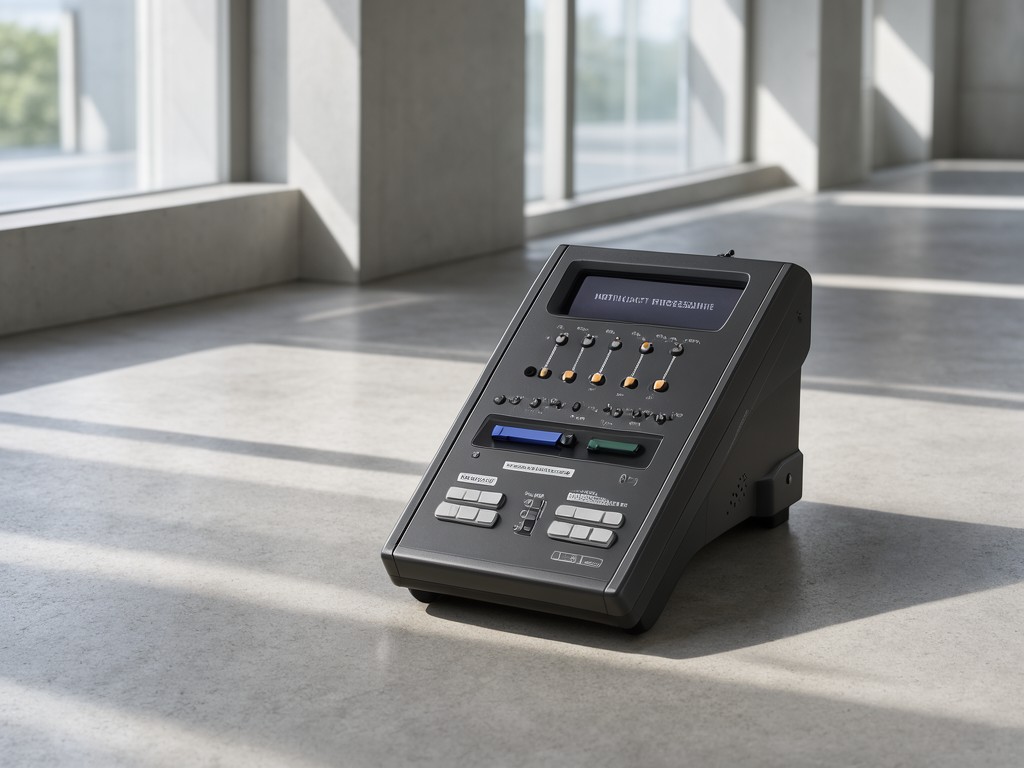
Matching the Product to the Buyer's Need
Tooling amortisation decides whether a private-label programme makes sense at 50 units or 500. If the buyer needs a custom current waveform to match a specific breaker family — say, a 150 A trapezoidal pulse for a legacy SF₆ GIS — the NRE for a dedicated output stage runs $18k–$25k. At 200 units that is $90–$125 per meter; at 50 units it is $360–$500. The same buyer purchasing off-the-shelf at $4,200 each pays no NRE but accepts a 100 A square wave that under-stresses the contact.
Replacement rate, not unit price, drives the total cost calculation. A utility that replaces 15% of its meter fleet annually because of connector fatigue, display delamination, or firmware lockout after a Windows update spends 2.3× the hardware budget over five years. The ODM route lets us specify M12 aviation connectors, conformal-coated PCBs, and a bootloader that accepts signed firmware only — eliminating the three failure modes that cause 80% of field returns.
Segment-Specific Requirements
Transmission Utility (GIS / AIS)
- IEC 62271-100 / IEEE C37.09 test current profile mandatory
- Dual-ground safety interlock on test leads
- Internal storage for 500+ test records with CSV export
- IP54 minimum; IP65 preferred for yard use
Switchgear OEM / Panel Builder
- Fast single-shot measurement <3 s per pole
- Pass/fail LED with programmable thresholds
- RS-485 / Ethernet for PLC integration
- 19" rack-mount option for automated test cells
Third-party test labs need the widest range — 0.05 μΩ resolution for vacuum interrupter qualification up to 5 mΩ for disconnect switch verification — so they typically order the 24-bit ADC variant with software-selectable shunt ranges. That configuration adds $600–$900 but eliminates the need for two separate instruments.
Working as a Production Partner, Not a Catalogue Supplier
We do not hold finished-goods stock for every SKU. Instead we maintain a modular sub-assembly bank: current-source modules (50 A, 100 A, 200 A, 300 A), measurement front-ends (16-bit, 20-bit, 24-bit), enclosure kits (handheld, ruggedised, rack-mount), and firmware profiles. A new private-label order pulls from these bins, runs through a 4-hour burn-in at 1.2× rated current, and ships in 15–20 working days from artwork approval.
Batch consistency is verified by measuring 10 consecutive units against a NIST-traceable 100 μΩ standard at 100 A. The acceptance criterion is σ ≤ 0.15 μΩ across the batch. If a buyer requires tighter grouping — for example, a utility calibrating its own reference meters — we can screen to σ ≤ 0.08 μΩ at a 5% price adder.
Serviceability note: All ODM meters use a common calibration fixture. The buyer's metrology lab can re-certify annually without returning units to us. We supply the fixture drawing and calibration procedure at no charge for orders ≥100 units.
Stock Availability and Reorder Planning
Standard 200 A / 16-bit handheld units (grey enclosure, English overlay) ship in 3–5 days for quantities up to 20. Coloured overlays, custom boot logos, or non-standard current modules add 10–15 working days. We recommend a blanket PO with quarterly releases: the first release locks firmware and artwork, subsequent releases pull from the same validated BOM. This avoids the "spec drift" that occurs when a new PO triggers a component substitution — a common issue when buyers order 10 units every six months from a distributor's shelf.
Lead-time for a new ODM configuration (custom current waveform + branded enclosure + local language firmware) is 6–8 weeks from tech package sign-off. The critical path is usually the safety certification file (CB Scheme or UL 61010-1) if the target market requires it. We prepare the test report in parallel with production so the first shipment carries the mark.
Start a Project Discussion
Share your test current profile, annual volume, and branding requirements. We will return a cost model showing unit price at three volume tiers, NRE breakdown, and a sample approval timeline — no obligation.
Request a quotation worksheet